
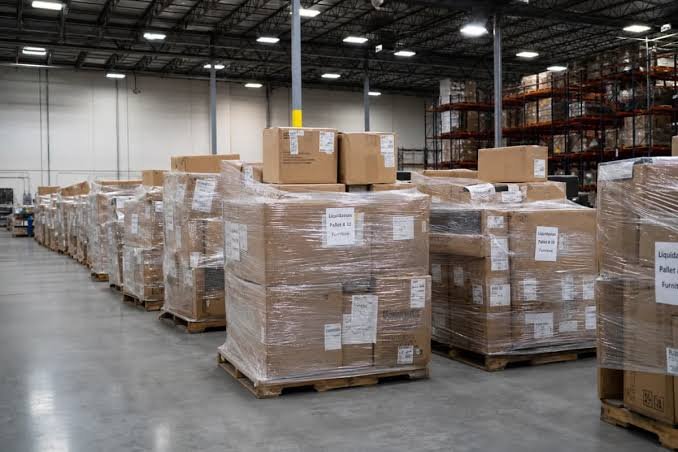
How to Evaluate a Liquidation Pallet Before You Buy
Buying a liquidation pallet can look like an easy way to acquire valuable inventory at a fraction of retail prices. A pallet may advertise thousands of dollars in retail merchandise for a much lower purchase price, but that does not automatically mean it is a good deal. The real question is whether the merchandise can generate enough realistic resale revenue to cover your purchase cost, shipping, marketplace fees, processing expenses, and other business costs.
Learning how to evaluate a liquidation pallet before spending your money is one of the most important skills a reseller can develop. A good liquidation purchase should be based on actual product information, condition, realistic market prices, quantity, demand, and your total landed cost rather than an attractive retail-value number.
A liquidation manifest can provide valuable information about what is inside a pallet, including product descriptions, quantities, brands, model numbers, UPCs, condition information, and stated retail values. However, the retail value shown on a manifest should not automatically be treated as your expected resale revenue. Retail value and actual Pallet Resale Value are two different numbers.
In this guide, we will show you how to evaluate a liquidation pallet step by step so you can identify potentially profitable inventory, recognize warning signs, estimate your real costs, and determine whether a pallet deserves your money.
What Makes a Liquidation Pallet a Good Deal?
A good liquidation pallet is not necessarily the pallet with the highest advertised retail value. Instead, it is a pallet where the expected resale revenue, after realistic discounts and business expenses, provides enough margin to justify the purchase risk and the work required to process the merchandise.
For example, imagine a pallet advertised with a $10,000 retail value. If the merchandise consists mostly of customer returns, outdated products, incomplete items, or products with weak demand, the $10,000 figure may have little relationship to what you can actually recover.
On the other hand, a pallet with a lower stated retail value could potentially be more attractive if it contains recognizable products, strong demand, accurate product identifiers, favorable condition grades, and merchandise that you already know how to sell.
This is why Liquidation Pallet Value should always be evaluated from the perspective of realistic resale potential rather than simply accepting the seller’s headline retail number.
Start With the Liquidation Pallet Manifest
The first step in how to evaluate a liquidation pallet is to examine the manifest carefully. A detailed manifest gives you an opportunity to research the products before committing to a purchase.
Depending on the liquidation supplier, a manifest may include information such as:
- Product name and description
- Brand
- SKU or model number
- UPC or barcode
- Quantity
- Condition or grade
- Original retail price
- Extended retail value
- Product category
- Additional condition notes
The more specific the information is, the easier it becomes to perform your own research. Product identifiers such as UPCs, SKUs, and model numbers are particularly useful because they allow you to compare the exact product rather than relying on a generic product description. A detailed manifest can turn a purchase from a blind gamble into a more informed buying decision.
If you are still learning how liquidation manifests work, read our detailed guide on liquidation pallet grading to better understand how condition can affect the potential value of a pallet.
Do Not Confuse Retail Value With Resale Value
This is one of the most important rules when learning how to evaluate a liquidation pallet: MSRP is not the same as resale value.
A manifest may show that a product originally sold for $100 at retail. That does not mean you can automatically sell the product for $100. The actual selling price may be considerably lower because of competition, condition, discontinued models, marketplace pricing, shipping costs, customer expectations, or changes in demand.
The same principle applies to the total retail value of the entire pallet. If a manifest states that the merchandise has $8,000 in retail value, treat that figure as a reference point rather than guaranteed revenue.
Your goal should be to estimate the Pallet Resale Value using realistic prices that customers are currently willing to pay. Research comparable products, preferably using actual current listings and sold-market data where available, instead of simply multiplying the quantity by the original retail price.
This distinction is critical because a pallet can appear heavily discounted compared with MSRP while still being overpriced for a reseller. Industry guidance on reading liquidation manifests similarly emphasizes that stated retail value is not the same as the price a reseller will actually recover.
Check the Condition Before Calculating Value
Condition is another major factor when determining how to evaluate a liquidation pallet. Two pallets can have identical stated retail values while having completely different resale potential because their merchandise is in different conditions.
Common liquidation conditions include:
- New: Merchandise that is unused and generally in original packaging.
- Overstock: Excess inventory that was not necessarily sold to a customer.
- Shelf Pulls: Products removed from retail shelves, potentially with packaging wear.
- Open Box: Products where packaging has been opened and the contents may require inspection.
- Customer Returns: Merchandise returned by customers for various reasons.
- Used: Products that have previously been used.
- Salvage: Damaged, incomplete, defective, or otherwise higher-risk merchandise.
Condition terminology is not always standardized across liquidation sellers, so you should read the supplier’s specific definition of each grade rather than assuming that a particular letter or description means exactly the same thing everywhere.
A pallet dominated by new or overstock products may require less testing and preparation than a pallet containing heavily mixed customer returns. Likewise, salvage inventory may only make sense if you have the skills, labor, equipment, and sales channels necessary to repair, part out, or otherwise recover value from damaged merchandise.
Research the Products Before You Buy
One of the strongest ways to evaluate a liquidation pallet is to research the products individually, particularly the items responsible for most of the pallet’s stated value.
You do not necessarily need to research every low-value item. Instead, start with the products that have the highest quantities and the highest stated retail values. These products can have the greatest impact on your final calculation.
Look for:
- Current selling prices
- Product demand
- Brand reputation
- Model age
- Condition
- Competition
- Availability of replacement parts
- Shipping difficulty
- Marketplace restrictions
- Seasonality
If a manifest contains 50 units of a product that originally retailed for $80 but comparable items are currently selling for only $25, your calculation should use a realistic selling price rather than the original $80 retail price.
This is where the real Liquidation Pallet Value starts to emerge. You are not simply asking, “What did this merchandise cost at retail?” You are asking, “What can I realistically sell this merchandise for in my market?”
Calculate Your Real Landed Cost
Another essential part of how to evaluate a liquidation pallet is calculating the total amount the pallet will actually cost you. The advertised pallet price is not always your final expense.
Your landed cost may include:
- Pallet purchase price
- Freight or shipping
- Buyer premiums
- Taxes where applicable
- Marketplace fees
- Payment-processing fees
- Storage
- Packaging materials
- Cleaning costs
- Testing costs
- Repair costs
- Labor
For example, a pallet listed for $800 may initially appear inexpensive. But if freight adds $250 and other purchase-related charges add another $100, your actual acquisition cost is already $1,150 before you sell a single product.
That is the number you should use when determining whether the pallet is a good deal.
Industry guidance also recommends including freight, buyer premiums, storage, marketplace fees, labor, and other expenses when determining whether a liquidation purchase makes financial sense.
Use Realistic Pallet Resale Value
Once you have researched the products, condition, and costs, estimate the Pallet Resale Value. This should represent what you reasonably expect to collect from selling the merchandise, not the maximum theoretical value.
A practical approach is to create three estimates:
- Conservative estimate: What happens if prices are lower and some products do not sell?
- Expected estimate: What you reasonably expect based on current market conditions.
- Optimistic estimate: What could happen if demand and selling prices are favorable.
Your purchasing decision should not depend entirely on the optimistic scenario. If the pallet only appears profitable under perfect conditions, it may not provide enough margin to justify the risk.
A stronger purchase is one where the numbers still make sense after you apply a conservative estimate for selling prices, unsellable merchandise, additional costs, and slower sell-through.
Visit Elite Pallet Liquidators for More Inventory
If you are ready to compare different liquidation opportunities, visit the Elite Pallet Liquidators Shop to explore available pallets and bulk inventory.
You can also review our guide on how to buy liquidation pallets before making your next purchase. Understanding the sourcing process, inventory condition, pricing, and resale strategy can help you make more informed buying decisions.
For additional guidance, our article on liquidation pallets for resellers is also useful if your goal is to build a repeatable resale business rather than make a single purchase.
Key Takeaway From Part 1
The most important lesson in how to evaluate a liquidation pallet is to stop judging a pallet by its advertised retail value alone. A good purchase requires a closer look at the manifest, product condition, actual market prices, quantity, demand, shipping, fees, processing requirements, and realistic Pallet Resale Value.
A pallet is potentially worth buying when the numbers still make sense after you account for the costs and risks involved. The objective is not to find the pallet with the biggest retail-value claim. The objective is to find inventory that you can realistically sell for enough money to cover your total investment and leave a worthwhile margin.
How to Read a Liquidation Pallet Manifest Before Buying
Knowing how to evaluate a liquidation pallet becomes much easier when you understand how to read the information provided in its manifest. A liquidation manifest is one of the most useful documents available to a buyer because it can give you product-level information before you commit your money. However, simply seeing a manifest is not enough. You need to know which numbers matter, which details require additional research, and which figures should never be accepted at face value.
When evaluating a liquidation pallet, your objective is to determine whether the merchandise has enough realistic resale potential to justify the total acquisition cost. That means looking beyond the advertised retail value and examining the individual products, quantities, condition, market prices, and potential selling expenses.
1. Check the Product Description
The first column you should examine is the product description. Look for specific product names rather than vague descriptions such as “electronics,” “general merchandise,” or “mixed household goods.”
Specific descriptions make it easier to research the products and estimate their potential Liquidation Pallet Value. For example, “wireless noise-canceling headphones, Model XYZ” provides considerably more useful information than simply “headphones.”
A detailed description allows you to search for the exact product, compare current market prices, identify competing listings, and determine whether customers are still actively purchasing it.
2. Look for UPCs, SKUs and Model Numbers
Product identifiers can make your research much more accurate. When a manifest includes UPCs, SKUs, model numbers, or other identifiers, use them to locate the exact merchandise online.
This matters because two products can look similar while having completely different prices. A particular model may be discontinued, replaced by a newer version, or sold at a significant discount.
When researching products, compare the exact model whenever possible instead of relying on a generic product category.
You can also use the official GS1 identification standards to understand how product identification numbers such as GTINs are used in global commerce. Accurate product identification is particularly useful when researching inventory before purchase.
3. Examine the Quantity Carefully
Quantity is another critical part of how to evaluate a liquidation pallet. A product may have a high individual resale value, but if there are only one or two units, it may have less impact on the overall pallet than a lower-priced product with dozens of units.
Suppose a manifest contains:
- 2 units at an estimated resale price of $200 each
- 20 units at an estimated resale price of $40 each
- 50 units at an estimated resale price of $15 each
The larger quantity of lower-priced merchandise may contribute more to your expected revenue than the two expensive products. This is why you should calculate the potential value of the entire inventory rather than focusing only on the most expensive item.
4. Investigate the Stated Retail Value
One of the easiest mistakes a new buyer can make is treating the retail value listed on the manifest as guaranteed revenue.
If a manifest says that a pallet has a retail value of $12,000, that figure may represent original retail prices or another valuation method used by the supplier. It does not necessarily mean you can sell the merchandise for $12,000.
Your objective is to calculate realistic Pallet Resale Value. Research what comparable products are actually selling for today and adjust your estimate according to condition, competition, demand, and selling expenses.
The Federal Trade Commission’s guidance on advertising emphasizes the importance of truthful and non-deceptive representations in commerce. While a liquidation manifest is not itself a consumer advertisement, the principle is useful for buyers: treat stated values as information to investigate rather than automatically assuming they represent guaranteed future sales. You can review the FTC advertising and marketing guidance for more information.
5. Check the Condition Column
Condition can dramatically change your Liquidation Pallet Value. A brand-new product and a customer-return product may have completely different resale potential even when they are the exact same model.
When reviewing a manifest, identify whether the merchandise is classified as:
- New
- Overstock
- Shelf pulls
- Open box
- Customer returns
- Used
- Salvage
You should also determine whether the supplier provides a specific definition for each condition category. Do not assume that a particular grade means exactly the same thing across every liquidation marketplace.
For a deeper explanation of condition categories, visit our liquidation pallet grading guide.
6. Identify the Highest-Value Products
When you receive a large manifest, you do not necessarily need to research every product immediately. Start with the products that account for the largest portion of the stated value.
For example, if five products represent more than half of the manifest’s stated retail value, those five products deserve detailed research. Verify their model numbers, current market prices, condition, demand, and availability.
If those high-value products turn out to have significantly lower real-world resale prices, your estimate of the entire pallet’s value may need to be reduced.
7. Search for Current Market Prices
The next step in how to evaluate a liquidation pallet is determining what customers are currently paying. Retail websites can be useful for understanding product positioning, but active listings do not necessarily prove that a product is actually selling at that price.
Where possible, look for completed or sold transactions and compare multiple marketplaces. This can help you identify the realistic range for the product rather than relying on a single seller’s asking price.
Pay attention to condition when making comparisons. A new product, open-box product, and customer return should not automatically be assigned the same resale price.
8. Calculate Your Expected Pallet Resale Value
Once you have researched the major products, calculate your estimated Pallet Resale Value. Multiply the realistic expected selling price of each product by the quantity you expect to successfully sell.
For example:
- 20 units × $30 realistic selling price = $600
- 10 units × $50 realistic selling price = $500
- 25 units × $15 realistic selling price = $375
Your estimated gross resale value for those products would therefore be $1,475 before accounting for selling costs, unsold inventory, returns, shipping subsidies, marketplace fees, and other expenses.
This is a much more useful calculation than simply accepting the original retail value listed on the manifest.
9. Account for Unsellable Merchandise
Not every item in a liquidation pallet will necessarily become a successful sale. Some products may be damaged, incomplete, defective, obsolete, difficult to ship, or simply unwanted by your customers.
When learning how to evaluate a liquidation pallet, include a reasonable allowance for merchandise that produces little or no revenue.
The percentage you use will depend on the condition and type of inventory. A pallet containing brand-new overstock may have a different risk profile from a pallet dominated by customer returns or salvage merchandise.
The important point is to avoid building your purchase decision around the assumption that every item will sell at your ideal price.
10. Check for Duplicate or Oversupplied Products
A manifest may contain large quantities of the same product. At first, this may look attractive because you can calculate the potential revenue easily. However, large quantities can create a different problem: market saturation.
If you receive 200 units of the same item and your target marketplace already has hundreds of competing listings, you may have to reduce your price to generate sales.
Before buying, investigate how much competition exists for the major products on your manifest. Consider whether you have another sales channel available if your primary marketplace becomes too competitive.
11. Check Product Demand
A product’s potential resale price is only useful if there are customers willing to purchase it. This makes demand one of the most important considerations when determining Liquidation Pallet Value.
Look for products with established demand, recognizable brands, useful features, and active markets. Be more cautious with products that are outdated, highly seasonal, difficult to explain, or already heavily discounted by competing sellers.
Demand can also vary according to location. A product that sells quickly in one market may move more slowly in another, so consider your actual customer base when calculating your Pallet Resale Value.
12. Factor in Shipping and Marketplace Fees
A liquidation pallet can look profitable on paper and become much less attractive after all selling expenses are included.
Depending on your business model, expenses may include:
- Freight
- Storage
- Marketplace commissions
- Payment processing
- Packaging
- Shipping materials
- Returns
- Testing
- Cleaning
- Repairs
- Labor
For example, if your expected gross resale revenue is $4,000 but your total acquisition and selling expenses reach $3,500, the apparent $4,000 value is not nearly as attractive as it initially appeared.
Always calculate the economics of the complete transaction rather than looking only at the purchase price.
13. Compare the Pallet With Your Available Budget
Even a potentially profitable pallet may not be the right purchase if it consumes too much of your available working capital.
Resellers need money not only to purchase inventory but also to cover shipping, storage, packaging, advertising, marketplace fees, and other operating expenses. If one pallet consumes your entire inventory budget, you may have difficulty maintaining your business after the purchase.
A disciplined buyer should therefore determine a maximum acquisition price before making an offer or placing an order.
Use Your Research to Set a Maximum Purchase Price
After calculating your realistic Pallet Resale Value, you can work backward to determine what you are willing to pay.
For example, if you estimate that a pallet could generate $5,000 in realistic gross sales, you should not automatically offer $4,500 for it. You still need to account for shipping, marketplace fees, processing, unsold inventory, labor, and your desired profit margin.
The goal is to establish a purchase price that leaves enough room for those costs and the risks associated with liquidation inventory.
This is the foundation of how to evaluate a liquidation pallet like a business owner rather than simply buying based on excitement over a large retail-value figure.
Compare More Liquidation Opportunities
Once you understand how to analyze a manifest, you can apply the same process to different types of liquidation inventory. Visit the Elite Pallet Liquidators Shop to compare available products and bulk inventory opportunities.
You can also review our liquidation pallets for resellers guide for additional information about sourcing inventory for a resale business.
If you are still learning the basics, our liquidation pallets for beginners guide can help you understand the process before committing to a larger purchase.
Part 2 Takeaway
A manifest is valuable because it gives you information that can be researched before you buy. However, the numbers on the manifest should be treated as starting points for your own analysis.
When learning how to evaluate a liquidation pallet, focus on product identifiers, quantities, condition, current market prices, demand, competition, realistic Liquidation Pallet Value, and expected Pallet Resale Value. Then subtract the costs associated with acquiring, processing, storing, and selling the merchandise.
The best liquidation buyers do not simply ask whether a pallet looks cheap. They ask whether the inventory can realistically produce enough revenue to justify the investment and the work required to turn that inventory into sales.
How to Calculate the Real Value of a Liquidation Pallet
Once you know how to read a liquidation manifest, the next step in how to evaluate a liquidation pallet is putting the numbers into a realistic profit calculation. This is where many new resellers make mistakes. They see a pallet advertised with $10,000 in retail merchandise and assume that buying it for $2,000 automatically creates an $8,000 opportunity.
In reality, the difference between retail value and your actual profit can be substantial. Products may sell for less than their original retail price, some items may not sell at all, and you may have to pay freight, marketplace fees, storage, packaging, repairs, and other operating expenses.
Therefore, the correct question is not simply, “How much retail merchandise is in this pallet?” The better question is, “How much money can I realistically recover from this pallet after all relevant costs?”
Start With the Manifested Retail Value
Suppose you are considering a liquidation pallet with a stated retail value of $10,000. This is your starting reference point, not your expected revenue.
The manifest may calculate that value by multiplying the listed quantity by an original retail price. However, the current market may have changed since those products were originally sold at full retail.
For example, a product that originally retailed for $100 may currently sell for $60, $50, or even less depending on competition, condition, demand, and product age.
This is why determining the real Liquidation Pallet Value requires additional research.
Step 1: Estimate the Realistic Selling Price
For every important product on the manifest, research the price customers are currently paying. Do not simply copy the manufacturer’s suggested retail price or the price of the most expensive active listing.
A useful approach is to research several comparable listings and determine a realistic price range. Consider both condition and competition when making your estimate.
For example:
| Product | Quantity | Realistic Selling Price | Estimated Revenue |
|---|---|---|---|
| Product A | 20 | $40 | $800 |
| Product B | 30 | $25 | $750 |
| Product C | 50 | $15 | $750 |
The estimated revenue from these products would be $2,300, not whatever their original retail prices may have suggested.
This is a much more useful starting point for estimating Pallet Resale Value.
Step 2: Account for Condition
Condition should be incorporated into your calculations rather than treated as an afterthought. If a pallet contains customer returns, open-box products, shelf pulls, or salvage merchandise, you should not assume every item can be sold at the same price as brand-new retail inventory.
For example, if a new product normally sells for $100 but a customer-return version can realistically be sold for $60, your calculation should use the $60 figure.
You should also consider the possibility that some customer-return products may require testing, cleaning, repackaging, or repair before they can be sold.
For a more detailed explanation of condition categories, visit our liquidation pallet grading guide.
Step 3: Account for Unsellable or Problem Inventory
One of the biggest differences between theoretical value and real-world Liquidation Pallet Value is the possibility that some merchandise will not produce revenue.
Products may arrive damaged, incomplete, defective, obsolete, or simply difficult to sell. Even products that technically work may not be worth the time and expense required to prepare them for sale.
For this reason, avoid assuming a 100% sell-through rate when evaluating a pallet.
Instead, create a conservative scenario. For example, if you estimate $5,000 in potential gross sales, you might also calculate what happens if only $4,000 or $3,500 of that inventory actually sells.
A pallet that remains profitable under a conservative scenario is generally easier to justify than one that only works if every product sells at the highest expected price.
Step 4: Calculate Your Landed Cost
The purchase price is only one part of the cost of acquiring liquidation inventory. Your landed cost is the total amount you spend to get the merchandise into your possession and ready for resale.
For example:
- Pallet purchase: $1,800
- Freight: $300
- Taxes or purchase fees: $100
- Initial processing: $150
In this example, the total initial investment is $2,350.
If you only compare the $1,800 purchase price against your expected sales, you will overestimate your potential margin.
When learning how to evaluate a liquidation pallet, always compare your expected resale revenue against your total expected costs.
Step 5: Calculate Selling Expenses
After calculating your acquisition cost, estimate the expenses associated with actually selling the products.
Depending on your sales channel, these can include:
- Marketplace selling fees
- Payment-processing fees
- Shipping paid by the seller
- Packaging materials
- Advertising
- Returns
- Customer-service costs
- Storage
- Labor
These expenses can significantly reduce your final profit, particularly when selling lower-priced products individually.
For example, a product that sells for $20 may look attractive until you account for marketplace fees, shipping, packaging, and your labor. This is why your calculation should focus on net profit rather than gross sales alone.
Step 6: Calculate Your Expected Gross Revenue
Now add the realistic expected selling prices of the products you believe you can successfully sell.
Imagine your research produces the following estimate:
- High-value products: $2,000
- Mid-range products: $1,500
- Low-value products: $800
- Estimated miscellaneous sales: $300
Your estimated gross resale revenue would be $4,600.
Notice that this number is based on realistic expected selling prices rather than the original retail value shown on the manifest.
Step 7: Calculate Your Expected Profit
Now subtract your total costs from your estimated gross revenue.
For example:
- Expected gross sales: $4,600
- Pallet purchase: $1,800
- Freight: $300
- Processing and preparation: $150
- Estimated selling expenses: $700
Estimated total costs would be $2,950.
That would leave an estimated operating profit of approximately $1,650 before other business overhead and taxes.
This calculation provides a much more meaningful assessment of the pallet than simply saying the merchandise has $4,600 or $10,000 in retail value.
Step 8: Calculate the Maximum Price You Should Pay
One of the most valuable skills in how to evaluate a liquidation pallet is determining your maximum purchase price before buying.
Suppose your research indicates that a pallet could realistically generate $4,600 in gross sales. After expected selling and processing expenses of $1,150, you estimate $3,450 is available to cover the inventory acquisition cost and profit.
If you want at least $1,000 in profit, your maximum purchase price would be approximately:
$3,450 − $1,000 = $2,450
If the seller wants $3,200 for the pallet, the purchase may no longer meet your target margin.
This is why experienced buyers establish their maximum price before negotiating. Having a predetermined ceiling helps prevent emotional purchases.
Step 9: Consider Your Sell-Through Time
Profit is not the only consideration. You should also think about how quickly you can convert inventory into cash.
A pallet that produces $1,500 in profit over three months may be less attractive to you than one that produces $1,000 in profit within three weeks, depending on your business model and available working capital.
Slow-moving merchandise ties up storage space and capital. Seasonal products can be particularly risky because demand may decline sharply after the season ends.
When evaluating Pallet Resale Value, therefore consider both expected profit and expected sell-through time.
Step 10: Consider Your Sales Channel
Your expected resale price should be based on where you intend to sell the inventory. The same product may command different prices depending on whether it is sold through an online marketplace, physical retail store, flea market, social commerce, or wholesale channel.
If you already have an established customer base, you may be able to move certain products faster than a new reseller starting from zero.
This is another reason there is no universal formula for determining Liquidation Pallet Value. The value depends partly on the buyer’s ability to turn inventory into actual sales.
A Simple Liquidation Pallet Profit Formula
You can use this basic formula when analyzing potential purchases:
Estimated Net Profit = Realistic Resale Revenue − Total Acquisition Cost − Selling Expenses
Where:
- Realistic Resale Revenue = expected selling prices based on current market conditions
- Total Acquisition Cost = pallet price + freight + applicable fees + initial processing
- Selling Expenses = marketplace fees + payment fees + packaging + seller-paid shipping + advertising + returns and other costs
Using this formula forces you to think about the entire transaction instead of focusing on a single attractive number from the manifest.
Example: Is a $2,000 Pallet Actually a Good Deal?
Imagine you find a liquidation pallet priced at $2,000. The manifest claims an original retail value of $8,000.
At first glance, the deal looks excellent. But after researching the products, you estimate that their realistic resale value is only $5,000.
You then estimate:
- Pallet purchase: $2,000
- Freight: $400
- Processing: $200
- Selling expenses: $900
- Potential unsold/problem inventory: $300
Your estimated total costs would be approximately $3,800.
If the inventory produces $5,000 in actual sales, the estimated remaining amount is approximately $1,200.
That is very different from the initial assumption that the pallet could generate an $8,000 retail-value opportunity.
The pallet may still be worth buying, but now you are making the decision based on realistic numbers instead of an inflated expectation.
Use a Conservative, Expected and Optimistic Scenario
A useful way to improve your purchasing decisions is to calculate three possible outcomes.
Conservative Scenario
Assume lower selling prices, slower sales, and a larger percentage of inventory that does not sell. This represents the downside scenario.
Expected Scenario
Use the selling prices and sell-through rate that you believe are most realistic based on your research and experience.
Optimistic Scenario
Assume stronger demand, better selling prices, and a higher percentage of inventory successfully sold.
Do not base your maximum purchase price exclusively on the optimistic scenario. If the purchase only makes sense when everything goes perfectly, the risk may be too high.
Compare Your Numbers With Other Liquidation Opportunities
Once you know how to calculate Liquidation Pallet Value, you can compare different inventory opportunities more effectively. Visit the Elite Pallet Liquidators Shop to review available liquidation products and compare different categories.
You can also explore our article about liquidation pallets for resellers to learn how different types of bulk inventory can fit into a resale business.
If you are still developing your sourcing strategy, our guide on how to buy liquidation pallets provides additional information about making better purchasing decisions.
Final Rule: Never Buy Based on Retail Value Alone
The most important lesson in how to evaluate a liquidation pallet is simple: never let the advertised retail value make the buying decision for you.
A $10,000 retail-value pallet is not necessarily better than a $5,000 retail-value pallet. The better purchase is the one that gives you the strongest combination of realistic resale revenue, manageable costs, reasonable sell-through time, and acceptable risk.
Calculate the realistic Pallet Resale Value, estimate your total landed cost, account for selling expenses, allow for unsold merchandise, and determine the maximum amount you are willing to pay before placing your order.
That process transforms liquidation buying from guesswork into a more disciplined purchasing strategy.
10 Red Flags That a Liquidation Pallet May Not Be a Good Deal
Knowing how to evaluate a liquidation pallet is not only about finding profitable opportunities. It is also about recognizing when you should walk away. A pallet can have an impressive manifest, a large advertised retail value, and an attractive purchase price while still producing disappointing results for a reseller.
The safest approach is to look for warning signs before committing your money. If the numbers do not make sense after realistic resale prices, condition, shipping, fees, and potential losses are included, the best decision may be to skip the purchase.
1. The Manifest Is Too Vague
One of the first warning signs is a manifest that provides very little useful information. Descriptions such as “mixed electronics,” “general merchandise,” or “assorted returns” make it difficult to determine what you are actually buying.
A vague manifest does not automatically mean the pallet is bad, but it increases uncertainty. Without product names, quantities, identifiers, or condition information, it becomes much harder to calculate realistic Liquidation Pallet Value.
The more uncertainty you have, the more conservative your valuation should be.
2. The Retail Value Looks Too Good to Be True
A massive retail-value figure can be tempting, but it should never be the only reason you buy a pallet.
For example, a $1,500 pallet advertised with $15,000 in retail value may initially appear to offer a huge discount. However, you still need to determine whether the products are currently selling near those original prices.
Retail value is useful as a reference, but your purchasing decision should be based on your estimated Pallet Resale Value.
If the advertised retail value is dramatically higher than the current market value, the apparent discount may be misleading from a reseller’s perspective.
3. Most of the Value Comes From a Few Products
Be careful when a large percentage of a pallet’s stated value comes from only one or two products.
If those products turn out to be damaged, obsolete, difficult to sell, restricted on your preferred marketplace, or worth less than the manifest suggests, your entire valuation can change dramatically.
Research the highest-value products separately before buying. If the pallet depends heavily on one item, you need to be especially confident in that item’s actual market demand and resale price.
4. The Merchandise Is Mostly Customer Returns
Customer returns can offer attractive opportunities, but they generally require more due diligence than new or overstock inventory.
Returned merchandise may require testing, cleaning, repackaging, repair, or missing-component replacement. Some products may also be defective or incomplete.
When calculating Liquidation Pallet Value, do not automatically assign the same resale price to returned products that you would use for brand-new merchandise.
You should also determine whether you have the time and technical ability to process returned inventory efficiently. A pallet that is profitable for an experienced refurbisher may not be suitable for a reseller who wants ready-to-sell merchandise.
5. You Cannot Verify the Major Products
Another red flag is when the most important products cannot be independently researched.
If the manifest lists unfamiliar descriptions without model numbers, UPCs, SKUs, or sufficient product information, you may have difficulty verifying the claimed values.
When possible, search the exact products using available identifiers. Product identification systems such as GTINs are designed to provide unique identification for products in commerce. The GS1 standards provide additional information about product identification.
6. There Is Little Evidence of Current Demand
A product can have a high historical retail price and still be difficult to sell today.
Technology products are a good example. Older electronics can lose value quickly when newer models are introduced. Seasonal merchandise can also become much harder to sell once the season has ended.
Before purchasing, research current competition and demand. If many sellers are already offering the same product at heavily discounted prices, reduce your expected Pallet Resale Value accordingly.
7. The Pallet Contains Too Much Low-Value Inventory
Large quantities can sometimes create the illusion of value.
Imagine a pallet containing 1,000 inexpensive items. The manifest may show a respectable total retail value, but selling hundreds or thousands of low-value products can require substantial time and labor.
You may need to photograph each item, create listings, answer customer questions, package orders, manage returns, and handle shipping.
Always consider your labor when determining whether a pallet is actually profitable. Your time has a monetary value, even if you are initially doing the work yourself.
8. Freight Makes the Deal Unprofitable
Shipping is one of the easiest costs to overlook when learning how to evaluate a liquidation pallet.
A pallet may be attractively priced at $1,000, but if freight costs another $500, your acquisition cost has effectively increased by 50%.
Before buying, request or calculate the expected freight cost whenever possible. Include that expense in your maximum purchase-price calculation.
This is especially important for heavy products such as appliances, tools, furniture, electronics, and certain types of general merchandise.
9. The Profit Depends on Unrealistically High Selling Prices
Be honest about what customers are likely to pay.
If your projected profit requires selling every item at full retail price, the calculation is probably too optimistic. Liquidation buyers typically acquire inventory below traditional retail pricing precisely because they need room to resell it competitively.
Use realistic market prices and allow room for discounts. Your Pallet Resale Value should represent a reasonable expected outcome rather than the best possible outcome.
10. You Feel Pressured to Buy Immediately
High-pressure sales tactics should encourage you to slow down rather than rush.
If you have not reviewed the manifest, calculated your costs, researched the products, or determined your maximum purchase price, you are not ready to make the purchase simply because someone tells you that the inventory will disappear quickly.
A disciplined reseller knows when to say no. There will always be additional inventory opportunities, but recovering money from a poor purchase can be much more difficult.
Questions to Ask Before Buying a Liquidation Pallet
Before placing an order, use the following checklist:
- Is the manifest detailed enough to research the inventory?
- Are product quantities clearly listed?
- Are UPCs, SKUs, or model numbers available?
- What condition is the merchandise in?
- How is the supplier defining that condition?
- What is the realistic current selling price?
- What percentage of the inventory may be difficult to sell?
- How much will freight cost?
- Are there buyer premiums or additional fees?
- How much will marketplace and payment fees cost?
- How much labor will the inventory require?
- How quickly can the products realistically sell?
- What is the conservative Pallet Resale Value?
- What is the expected Pallet Resale Value?
- What is the maximum amount you are willing to pay?
Build a Simple Buyer Scorecard
A scorecard can make your purchasing decisions more consistent. Instead of relying on excitement or intuition, rate the pallet across several categories.
| Factor | What to Check |
|---|---|
| Manifest Quality | Detailed product information and identifiers |
| Condition | New, overstock, shelf pulls, returns, used or salvage |
| Demand | Current customer interest and market activity |
| Competition | Number of competing sellers and current prices |
| Resale Value | Realistic expected selling prices |
| Acquisition Cost | Purchase price plus freight and applicable fees |
| Processing | Testing, cleaning, repairs and labor |
| Sell-Through | Expected time required to convert inventory into cash |
| Profit Margin | Expected profit after relevant costs |
The purpose of the scorecard is not to create a universal pass-or-fail number. Instead, it forces you to consider multiple factors before making the purchase.
Know When to Walk Away
One of the most valuable lessons in how to evaluate a liquidation pallet is knowing when not to buy.
You should consider walking away when the manifest is too vague, the product values cannot be verified, the condition is substantially worse than expected, freight eliminates your margin, or the expected Pallet Resale Value is too close to your total cost.
Do not feel obligated to buy simply because you have already spent time researching a pallet. The purpose of research is to protect your capital and identify whether the opportunity actually fits your business.
How Experienced Resellers Reduce Their Risk
Experienced resellers generally do not depend on one number when evaluating inventory. They combine manifest information with product research, market comparisons, condition analysis, cost calculations, and their own knowledge of the customers they serve.
They also understand that not every pallet will perform exactly as expected. Instead of trying to predict the future perfectly, they build enough margin into the purchase to give themselves room for unexpected problems.
This is the key difference between buying liquidation inventory casually and operating a disciplined resale business.
Where to Find More Liquidation Inventory
Once you have developed a process for how to evaluate a liquidation pallet, you can use the same process to compare different categories of inventory.
Visit the Elite Pallet Liquidators Shop to explore available liquidation inventory and compare different pallet opportunities.
You can also learn more about liquidation pallets for resellers if your goal is to source inventory consistently for an established resale operation.
If you are newer to the industry, our guide on liquidation pallets for beginners can help you build a stronger foundation before purchasing larger quantities.
Final Buyer Checklist
Before buying any liquidation pallet, take a final pause and review your numbers.
- Manifest: Do you know what you are buying?
- Condition: Do you understand the merchandise condition?
- Market: Do customers currently want these products?
- Pricing: Have you researched realistic selling prices?
- Quantity: Can you realistically sell the entire inventory?
- Costs: Have you included freight, fees, processing, and labor?
- Resale: Is your estimated Pallet Resale Value realistic?
- Profit: Is there enough margin after expenses?
- Risk: Can your business absorb unexpected losses?
- Maximum Price: Do you know the most you are willing to pay?
Conclusion: Evaluate the Numbers, Not the Hype
The best way to evaluate a liquidation pallet is to approach the purchase as a business investment rather than a bargain hunt. A large retail-value claim can be attractive, but it does not guarantee that you will generate the same amount in sales.
Your decision should be based on the information you can verify. Examine the manifest, research the products, understand the condition, estimate realistic selling prices, calculate your total landed cost, account for selling expenses, and allow for products that may take longer to sell or may not sell at all.
Most importantly, calculate your expected Liquidation Pallet Value and Pallet Resale Value using realistic market conditions. Then establish your maximum purchase price before you buy.
When the numbers work under a conservative scenario, the opportunity may deserve serious consideration. When the deal only works under perfect conditions, it is usually better to keep your money available for a stronger opportunity.
Ultimately, successful liquidation reselling is not about finding the pallet with the biggest advertised discount. It is about consistently finding inventory that you can acquire at the right price, sell through efficiently, and convert into a healthy margin.
How to Decide If a Liquidation Pallet Is Worth Buying
After reviewing the manifest, researching the products, calculating realistic selling prices, and identifying potential risks, you are finally ready to make the most important decision: should you actually buy the pallet?
Knowing how to evaluate a liquidation pallet means being able to turn all of that information into a clear purchasing decision. You should not buy simply because the pallet has a high advertised retail value or because the purchase price looks significantly lower than MSRP. Instead, you need to determine whether the inventory can realistically produce enough revenue to cover your total investment and leave a worthwhile profit.
This final stage is about bringing everything together into a repeatable buying process that you can use whenever you discover a new liquidation opportunity.
Step 1: Confirm Exactly What You Are Buying
Before making a purchase, review the manifest one final time. Confirm the product categories, quantities, condition, brands, model numbers, and other available information.
If the inventory is manifested, identify the products that contribute most to the stated retail value. These products deserve the most attention because an inaccurate valuation of a major item can significantly change the overall Liquidation Pallet Value.
If the manifest contains vague descriptions, missing quantities, or incomplete product identifiers, increase your risk allowance and be more conservative with your valuation.
Step 2: Separate Retail Value From Resale Value
Never use the advertised retail value as your expected revenue. Instead, create your own estimate based on current market conditions.
For example, imagine a manifest reports:
- Original retail value: $10,000
- Purchase price: $2,000
It may look like you are receiving $10,000 worth of merchandise for $2,000. But after researching the products, you may discover that the realistic selling value is closer to $6,000.
That $6,000 figure is much more useful when determining your expected Pallet Resale Value.
This distinction should become second nature for every reseller. The original retail price tells you something about the merchandise’s historical retail positioning. Your resale estimate tells you what the inventory may actually be worth in your business today.
Step 3: Calculate a Conservative Resale Estimate
When you evaluate a liquidation pallet, create a conservative estimate before creating your expected or optimistic scenario.
Suppose your research suggests that a pallet could generate:
- Optimistic sales: $6,000
- Expected sales: $5,000
- Conservative sales: $4,000
Your purchase decision should be tested against the $4,000 scenario rather than assuming the $6,000 outcome will happen.
If the pallet remains reasonably profitable under the conservative scenario, the purchase may offer a stronger risk-to-reward profile.
Step 4: Calculate Your Total Investment
Next, determine how much money you will actually have invested before the merchandise begins generating revenue.
Include:
- Pallet purchase price
- Freight
- Buyer premiums
- Taxes where applicable
- Transportation
- Initial storage
- Inspection
- Cleaning
- Testing
- Repairs
- Packaging
For example:
| Expense | Estimated Cost |
|---|---|
| Pallet purchase | $2,000 |
| Freight | $400 |
| Processing | $200 |
| Initial packaging | $100 |
| Total initial investment | $2,700 |
Your analysis should use the $2,700 total investment rather than the original $2,000 purchase price alone.
Step 5: Estimate Your Net Revenue
Gross sales are not the same as money that remains in your business.
Suppose you expect to generate $5,000 in sales. You may still need to pay:
- Marketplace fees
- Payment processing
- Seller-paid shipping
- Packaging
- Returns
- Advertising
- Discounts
If those expenses total $900, your remaining revenue before accounting for the inventory acquisition cost would be approximately $4,100.
This gives you a much clearer picture of your potential profit.
Step 6: Calculate Your Expected Profit Margin
A simple profit calculation can help you determine whether the opportunity is worth pursuing.
Estimated Net Profit = Expected Revenue − Acquisition Costs − Selling Costs
For example:
- Expected revenue: $5,000
- Purchase and acquisition costs: $2,700
- Selling expenses: $900
- Estimated profit: $1,400
This provides a much clearer assessment than saying the pallet has a $10,000 retail value.
Step 7: Determine Your Maximum Purchase Price
One of the most important parts of how to evaluate a liquidation pallet is knowing your maximum purchase price before you negotiate.
Suppose your conservative resale estimate is $4,000 and you expect $900 in selling and processing expenses. That leaves approximately $3,100 to cover the inventory acquisition cost and your desired profit.
If your minimum desired profit is $1,000:
$3,100 − $1,000 = $2,100 maximum acquisition price.
If the pallet is available for $1,700, you have more room. If the seller wants $2,500, the deal may not meet your target.
This method prevents you from allowing the seller’s asking price to determine whether the purchase is profitable.
Step 8: Consider Your Storage Capacity
A pallet is not truly a good deal if you do not have the infrastructure to handle it.
Before purchasing, consider where the inventory will be stored, how it will be organized, and how quickly you can process it.
Large quantities of merchandise can consume significant space. If your inventory sits unsold for months, storage costs can reduce your effective profit and prevent you from purchasing new opportunities.
This is especially important when purchasing multiple pallets or full truckloads.
Step 9: Consider Your Processing Capacity
Your available labor should also influence your purchasing decision.
A pallet containing hundreds of customer returns may require considerably more work than a pallet containing new, retail-ready merchandise.
You may need to:
- Open packages
- Inspect products
- Test electronics
- Clean merchandise
- Replace missing components
- Take photographs
- Create product listings
- Package orders
- Handle customer questions
If you do not have enough time or staff to process the inventory, your expected Pallet Resale Value may be difficult to achieve.
Step 10: Think About Your Exit Strategy
Before purchasing a liquidation pallet, know how you intend to sell the inventory.
Possible sales channels include:
- Your own ecommerce store
- Online marketplaces
- Local retail stores
- Flea markets
- Pop-up sales
- Social commerce
- Wholesale buyers
- Local businesses
Having multiple sales channels can give you greater flexibility when certain products move more slowly than expected.
For example, merchandise that does not sell quickly through your primary online channel may perform better through local buyers or wholesale sales.
When You Should Buy a Liquidation Pallet
A liquidation pallet may be worth considering when several positive factors come together.
- The manifest provides sufficient information.
- The products have identifiable market demand.
- The condition is clearly understood.
- The current resale prices support your projections.
- The acquisition cost leaves adequate margin.
- Freight costs are manageable.
- You have sufficient storage space.
- You have the capacity to process the inventory.
- You have realistic sales channels.
- The conservative scenario still produces an acceptable return.
When these factors align, the purchase may represent a reasonable opportunity for your resale business.
When You Should Walk Away
You should also be comfortable rejecting an opportunity.
Consider walking away when:
- The manifest is too vague.
- The products cannot be independently verified.
- The condition is unclear.
- The advertised retail value is substantially higher than current market prices.
- Freight consumes too much of the potential margin.
- The pallet depends on one or two high-value products.
- Demand appears weak.
- The inventory requires more processing than you can handle.
- Your conservative scenario produces little or no profit.
- The seller’s price exceeds your predetermined maximum.
Walking away from a bad deal is not a failure. It is part of successful inventory management. Your goal is to preserve your capital for opportunities where the numbers make sense.
A 60-Second Liquidation Pallet Evaluation Checklist
Once you have gained experience, you can use a quick checklist to screen opportunities before spending significant time on detailed research.
- What is the purchase price?
- What is the estimated freight cost?
- What condition is the inventory?
- Is the manifest detailed?
- What products represent most of the value?
- What are those products currently selling for?
- What is the realistic Pallet Resale Value?
- How much inventory could remain unsold?
- What are the selling and processing costs?
- What is the expected net profit?
- Does the conservative scenario still make sense?
- What is your maximum purchase price?
If you cannot answer several of these questions, gather more information before purchasing.
Keep Improving Your Liquidation Buying Strategy
Learning how to evaluate a liquidation pallet is not something you master after analyzing one manifest. Your estimates will become more accurate as you gain experience with different product categories, suppliers, conditions, marketplaces, and customers.
Keep records of your purchases. Write down what you expected the inventory to sell for, how much it actually sold for, how long it took to sell, and what unexpected costs appeared.
Over time, this information will help you build your own historical data. That data can become extremely valuable when evaluating future pallets because you will have a better understanding of your actual sell-through rates, average discounts, processing costs, and Liquidation Pallet Value.
Explore Liquidation Inventory for Your Resale Business
Once you have developed a reliable evaluation process, you can begin comparing actual inventory opportunities using the same criteria. Visit the Elite Pallet Liquidators Shop to explore available liquidation pallets and bulk merchandise.
You can also learn more about how to buy liquidation pallets and develop a more disciplined approach to sourcing wholesale inventory.
For new buyers, our guide to liquidation pallets for beginners provides additional information that can help you understand the purchasing process and avoid common mistakes.
Final Thoughts: Buy Based on Numbers
The most important lesson from this guide is simple: buy based on realistic numbers, not impressive claims.
A liquidation pallet can provide an excellent opportunity for retailers, wholesalers, flea-market sellers, ecommerce businesses, and other resellers. However, profitability depends on the difference between what you invest and what you can realistically recover from the inventory.
When you evaluate a liquidation pallet, start with the manifest. Verify the products, quantities, identifiers, and condition. Research current market prices and calculate a realistic Pallet Resale Value. Then add freight, processing, storage, selling fees, labor, and other relevant costs.
After calculating your conservative, expected, and optimistic scenarios, establish your maximum purchase price. If the seller’s price is within your target range and the downside risk is acceptable, the pallet may be worth considering.
If the numbers do not work, walk away. There is no advantage to buying inventory simply because it appears cheap. Your objective is to acquire merchandise that gives your business a reasonable opportunity to generate revenue and profit.
The more consistently you apply this process, the better you will become at identifying genuine opportunities and avoiding expensive mistakes. With experience, manifest analysis becomes less about guessing and more about making informed purchasing decisions based on data, market conditions, and your own resale history.
Start Evaluating Your Next Pallet
Ready to put these strategies into practice? Browse the current inventory at Elite Pallet Liquidators and apply the checklist from this guide to your next potential purchase.
Remember: the best liquidation deal is not necessarily the pallet with the biggest retail-value claim. It is the pallet you can buy at the right price, process efficiently, sell through effectively, and turn into a healthy return.
How to Evaluate a Liquidation Pallet: Your Final Buyer Strategy
Learning how to evaluate a liquidation pallet correctly can make a major difference in the profitability of your resale business. Whether you are purchasing your first pallet or regularly sourcing truckloads of inventory, you need a consistent process for deciding whether an opportunity is actually worth your money. The goal of how to evaluate a liquidation pallet is not simply to find merchandise with a low purchase price. The goal is to identify inventory that has realistic resale potential, manageable costs, strong demand, and enough margin to justify your investment.
When you understand how to evaluate a liquidation pallet, you can look beyond attractive retail-value claims and focus on the numbers that actually matter. You can examine the manifest, verify the products, research current prices, assess condition, estimate your Liquidation Pallet Value, calculate your Pallet Resale Value, and determine your maximum purchase price before committing your capital.
Why Learning How to Evaluate a Liquidation Pallet Matters
Every liquidation purchase carries some level of uncertainty. Even a detailed manifest cannot guarantee that every item will sell at your expected price. Products may take longer to sell, market prices may change, some items may require additional work, and certain merchandise may generate less revenue than originally expected.
That is why how to evaluate a liquidation pallet should become a repeatable part of your sourcing process. Instead of purchasing based on excitement, you can use a structured evaluation method to compare opportunities objectively.
A disciplined approach to how to evaluate a liquidation pallet also protects your working capital. The money used to purchase inventory is money that cannot be used for another opportunity until that inventory is converted back into cash. The better your evaluation process becomes, the easier it is to avoid tying up capital in slow-moving or overpriced merchandise.
Review the Manifest Before You Buy
The manifest should always be one of the first things you examine when learning how to evaluate a liquidation pallet. A detailed manifest can provide product descriptions, quantities, product identifiers, condition information, and other details that allow you to conduct additional research.
When reviewing the manifest, ask yourself whether you can identify the products accurately. Can you find the exact models online? Are quantities clearly listed? Are UPCs, SKUs, or model numbers available? Is the condition clearly explained?
If the answer to these questions is yes, you have more information available for your analysis. If the answer is no, you should recognize that the purchase involves greater uncertainty.
For additional information about evaluating merchandise condition, review our liquidation pallet grading guide before making a purchase.
Calculate Real Liquidation Pallet Value
Understanding Liquidation Pallet Value is one of the most important parts of how to evaluate a liquidation pallet. The value shown on a manifest may represent original retail prices, estimated retail values, or another valuation method. You should therefore perform your own research before using that number in a purchasing decision.
For example, suppose a manifest states that a pallet has a $12,000 retail value. Instead of assuming you will generate $12,000 in sales, research the products and determine what they can realistically sell for today.
You may discover that the current market supports only $7,000 in gross sales. After accounting for unsold products, discounts, fees, freight, and other expenses, your actual recoverable value could be even lower.
This is why how to evaluate a liquidation pallet requires current market research rather than simply copying the retail value from the manifest.
Determine Your Real Pallet Resale Value
Your Pallet Resale Value should represent the amount you reasonably expect to generate from the merchandise through your actual sales channels.
When determining Pallet Resale Value, consider:
- Current market prices
- Product condition
- Brand recognition
- Customer demand
- Marketplace competition
- Seasonality
- Expected discounts
- Potential unsold inventory
- Shipping costs
- Marketplace fees
The stronger your research, the more realistic your Pallet Resale Value estimate will be. This is a central part of how to evaluate a liquidation pallet because your expected revenue ultimately determines how much you can safely pay for the inventory.
Use Multiple Resale Scenarios
Another useful technique for how to evaluate a liquidation pallet is creating three different scenarios.
Conservative Scenario
The conservative scenario assumes lower selling prices, slower sales, and a greater percentage of merchandise that does not sell. This scenario helps you understand what could happen if the pallet performs below expectations.
Expected Scenario
The expected scenario represents the outcome you believe is most realistic based on your research, experience, sales channels, and current market conditions.
Optimistic Scenario
The optimistic scenario assumes stronger demand, favorable selling prices, and a higher sell-through rate.
When you evaluate a liquidation pallet, do not base your entire purchase decision on the optimistic scenario. A strong opportunity should still have reasonable economics under a more conservative assumption.
Calculate the Complete Acquisition Cost
A major part of how to evaluate a liquidation pallet is calculating what the pallet will actually cost you. Your purchase price is only one component.
Consider:
- Pallet purchase price
- Freight
- Buyer fees
- Taxes where applicable
- Transportation
- Storage
- Inspection
- Testing
- Cleaning
- Repairs
- Packaging
For example, if the pallet costs $2,000 and freight costs $500, your actual acquisition cost is already $2,500 before additional processing expenses.
Ignoring these costs can make a pallet appear much more profitable than it really is. This is why anyone learning how to evaluate a liquidation pallet should calculate the complete landed cost before making a final decision.
Do Not Forget Your Time and Labor
Your time is another expense that should be considered when determining whether a pallet is worthwhile.
A pallet containing new, retail-ready products may require relatively little preparation. A pallet containing customer returns could require hours of testing, cleaning, photographing, listing, repairing, and repackaging.
If you spend 30 hours processing a pallet and generate only a small profit, your effective return may not be attractive.
Therefore, how to evaluate a liquidation pallet should include not only financial costs but also the operational effort required to turn the inventory into completed sales.
Check Current Product Demand
A product is valuable to a reseller only if customers are willing to buy it. This makes demand one of the most important factors in how to evaluate a liquidation pallet.
Research current listings and market activity for the major products in the manifest. Pay attention to how many competing sellers are offering the same items and whether their prices are moving downward.
Products with strong demand and reasonable competition may offer better resale opportunities than products that have high historical retail prices but weak current demand.
You can also research broader retail and consumer-market information through legitimate industry resources such as the U.S. Census Bureau retail trade data. Market-level information can provide useful context when evaluating broader retail trends.
Research Before Accepting the Manifest Value
One of the biggest mistakes beginners make when learning how to evaluate a liquidation pallet is accepting every number on the manifest without verification.
Treat the manifest as a research tool. If a product is listed at a $100 retail value, search for that exact product and determine what it currently sells for.
If comparable products are consistently selling for $55, your calculation should reflect approximately $55 rather than $100.
The same principle applies to quantities. If a manifest lists 100 units but the market is already saturated with the same product, you may need to reduce your expected selling price.
Identify Your Break-Even Point
Knowing your break-even point is another essential component of how to evaluate a liquidation pallet.
Your break-even point is the amount of revenue you need to generate before recovering your total investment and relevant costs.
For example, if your pallet purchase, freight, processing, and other acquisition costs total $2,500, you need enough net revenue to recover that $2,500 before you can consider the transaction profitable.
Understanding this number helps you monitor the pallet after purchase. You can track how much inventory has sold and compare your actual recovery against your original projections.
Set a Minimum Profit Target
Do not simply ask whether a pallet will make money. Ask whether it will make enough money to justify the risk and effort.
Suppose two pallets require similar investments:
- Pallet A: Expected profit of $300
- Pallet B: Expected profit of $1,200
Both may technically be profitable, but the second opportunity may provide a more attractive return relative to the amount of capital and work required.
Your minimum profit target will depend on your business model, operating costs, experience, and risk tolerance. Establishing that target makes how to evaluate a liquidation pallet much more objective.
Compare Several Pallets Before Choosing One
Do not evaluate a single pallet in isolation. Compare multiple opportunities using the same criteria.
For each pallet, record:
- Purchase price
- Estimated freight
- Condition
- Manifest quality
- Estimated Liquidation Pallet Value
- Estimated Pallet Resale Value
- Expected selling expenses
- Expected profit
- Estimated sell-through time
This comparison can reveal that the pallet with the lowest purchase price is not necessarily the best opportunity.
The strongest purchase may instead be the pallet with the best balance between acquisition cost, product quality, demand, resale value, processing requirements, and expected profit.
Keep a Record of Every Purchase
One of the best ways to improve how to evaluate a liquidation pallet is to learn from your own results.
After every purchase, record:
- What you paid
- Freight cost
- Number of sellable units
- Number of unsellable units
- Actual selling prices
- Total sales revenue
- Marketplace fees
- Processing costs
- Time required to sell the inventory
- Final profit
After several purchases, you will have your own historical data. This can make future Liquidation Pallet Value and Pallet Resale Value estimates much more accurate.
Use Your Experience to Improve How to Evaluate a Liquidation Pallet
Your evaluation process should become more accurate as your business grows. If you consistently discover that customer returns require more testing than expected, increase your processing allowance. If a particular product category sells quickly for you, you may be able to value similar inventory more confidently.
Likewise, if you repeatedly purchase products that remain in storage for months, adjust your future calculations. Your own sales history can become one of the most valuable resources for how to evaluate a liquidation pallet.
Where to Find Liquidation Inventory
After learning how to evaluate a liquidation pallet, you can use the same process when comparing real inventory opportunities. Visit the Elite Pallet Liquidators Shop to explore available liquidation pallets and bulk inventory.
If your goal is to source inventory for resale, you can also read our guide to liquidation pallets for resellers.
New buyers can also review our guide to liquidation pallets for beginners to better understand the sourcing process and common considerations before purchasing inventory.
Final How to Evaluate a Liquidation Pallet Checklist
Before you purchase, go through this final checklist:
- Review the manifest. Make sure you understand what merchandise is included.
- Verify the products. Use UPCs, SKUs, model numbers, and product names whenever available.
- Check condition. Understand whether the inventory is new, overstock, shelf pulls, open box, returns, used, or salvage.
- Research current prices. Do not rely exclusively on historical retail prices.
- Calculate Liquidation Pallet Value. Estimate what the merchandise is realistically worth in today’s market.
- Calculate Pallet Resale Value. Estimate what you can realistically sell the products for through your available sales channels.
- Estimate unsold inventory. Do not assume every item will sell.
- Calculate landed cost. Include purchase price, freight, fees, and processing.
- Calculate selling expenses. Include marketplace fees, packaging, shipping, advertising, and returns.
- Calculate expected profit. Compare realistic revenue with total costs.
- Set your maximum purchase price. Never allow emotion to push you beyond your predetermined limit.
- Review the downside. Ask what happens if prices fall or inventory takes longer to sell.
Final Takeaway for Liquidation Buyers
Ultimately, how to evaluate a liquidation pallet comes down to disciplined research and realistic financial calculations. The most attractive-looking pallet is not automatically the best purchase. A pallet with a huge retail-value claim can perform poorly if the products have weak demand, outdated pricing, poor condition, high processing requirements, or expensive freight.
The strongest buyers focus on realistic numbers. They examine the manifest, research individual products, verify condition, calculate Liquidation Pallet Value, estimate Pallet Resale Value, calculate total landed cost, and establish a maximum purchase price before committing their money.
If you consistently apply this process, how to evaluate a liquidation pallet becomes a repeatable business skill rather than a guessing game. You will become better at recognizing attractive opportunities, identifying warning signs, estimating profit, and protecting your working capital.
Remember that the purpose of liquidation sourcing is not simply to buy merchandise cheaply. The real objective is to acquire inventory at a price that leaves enough room for your expenses, your effort, your business overhead, and a worthwhile profit.
So before your next purchase, stop and ask the most important question: Have I actually evaluated this liquidation pallet based on realistic resale numbers?
If the answer is yes, and the numbers remain attractive after accounting for costs and risks, you can move forward with considerably more confidence. If the numbers do not work, keep your capital available and wait for a better opportunity.
That is the foundation of smart liquidation buying—and the real value of knowing how to evaluate a liquidation pallet.
How to Evaluate a Liquidation Pallet: Turn Research Into Better Buying Decisions
Understanding how to evaluate a liquidation pallet is one of the most important skills a reseller can develop. The difference between a profitable liquidation purchase and an expensive mistake often comes down to the quality of the research completed before the order is placed. When you know how to evaluate a liquidation pallet, you can look beyond the advertised retail value and determine whether the inventory actually fits your business.
The process of how to evaluate a liquidation pallet should include manifest analysis, product research, condition assessment, current market pricing, freight calculations, processing costs, expected sell-through, and realistic profit projections. By combining these factors, you can create a much more accurate estimate of the pallet’s potential.
How to Evaluate a Liquidation Pallet Before Spending Your Money
The first rule of how to evaluate a liquidation pallet is to slow down before purchasing. A discounted price can create a sense of urgency, but successful liquidation buyers understand that every purchase should be supported by numbers.
Before purchasing, collect as much information as possible about the inventory. Review the manifest, examine product quantities, identify major brands, check condition, research current prices, and determine whether the merchandise has sufficient demand.
If important information is missing, do not automatically assume the inventory is worthless. Instead, recognize that the uncertainty increases your risk. Your purchase price should reflect the amount of information you actually have.
How to Evaluate a Liquidation Pallet Using Current Market Prices
Another critical part of how to evaluate a liquidation pallet is researching current market prices. The price printed on an old retail listing may not represent what customers are willing to pay today.
Search for the exact product whenever possible. Compare multiple sellers rather than relying on a single listing. Pay attention to product condition, shipping costs, seller reputation, and competition.
For example, if a product originally retailed for $100 but similar products are currently selling for $55, your calculation should use a realistic selling price closer to $55.
This simple adjustment can significantly improve your estimate of Liquidation Pallet Value.
How to Evaluate a Liquidation Pallet by Condition
Condition can have a major effect on the outcome of a liquidation purchase. Therefore, how to evaluate a liquidation pallet should always include a detailed condition assessment.
New merchandise generally requires less preparation than customer returns. Overstock may also be easier to sell than used merchandise. Customer returns can vary considerably and may require inspection, testing, cleaning, repair, or repackaging.
If you are evaluating returned electronics, for example, you should not automatically assume that every unit is fully functional. Your estimated Pallet Resale Value should account for the possibility of defective or incomplete products.
Understanding merchandise condition is especially important when comparing different liquidation opportunities. A lower-priced pallet is not necessarily better if it requires significantly more labor to prepare for resale.
How to Evaluate a Liquidation Pallet With a Profit Margin in Mind
When learning how to evaluate a liquidation pallet, remember that sales revenue is not profit.
Suppose you purchase a pallet for $2,000 and eventually generate $5,000 in sales. At first, the $3,000 difference may look like profit. However, you may still have freight, marketplace fees, packaging, advertising, repairs, storage, payment-processing fees, and other expenses.
If those expenses total $1,200, your actual remaining profit would be approximately $1,800 before other business overhead.
This is why your Liquidation Pallet Value should always be considered alongside your total acquisition and selling costs.
How to Evaluate a Liquidation Pallet for Different Selling Channels
Your sales channel can influence your expected Pallet Resale Value. The same merchandise may perform differently on your own ecommerce store, an online marketplace, a flea market, a physical store, or through wholesale buyers.
For example, products that are easy to ship may perform well through ecommerce. Bulky merchandise may be more suitable for local sales because shipping costs could reduce your margin.
Therefore, part of how to evaluate a liquidation pallet is determining where the inventory will actually be sold.
If you already have customers interested in a particular product category, your expected sell-through may be higher than that of a reseller who has no established customer base.
How to Evaluate a Liquidation Pallet for Sell-Through Speed
Profitability is only one part of the equation. You should also consider how quickly the inventory can be converted back into cash.
When determining how to evaluate a liquidation pallet, ask how long you realistically expect to hold the inventory. Fast-moving products can help you recover your capital quickly, while slow-moving products can occupy storage space for months.
Seasonal merchandise deserves additional attention. A pallet containing holiday products may have strong demand during a specific period but significantly lower demand afterward.
Your expected Pallet Resale Value should therefore consider both price and timing.
How to Evaluate a Liquidation Pallet When the Manifest Is Large
Large manifests can contain hundreds or thousands of individual products. You do not necessarily need to research every low-value item individually.
Instead, identify the products that represent the largest percentage of the stated value. Research those products carefully and then apply a conservative estimate to the remaining inventory.
For example, if five products represent 60% of the stated retail value, those five products deserve immediate attention. If their current resale prices are much lower than the manifest values, your overall Liquidation Pallet Value may need to be adjusted significantly.
This approach allows you to evaluate a liquidation pallet efficiently without spending hours researching every minor item.
How to Evaluate a Liquidation Pallet When Shipping Is Expensive
Freight should never be ignored when determining how to evaluate a liquidation pallet.
A pallet purchased for $1,500 may appear inexpensive, but if freight costs another $600, your effective acquisition cost becomes $2,100.
The higher the freight cost, the more important your resale margin becomes. Heavy products, oversized merchandise, and large quantities can make transportation a significant portion of your investment.
Always include estimated freight in your purchase calculation before deciding whether the opportunity is profitable.
How to Evaluate a Liquidation Pallet With a Maximum Purchase Price
One of the strongest techniques in how to evaluate a liquidation pallet is establishing a maximum purchase price.
For example, imagine that your realistic net revenue after selling expenses is expected to be $4,000. You want to make at least $1,200 in profit, and you estimate $500 in freight and processing costs.
Your maximum inventory purchase price would be approximately:
$4,000 − $1,200 − $500 = $2,300
If the seller asks $2,300 or less, the opportunity may meet your target. If the seller asks $3,000, you should not allow excitement to push you beyond your calculated limit.
This is one of the most practical lessons in how to evaluate a liquidation pallet: determine your price before the seller determines it for you.
How to Evaluate a Liquidation Pallet for Risk
Every liquidation purchase carries risk. The objective is not to eliminate all risk but to understand and manage it.
When learning how to evaluate a liquidation pallet, identify the biggest risks associated with the specific inventory:
- Unknown product condition
- Missing components
- Defective merchandise
- Low customer demand
- Excessive competition
- Outdated products
- Seasonal merchandise
- High freight costs
- Long sell-through periods
- Limited selling channels
The more risks a pallet contains, the more conservative your purchase price should be.
How to Evaluate a Liquidation Pallet Using a Three-Scenario Model
A three-scenario model can make how to evaluate a liquidation pallet much more reliable.
Conservative Estimate
Assume lower selling prices, slower inventory turnover, and a higher percentage of products that remain unsold.
Expected Estimate
Use your most realistic assumptions based on market research and your previous sales experience.
Optimistic Estimate
Assume strong demand, favorable pricing, and a high sell-through rate.
If the pallet remains profitable under the conservative scenario, it may have a stronger risk profile. If it only produces a profit under the optimistic scenario, you should reconsider the purchase price.
How to Evaluate a Liquidation Pallet With a Simple Formula
You can simplify how to evaluate a liquidation pallet by using this formula:
Estimated Profit = Realistic Resale Revenue − Total Acquisition Costs − Selling Expenses
Your realistic resale revenue should be based on current market prices rather than original retail value. Your acquisition costs should include the pallet purchase, freight, applicable fees, and initial processing. Selling expenses should include marketplace fees, packaging, shipping, advertising, returns, and other applicable costs.
This calculation provides a more realistic picture of your potential return.
How to Evaluate a Liquidation Pallet Before Scaling Your Business
If you are planning to purchase multiple pallets or move into truckload quantities, mastering how to evaluate a liquidation pallet becomes even more important.
A small mistake on one pallet can become a major financial problem when multiplied across several pallets. Before scaling your purchases, make sure you understand your actual sell-through rates, processing costs, storage requirements, and average profit margins.
Start with manageable quantities, document your results, and use your data to improve future purchasing decisions.
How to Evaluate a Liquidation Pallet and Build a Repeatable System
The most successful liquidation buyers do not evaluate every opportunity from scratch. They create a repeatable system.
Your system can include:
- Review the manifest.
- Verify the product information.
- Check merchandise condition.
- Research current market prices.
- Estimate Liquidation Pallet Value.
- Estimate Pallet Resale Value.
- Calculate freight and acquisition costs.
- Estimate selling expenses.
- Calculate conservative and expected profit.
- Determine your maximum purchase price.
- Compare the opportunity with other available pallets.
- Make the final buy-or-pass decision.
Following the same process every time makes how to evaluate a liquidation pallet faster, more consistent, and easier to improve.
Use Your Previous Results to Improve Your Future Evaluations
Your own sales history can become one of the most valuable tools for how to evaluate a liquidation pallet.
Record what you paid, what you expected to earn, what you actually earned, how much inventory remained unsold, and how long it took to sell.
If you discover that your actual Pallet Resale Value is consistently lower than your initial projections, adjust your future estimates. If certain categories consistently outperform your expectations, you can give those products more weight when evaluating future opportunities.
Over time, your own historical data can make your purchasing decisions significantly more accurate.
Shop for Your Next Liquidation Opportunity
Now that you understand how to evaluate a liquidation pallet, you can apply this process to real inventory opportunities. Visit the Elite Pallet Liquidators Shop to browse available liquidation merchandise.
If you are sourcing inventory specifically for resale, explore our guide to liquidation pallets for resellers for additional sourcing information.
If you are new to liquidation sourcing, you can also read our guide to liquidation pallets for beginners before making your first purchase.
Final Lesson: How to Evaluate a Liquidation Pallet With Confidence
The foundation of how to evaluate a liquidation pallet is simple: do not buy based solely on a discount, retail-value claim, or attractive photograph. Buy based on information that you can research and numbers that you can reasonably defend.
Start by reviewing the manifest. Verify the products and quantities. Understand the condition. Research current market prices. Calculate realistic Liquidation Pallet Value and Pallet Resale Value. Add freight, processing, storage, selling fees, and other relevant costs. Then determine your expected profit and maximum purchase price.
When you understand how to evaluate a liquidation pallet, you can make purchasing decisions with greater confidence because you are no longer relying on assumptions alone. You have a structured process that allows you to compare opportunities and identify potential risks before your money is committed.
The objective is not to find a perfect pallet. Perfect liquidation inventory rarely exists. The objective is to find inventory where the potential return justifies the purchase price, operating costs, time, and risk involved.
Whether you are buying one pallet or preparing to scale into larger liquidation loads, continue applying the principles of how to evaluate a liquidation pallet. Research before buying, calculate before bidding, and always leave enough margin to protect your business from unexpected costs.
A strong liquidation business is built one informed purchasing decision at a time. The better you become at how to evaluate a liquidation pallet, the easier it becomes to identify genuine opportunities and avoid purchases that only look profitable on paper.