
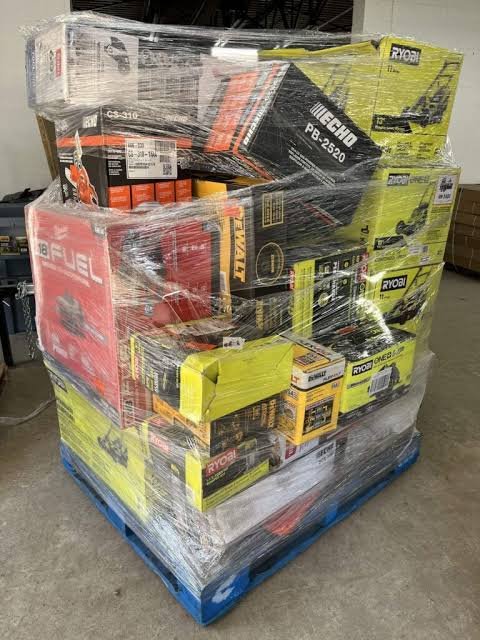
How to Buy Liquidation Pallets: Start With the Right Strategy
Learning how to buy liquidation pallets is an important first step for anyone interested in building a profitable resale business. Liquidation pallets can provide access to customer returns, overstock merchandise, shelf pulls, excess inventory, and other products at wholesale prices. However, successful pallet buying is about much more than finding the lowest price. You need to understand the merchandise, evaluate its condition, calculate your total costs, and determine whether the products have enough resale demand to make the purchase worthwhile.
For retailers, wholesalers, online sellers, and new entrepreneurs, knowing how to buy liquidation pallets can open the door to a wide variety of inventory opportunities. A single pallet can contain numerous products across categories such as electronics, household goods, apparel, tools, toys, appliances, beauty products, and general merchandise. The exact contents depend on the type of liquidation inventory and the supplier, which makes research particularly important before placing an order.
What Are Liquidation Pallets?
Liquidation pallets are bulk quantities of merchandise that are being sold through liquidation channels rather than traditional retail distribution. The inventory can originate from retailers, manufacturers, distributors, warehouses, or other businesses that need to move excess merchandise.
Common types of liquidation inventory include customer returns, overstock, shelf pulls, discontinued products, seasonal merchandise, and excess stock. The condition of the merchandise can vary significantly. Some pallets may contain brand-new products in their original packaging, while others may include opened, used, damaged, incomplete, or untested items.
This variation is one of the reasons why understanding how to buy liquidation pallets is so important. The purchase price alone does not determine whether a pallet represents a good opportunity. You need to consider what you are actually receiving and how much work will be required before the merchandise can be sold.
Why Buy Liquidation Pallets?
The primary attraction of liquidation pallets is the opportunity to acquire inventory at competitive wholesale prices. Instead of purchasing individual products at standard wholesale or retail rates, businesses can purchase merchandise in bulk and then sort it for resale.
Liquidation inventory can also provide variety. Depending on the pallet, you may discover multiple brands, product categories, sizes, models, and price points. This can help retailers expand their product selection without committing to large quantities of a single product.
- Access to bulk wholesale merchandise
- Potentially lower inventory acquisition costs
- Wide variety of product categories
- Opportunities for online and local resale
- Potential access to well-known brands
- Flexible inventory options for growing businesses
Know What You Want to Sell Before You Buy
One of the most useful principles when learning how to buy liquidation pallets is to choose inventory based on your existing customers and sales channels. Do not purchase a pallet simply because the advertised price appears attractive.
For example, an online seller specializing in electronics may benefit from electronics liquidation inventory, while a discount retailer may prefer general merchandise containing several different product categories. Matching the inventory to your customer base can make it easier to sell products and reduce the amount of merchandise sitting in storage.
Before purchasing, ask yourself what types of products your customers already purchase, which sales channels you will use, how much storage space you have available, and how much time you can dedicate to inspecting and listing inventory.
Start With a Realistic Budget
Your liquidation budget should include more than the advertised pallet price. Shipping, taxes, storage, repairs, cleaning, packaging, marketplace fees, and other expenses can all affect your final investment.
For example, a pallet advertised at $1,500 may require several hundred dollars in freight and additional preparation costs. Understanding your complete investment before purchasing will help you establish a more realistic estimate of potential profitability.
If you’re ready to explore available wholesale inventory, visit our Shop to browse current liquidation products and bulk merchandise.
Understanding how to buy liquidation pallets starts with choosing the right inventory, setting a realistic budget, and knowing what you plan to do with the merchandise after it arrives.
How to Buy Liquidation Pallets From the Right Supplier
One of the most important steps in learning how to buy liquidation pallets is knowing how to evaluate the supplier before placing an order. The supplier you choose can have a major effect on the quality of the merchandise, the accuracy of the inventory information, shipping arrangements, and your overall buying experience. A low price is not necessarily a good deal if the inventory description is unclear or the supplier cannot provide sufficient information about the merchandise.
Research the Supplier Before Purchasing
Before buying a liquidation pallet, take time to research the company offering the inventory. Look for clear business information, contact details, product descriptions, purchasing terms, and information about shipping or pickup. A professional supplier should make it reasonably clear what type of merchandise is being offered and what buyers can expect from the transaction.
When researching how to buy liquidation pallets, it is also useful to compare several suppliers rather than immediately choosing the first offer you find. Compare product categories, inventory conditions, pricing structures, shipping options, and available information. This can help you identify which opportunities are most suitable for your business.
Understand the Inventory Description
Never assume that every liquidation pallet contains brand-new merchandise. Read the inventory description carefully and identify whether the products consist of customer returns, overstock, shelf pulls, open-box items, or another type of liquidation inventory.
Condition can have a major effect on your processing costs and resale potential. A pallet containing primarily new overstock merchandise may require less preparation than a pallet containing customer returns that need inspection and testing.
If a supplier provides a manifest, review it carefully. A manifest can provide useful information about the products and quantities included in a particular load. However, buyers should still review the supplier’s terms and understand what information the manifest actually represents before making purchasing decisions.
Ask Important Questions Before Buying
If important information is unclear, contact the supplier before placing an order. Asking questions in advance can help you understand the opportunity and avoid unnecessary surprises after the merchandise arrives.
- What type of inventory is included?
- What is the general condition of the merchandise?
- Is a manifest available?
- Are the products tested or untested?
- Are original boxes and accessories included?
- How is the pallet packaged for shipping?
- What shipping options are available?
- Are there additional fees beyond the listed price?
Compare Pallet Pricing Carefully
When learning how to buy liquidation pallets, it is important to compare prices based on the complete cost rather than the advertised pallet price alone. A pallet that appears cheaper may become more expensive after freight, handling, storage, and processing expenses are included.
Calculate your estimated total investment before deciding whether the pallet makes sense. If you are comparing two similar pallets, consider not only their prices but also the condition of the products, estimated quantities, potential resale demand, and transportation costs.
Check Shipping Before You Order
Shipping is often overlooked by new liquidation buyers. Pallets are large and heavy, which means freight costs can represent a significant portion of the total investment. Before placing an order, determine whether delivery is available to your location and whether the receiving address can accommodate pallet delivery.
You should also consider what happens when the merchandise arrives. Make sure you have sufficient space to unload, inspect, sort, and store the products. Having a plan before delivery can make the receiving process much easier.
Be Careful With Unrealistic Profit Claims
Another important part of understanding how to buy liquidation pallets is learning to evaluate profit claims carefully. An advertised retail value does not mean that you will automatically generate the same amount in sales.
Retail value, estimated resale value, and actual selling prices are different measurements. Market demand, product condition, competition, platform fees, shipping expenses, and customer preferences can all affect the final amount you receive.
Instead of focusing exclusively on a large estimated retail value, research realistic selling prices for comparable products and calculate your potential revenue conservatively.
Choose a Supplier That Matches Your Business
The best supplier for one reseller may not be the best supplier for another. Your ideal source depends on the categories you sell, your budget, storage capacity, processing capabilities, and preferred sales channels.
If you specialize in electronics, for example, you may want inventory that allows you to test and evaluate individual products. If you operate a discount store, mixed general merchandise may provide greater flexibility.
You can explore available liquidation and wholesale inventory through our Shop and compare products based on your business needs before making a purchasing decision.
Learning how to buy liquidation pallets successfully requires careful supplier research, clear understanding of inventory condition, realistic pricing calculations, and a plan for receiving and reselling the merchandise.
How to Evaluate the Value of a Liquidation Pallet Before Buying
Once you understand the supplier and inventory description, the next important step in learning how to buy liquidation pallets is determining whether the merchandise offers enough potential value to justify your investment. A pallet can look attractive because of its low purchase price or high estimated retail value, but experienced resellers look deeper before making a decision. They consider product condition, quantity, market demand, resale prices, processing costs, and the likelihood of selling the inventory within a reasonable period.
Calculate the Potential Resale Value
Start by identifying the products included in the pallet whenever sufficient information is available. If a manifest is provided, review the listed products and research their current market prices. Do not automatically use the original retail price as your expected selling price.
For example, a product that originally sold for $100 may currently sell for $60 because of competition, newer models, changing consumer preferences, or reduced demand. When learning how to buy liquidation pallets, using realistic current market prices will give you a more useful estimate than simply adding together the original retail prices.
Understand Product Condition
Product condition is one of the biggest factors affecting liquidation value. New, unopened merchandise may require relatively little preparation, while customer returns and open-box products may require inspection, testing, cleaning, repairs, or repackaging.
Ask yourself how much work will be required before the products are ready for customers. If you are purchasing electronics, for example, consider whether you have the equipment and knowledge necessary to test the devices. If you are purchasing apparel, determine whether you have the time to inspect sizes, tags, stains, damage, and packaging.
Estimate Your Total Investment
The pallet purchase price is only the beginning of your investment. To understand how to buy liquidation pallets profitably, calculate the complete cost associated with acquiring and reselling the merchandise.
| Cost Factor | What to Consider |
|---|---|
| Pallet Price | The advertised purchase price of the inventory |
| Shipping | Freight, delivery, and handling charges |
| Processing | Inspection, cleaning, testing, sorting, and repackaging |
| Repairs | Potential costs for damaged or defective products |
| Storage | Warehouse or other inventory storage expenses |
| Selling Fees | Marketplace, payment processing, and advertising expenses |
Adding these costs together gives you a more realistic estimate of your total investment. This is important because a pallet that looks profitable based on the purchase price alone may have much smaller margins after all associated expenses are included.
Research Product Demand
High potential resale value does not necessarily mean fast sales. A product can have a reasonable market price but still remain in your inventory for months if customer demand is weak.
Before purchasing, research whether customers are actively searching for the types of products included in the pallet. Look at current marketplace listings, comparable products, seasonal trends, and competing prices. Consider whether the merchandise is likely to remain desirable by the time you are ready to sell it.
For broader information about retail trends and consumer behavior, the National Retail Federation provides retail industry research and insights that can help businesses understand changes in the marketplace.
Consider the Sell-Through Rate
The sell-through rate refers to how quickly and consistently you are able to sell your inventory. When learning how to buy liquidation pallets, this is an important metric because your business needs to recover its investment and reinvest capital into new inventory.
A pallet containing products with strong demand may generate sales faster than one containing highly specialized or seasonal merchandise. Faster inventory turnover can help improve cash flow, reduce storage requirements, and allow you to purchase additional inventory sooner.
Don’t Assume Every Item Will Sell
A common mistake among new liquidation buyers is assuming that every item in a pallet will sell at the expected price. In reality, some products may sell quickly, some may require discounts, and others may take significantly longer to move.
Build a conservative estimate into your calculations. Consider the possibility of damaged, incomplete, slow-moving, or difficult-to-sell merchandise. A realistic calculation is more useful than an overly optimistic projection based on perfect sales conditions.
Use a Simple Profitability Formula
You can use a basic calculation to estimate the potential gross profit of a pallet:
Estimated Gross Profit = Expected Sales Revenue − Total Investment
For example, if you estimate that the merchandise could generate $4,000 in realistic sales and your total investment, including shipping and processing, is $2,500, the estimated gross profit before other business expenses would be approximately $1,500.
This is only an estimate, not a guarantee. Actual results can vary depending on product condition, market demand, selling prices, fees, returns, and inventory turnover.
Match the Pallet With Your Resale Strategy
The best liquidation pallet is one that fits your business. If you already have customers looking for household products, purchasing a household-focused pallet may make more sense than buying a random assortment of products simply because it is cheaper.
Think about where you will sell the inventory, how much you can afford to invest, how much storage space you have, and how quickly you expect to process the merchandise.
If you’re ready to explore available wholesale inventory, visit our Shop to see current liquidation products and bulk merchandise.
Knowing how to buy liquidation pallets means learning to evaluate the complete opportunity rather than focusing on one attractive number. By researching realistic resale prices, calculating total expenses, evaluating product condition, and considering customer demand, you can make more informed purchasing decisions.
How to Inspect and Prepare Liquidation Pallets for Resale
Knowing how to buy liquidation pallets is only one part of building a successful resale business. Once your pallet arrives, the way you receive, inspect, organize, and prepare the merchandise can have a major effect on your eventual results. A well-organized receiving process helps you identify valuable products, separate merchandise by condition, and determine which items are ready for immediate resale and which require additional attention.
Inspect the Pallet Immediately
When your liquidation pallet arrives, inspect the shipment before moving everything into long-term storage. Check the pallet, boxes, wrapping, and visible merchandise for signs of damage that may have occurred during transportation.
If your supplier or shipping company has specific procedures for reporting freight damage, follow those instructions carefully. Take photographs when appropriate and keep relevant shipping documentation. Proper documentation can be useful if you need to communicate with the carrier or supplier about a shipment issue.
Create an Inventory Receiving System
One of the smartest practices when learning how to buy liquidation pallets is to create a consistent system for receiving every shipment. Instead of immediately placing products throughout your warehouse, establish a dedicated area where incoming merchandise can be counted, inspected, and sorted.
Record important information such as the number of products received, product descriptions, condition, estimated selling price, and any issues discovered during inspection. A spreadsheet or inventory management system can make this process easier as your business grows.
Sort Products by Condition
After receiving the pallet, separate the merchandise according to condition. Your categories may vary depending on the products, but a basic system could include new, open-box, used, damaged, incomplete, and items requiring testing or repair.
| Condition | Recommended Action |
|---|---|
| New / Sealed | Inspect packaging and prepare for listing |
| Open Box | Check contents and verify functionality |
| Used | Inspect, clean, test, and accurately describe |
| Damaged | Evaluate repair costs and resale potential |
| Incomplete | Check whether missing components can be replaced |
| Untested | Test before assigning a final resale condition |
Test Products When Necessary
Testing is especially important for categories such as electronics, appliances, power tools, and other products with functional components. Do not describe an item as fully functional unless you have an appropriate basis for making that claim.
Testing can help you identify working products, products requiring repairs, and products that may be better suited for parts or alternative resale channels. This information also helps you create accurate product listings and reduce avoidable customer disputes.
Clean and Repackage Merchandise
Some liquidation products may need basic cleaning or repackaging before they are ready for customers. Remove unnecessary packaging materials, clean suitable surfaces, organize accessories, and ensure that product information is presented clearly.
However, avoid altering products in ways that could damage them or misrepresent their condition. Your goal should be to prepare merchandise for resale while accurately communicating its actual condition to potential customers.
Take Quality Product Photos
Good product photography can make a significant difference when selling liquidation inventory online. Take clear photographs that show the product from useful angles and highlight important features or imperfections.
If a product has scratches, dents, missing accessories, opened packaging, or other visible issues, photograph those details rather than hiding them. Transparent listings can help customers make informed purchasing decisions and may reduce unnecessary returns.
Write Accurate Product Descriptions
When learning how to buy liquidation pallets, remember that purchasing inventory is only the beginning. Your product descriptions should accurately communicate what customers are receiving.
Include relevant information such as brand, model, size, quantity, condition, included accessories, dimensions, and known defects. Avoid describing customer-return or open-box merchandise as brand new unless it genuinely meets the criteria for that condition.
Organize Inventory for Faster Fulfillment
Once products have been inspected and prepared, organize them so that you can locate them quickly when an order is received. Use shelves, bins, labels, product codes, or another system that works for the size of your operation.
Poor inventory organization can create unnecessary labor and make it difficult to determine what products remain available. An organized system can help you track stock levels and identify slow-moving products that may need additional marketing or price adjustments.
Set Realistic Resale Prices
Pricing liquidation merchandise requires a balance between profitability and market demand. Research comparable products and consider their condition before setting your price.
Do not automatically price every item based on its original retail value. Customers compare prices across multiple sellers, and competitive pricing can help products move more efficiently. Your goal should be to achieve a sustainable margin while keeping prices realistic for the current market.
Keep Track of Your Results
A good inventory tracking system should record not only what you purchased but also what you actually sold. Track purchase costs, processing expenses, selling prices, fees, discounts, and the time required to move products.
Over time, this information can show you which categories generate the strongest results. That data can then guide your future purchasing decisions and help you become more strategic about how to buy liquidation pallets.
If you are ready to explore available wholesale inventory, visit our Shop to browse current liquidation merchandise and bulk products.
Receiving and preparing a pallet correctly can turn a large shipment of mixed merchandise into organized, sellable inventory.
How to Buy Liquidation Pallets: Final Buyer Checklist
Learning how to buy liquidation pallets successfully requires a combination of research, financial planning, inventory evaluation, and a clear resale strategy. Whether you are purchasing your first pallet or expanding an established wholesale business, taking a few extra steps before placing an order can help you make more informed decisions and avoid unnecessary expenses.
Before purchasing your next pallet, use the following checklist to evaluate the opportunity from multiple angles:
- Identify the inventory type: Determine whether the pallet contains customer returns, overstock, shelf pulls, discontinued products, or another type of liquidation merchandise.
- Review the condition: Find out whether the products are new, open-box, used, tested, untested, damaged, or incomplete.
- Research the supplier: Review the available business information, inventory descriptions, purchasing terms, and shipping arrangements.
- Check the manifest: If a manifest is provided, review the listed products and quantities carefully before making your decision.
- Calculate total costs: Include the pallet price, freight, taxes, processing, storage, repairs, packaging, and selling fees.
- Research market prices: Look at realistic current selling prices instead of relying entirely on original retail values.
- Evaluate demand: Make sure the products are relevant to your customers and sales channels.
- Consider your storage space: Confirm that you have enough room to receive, sort, inspect, and store the merchandise.
- Plan your resale strategy: Decide whether you will sell through your website, online marketplaces, social media, a physical store, local sales channels, or wholesale customers.
- Protect your working capital: Never invest more than your business can comfortably afford to have tied up in inventory.
Common Mistakes New Liquidation Buyers Should Avoid
One of the biggest mistakes beginners make when learning how to buy liquidation pallets is focusing exclusively on the purchase price. A cheap pallet is not automatically a profitable pallet. The merchandise may require significant processing, have limited demand, or generate lower resale prices than expected.
Another mistake is assuming that every item will sell at its highest estimated value. Some products may sell quickly, while others may need discounts or remain in inventory for longer periods. Building conservative assumptions into your calculations can help you make better purchasing decisions.
New buyers should also avoid purchasing more inventory than they can realistically process. A large pallet may look attractive, but if your business does not have enough storage space, labor, or time to prepare the merchandise, the inventory can become difficult to manage.
Frequently Asked Questions About Buying Liquidation Pallets
Is buying liquidation pallets profitable?
Liquidation pallets can provide profitable opportunities, but profitability is never guaranteed. Your results depend on the acquisition cost, product condition, resale demand, selling prices, processing expenses, shipping costs, marketplace fees, and how quickly you can sell the inventory.
What should a beginner look for when buying a pallet?
Beginners should pay particular attention to product condition, inventory type, total acquisition cost, expected resale demand, storage requirements, and the amount of processing required. Starting with an inventory volume that matches your experience and available resources can make the process easier to manage.
Are liquidation pallets always customer returns?
No. Liquidation pallets can contain several types of inventory. Depending on the supplier, pallets may contain customer returns, overstock, shelf pulls, discontinued merchandise, seasonal inventory, excess stock, or combinations of different inventory sources.
Should I buy a manifested or unmanifested pallet?
A manifested pallet can provide more information about the expected contents, which may make it easier to evaluate the potential opportunity. An unmanifested pallet can offer greater uncertainty and may require a buyer to accept more risk. The appropriate choice depends on your experience, budget, risk tolerance, and sourcing strategy.
How much money do I need to start?
There is no single amount required to begin buying liquidation inventory. Your starting budget should account for the purchase price as well as shipping, processing, storage, packaging, and other business expenses. Start with an amount that you can comfortably invest without creating cash-flow problems.
Build a Smarter Liquidation Buying Strategy
Understanding how to buy liquidation pallets is not about finding the cheapest pallet available. It is about finding inventory that fits your business, customers, budget, processing capabilities, and resale channels. The most successful buyers approach liquidation inventory as a business investment and evaluate the complete opportunity before committing their money.
Research the supplier, understand the merchandise condition, calculate your total costs, investigate realistic resale prices, and create a plan for selling the inventory before it arrives. Once you receive the pallet, inspect and organize the merchandise carefully, create accurate listings, price products competitively, and track your results.
Over time, your sales data can become one of your most valuable sourcing tools. Tracking which categories sell quickly, which products generate the strongest margins, and which inventory takes longer to move can help you make increasingly informed purchasing decisions.
If you are ready to explore liquidation and wholesale inventory, visit our Shop to browse available products and bulk merchandise. Choosing inventory that matches your customers and resale strategy can help you build a more organized and sustainable resale operation.
Final Thoughts
Whether you are a first-time reseller, online retailer, wholesaler, or established liquidation buyer, knowing how to buy liquidation pallets can help you approach bulk inventory sourcing with greater confidence. Take time to research every opportunity, calculate the complete investment, and focus on realistic resale potential rather than attractive numbers alone.
There is no guaranteed formula for making every pallet profitable. However, disciplined sourcing, accurate evaluation, effective inventory management, and a strong understanding of your customers can significantly improve the quality of your purchasing decisions.
Ready to explore your next inventory opportunity? Visit our Shop today to discover liquidation products and wholesale merchandise available for retailers, resellers, and businesses looking to expand their inventory.