
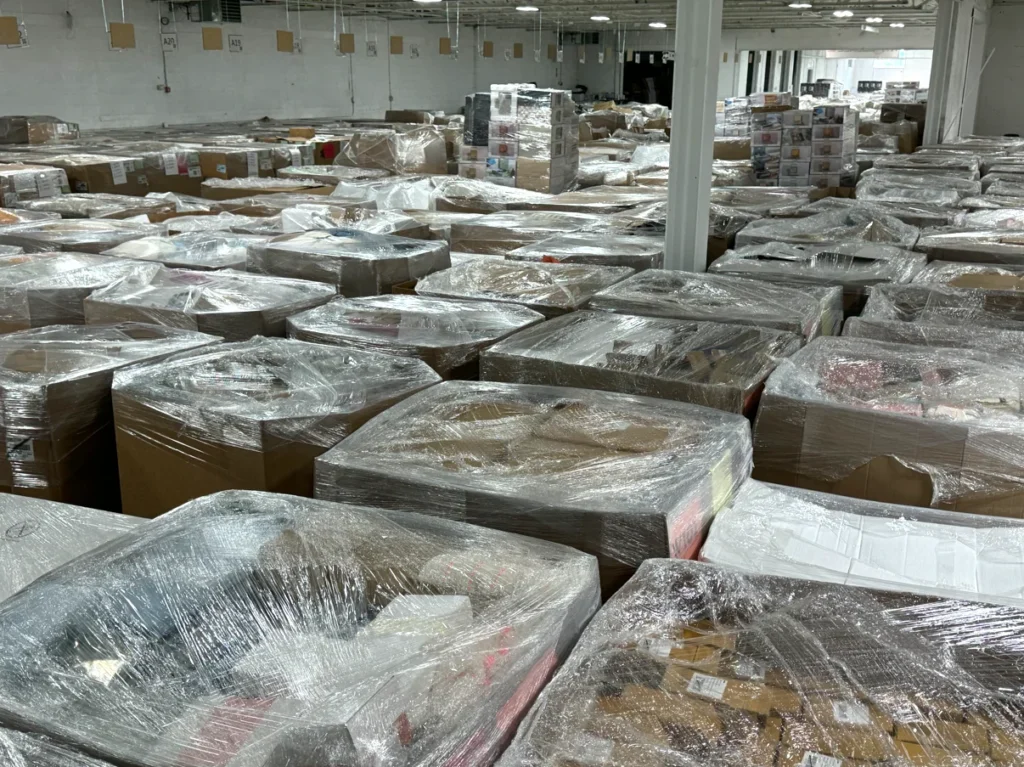
Liquidation Pallets for Resellers: A Smart Way to Source Wholesale Inventory
Starting or growing a resale business requires access to inventory at prices that leave enough room for a reasonable profit margin. For many entrepreneurs, liquidation pallets for resellers can provide an alternative way to source merchandise in bulk without purchasing every product individually at traditional wholesale prices.
Liquidation inventory can include products from different categories, conditions, brands, and retail channels. Depending on the particular load, resellers may find customer returns, overstock, shelf pulls, excess inventory, open-box merchandise, or other surplus products. Because every liquidation opportunity can be different, successful reselling requires careful research, realistic pricing, and proper inventory management.
For businesses interested in liquidation pallets for resellers, the goal should not simply be to find the cheapest pallet available. The better objective is to identify inventory that matches your customers, sales channels, storage capacity, and ability to process merchandise efficiently.
What Are Liquidation Pallets?
Liquidation pallets are bulk collections of merchandise sold together, often because the original retailer, distributor, or business needs to move inventory efficiently. The products may come from excess stock, customer returns, discontinued merchandise, seasonal inventory, or other sources of surplus goods.
This makes liquidation pallets for resellers particularly interesting because a single purchase can contain multiple products that can potentially be resold individually. Instead of purchasing one item at a time, a reseller can acquire a larger quantity and develop a complete inventory assortment.
However, liquidation inventory should not be treated as guaranteed profit. The actual condition, product mix, market demand, selling costs, and resale prices can all affect the final outcome of a purchase.
Why Are Liquidation Pallets Attractive to Resellers?
One of the biggest advantages of liquidation pallets for resellers is the potential to acquire merchandise in bulk. Buying multiple products through one transaction can simplify sourcing and provide a reseller with enough inventory to create several product listings or retail offers.
Bulk inventory can also provide opportunities for different selling strategies. A reseller may sell individual products, create bundles, offer quantity discounts, or distribute inventory across multiple sales channels depending on the merchandise received.
Another advantage is product variety. A pallet may contain several related products or a mixture of merchandise, allowing a business to test different categories and discover which products perform best with its customers.
Who Can Benefit From Liquidation Pallets?
Liquidation pallets for resellers can be useful for a variety of businesses. Online sellers, discount retailers, flea-market vendors, boutique owners, marketplace sellers, and established retail businesses can all use bulk inventory as part of their sourcing strategy.
New entrepreneurs may also use smaller liquidation purchases to learn how inventory sourcing works before committing to larger loads. Starting with manageable quantities can make it easier to understand product inspection, pricing, storage, fulfillment, and customer demand.
Experienced resellers can use liquidation inventory as an additional sourcing channel alongside traditional wholesale suppliers. The right approach depends on the business model, available capital, storage capacity, and sales volume.
Understand Product Condition Before You Buy
Condition is one of the most important factors to evaluate when considering liquidation pallets for resellers. Not all liquidation merchandise should be treated as brand-new inventory.
Depending on the source, products may be categorized as new, overstock, shelf pulls, open-box, customer returns, used, damaged, incomplete, or untested. These conditions can have a significant effect on resale value.
Before purchasing, carefully review the available information about the merchandise. If a manifest is provided, examine the listed products and quantities. If condition information is available, use it when calculating your expected resale value.
Never build your entire purchasing decision around an assumption that every item will sell at full retail price. A realistic assessment of condition can help you establish more accurate expectations.
Research Your Market Before Buying
Market research should happen before you purchase liquidation pallets for resellers, not after the merchandise arrives. Research the types of products your customers are already buying and compare current selling prices for similar items.
Look at factors such as product demand, competition, average selling prices, seasonality, shipping costs, and the number of competing sellers. This can help you determine whether a particular pallet fits your business.
The U.S. Small Business Administration’s market research and competitive analysis guide also emphasizes the importance of understanding customers and competitors when planning a business. :contentReference[oaicite:1]{index=1}
Calculate the Complete Cost of Your Pallet
A common mistake when evaluating liquidation pallets for resellers is looking only at the advertised pallet price. Your actual investment may include several additional expenses.
Consider costs such as:
- Pallet purchase price
- Freight and transportation
- Loading and unloading
- Warehouse or storage costs
- Cleaning supplies
- Testing equipment
- Repairs and replacement parts
- Packaging materials
- Marketplace fees
- Payment processing fees
- Advertising and marketing
Calculating these costs before purchasing can give you a more realistic understanding of your potential profit. A pallet that looks inexpensive at first may become considerably more expensive after freight, processing, storage, and selling expenses are included.
Choose Liquidation Inventory That Matches Your Business
The best liquidation pallets for resellers are not necessarily the pallets with the highest advertised retail value. Instead, look for inventory that matches what you already know how to sell.
If your business specializes in electronics, for example, you may already have customers, testing procedures, and sales channels for electronic products. If you specialize in clothing, apparel pallets may fit your operation better because you understand sizing, presentation, seasonal demand, and customer preferences.
Choosing familiar categories can reduce the learning curve and make it easier to process inventory efficiently.
Start Small and Learn Before Scaling
If you are new to liquidation pallets for resellers, avoid immediately committing large amounts of capital to inventory you have never handled before. A smaller purchase can provide valuable experience without creating excessive financial or storage pressure.
Use your first purchases to learn how to inspect merchandise, calculate costs, determine resale prices, photograph products, write listings, handle customer orders, and manage unsold inventory.
Once you understand your sales performance and have reliable systems in place, you can evaluate whether purchasing larger pallets or truckloads makes sense for your business.
Shop Wholesale and Liquidation Inventory
If you are ready to explore available merchandise, you can visit the Elite Pallet Liquidators Shop to review current wholesale and liquidation inventory.
Before purchasing any inventory, compare the available merchandise with your target market, storage capacity, budget, and resale strategy. A disciplined sourcing process can help you make better decisions and build a more sustainable resale operation.
How to Evaluate Liquidation Pallets for Resellers Before Buying
Choosing the right inventory is one of the most important steps when working with liquidation pallets for resellers. A low purchase price can look attractive, but the real value of a pallet depends on what is inside, the condition of the merchandise, current market demand, and the total cost required to turn the inventory into sales.
Before committing your money, take time to evaluate the opportunity from several different angles. A disciplined evaluation process can help you avoid purchasing merchandise that is difficult to sell, expensive to process, or unsuitable for your customers.
1. Review the Manifest Whenever One Is Available
A manifest can be one of the most useful resources when evaluating liquidation pallets for resellers. Depending on the supplier and inventory type, a manifest may provide information such as product names, quantities, brands, model numbers, retail prices, or other identifying details.
Do not assume that a manifest automatically guarantees the condition or resale value of every product. Instead, use it as a starting point for research. Search several of the listed products and compare their current selling prices across relevant marketplaces and retail channels.
If the manifest contains a large number of products, focus first on the highest-value or most important items. This can give you a better understanding of the overall inventory before you make a purchasing decision.
2. Understand the Condition of the Merchandise
Condition is critical when evaluating liquidation pallets for resellers. A pallet containing new, sealed merchandise should generally be evaluated differently from a pallet containing customer returns, open-box products, used merchandise, or untested items.
Ask what condition categories apply to the inventory. If products are customer returns, determine whether they have been inspected or tested. If the merchandise is described as untested, factor the possibility of defective or incomplete products into your calculations.
Remember that the condition of the merchandise can influence both the selling price and the amount of labor required before the products are ready for customers.
3. Research Current Resale Prices
When evaluating liquidation pallets for resellers, avoid basing your calculations entirely on original retail prices. A product that originally sold for $200 may have a much lower current market price because newer models, changing consumer preferences, or increased competition can affect demand.
Research current prices for comparable products instead. Look at actual marketplace listings, completed sales when available, and competing retailers. Pay attention to whether products are new, used, refurbished, open-box, or customer returns because these conditions can produce significantly different selling prices.
Current market research gives you a more realistic foundation for estimating potential revenue.
4. Calculate Your Landed Cost
The purchase price is only one component of your investment. When evaluating liquidation pallets for resellers, calculate the landed cost—the amount it takes to get the inventory into a condition and location where you can actually sell it.
Your calculation may include:
- Pallet purchase price
- Freight charges
- Transportation from the delivery point
- Warehouse or storage costs
- Unloading expenses
- Inspection and testing labor
- Cleaning or repair costs
- Packaging supplies
- Marketplace and payment fees
- Advertising expenses
For example, a pallet purchased for $1,200 could require another $300 in transportation and processing expenses. Your effective investment would therefore be $1,500 rather than simply $1,200.
5. Estimate a Realistic Recovery Rate
Not every unit in a liquidation pallet will necessarily produce the same return. Some products may sell quickly, some may require discounts, and others may be unsuitable for resale.
When evaluating liquidation pallets for resellers, estimate how much of the inventory you realistically expect to sell. Consider creating three categories: products you expect to sell at a strong price, products you expect to sell at a discount, and products that may require additional processing or may not be economically worthwhile to resell.
This approach is more conservative than assuming every item will sell at its highest possible price.
6. Consider the Cost of Your Time
Your time has value. A pallet containing hundreds of individual products may require significant hours for inspection, cleaning, testing, photographing, listing, packaging, and fulfillment.
When evaluating liquidation pallets for resellers, consider how much labor will be required before the merchandise becomes sale-ready. A pallet that looks highly profitable on paper may become less attractive if every item requires extensive testing or repair.
Simple inventory that can be quickly inspected and listed may sometimes be more practical than merchandise requiring specialized knowledge or extensive preparation.
7. Check Product Demand
Demand is another major factor. High-value merchandise is not necessarily profitable if customers are not actively searching for it.
Before purchasing liquidation pallets for resellers, investigate whether the products have consistent demand. Consider seasonality, product age, brand recognition, customer reviews, competing products, and current consumer preferences.
Inventory management guidance from Shopify emphasizes the importance of using sales data to understand inventory patterns and forecast future demand. :contentReference[oaicite:0]{index=0}
8. Think About Storage Requirements
Storage is easy to overlook when evaluating liquidation pallets for resellers. A pallet may occupy more space than expected once it arrives and is unpacked.
Consider where you will store the products, how they will be organized, and how quickly you expect them to sell. Electronics may require secure storage, clothing needs organized shelving or racks, and large merchandise may require considerably more floor space.
Do not purchase more inventory than your current operation can comfortably receive, organize, and sell.
9. Evaluate Your Sales Channels
Your sales channels should influence which liquidation pallets for resellers you purchase. If you sell primarily through an online store, consider products that are easy to photograph, describe, package, and ship.
If you operate a physical discount store, larger or heavier products may be easier to sell because customers can inspect them and arrange local transportation.
You can also distribute inventory across several appropriate channels. Multiple channels can increase your potential customer reach, but they also require accurate inventory tracking to prevent overselling.
10. Watch for Slow-Moving Inventory
One of the biggest risks associated with liquidation pallets for resellers is accumulating inventory that does not sell. Slow-moving products tie up money and consume storage space that could otherwise be used for faster-moving merchandise.
Shopify’s current inventory guidance notes that unsold inventory can tie up working capital and storage capacity, making regular inventory reviews important. :contentReference[oaicite:1]{index=1}
Before buying a pallet, ask yourself whether you have a realistic plan for moving the inventory if it does not sell quickly.
11. Compare Different Pallet Opportunities
Do not purchase the first pallet you find. Compare multiple liquidation pallets for resellers based on purchase price, merchandise condition, estimated quantity, product categories, freight costs, and potential demand.
Creating a simple comparison sheet can help you make more objective decisions. You can assign each opportunity a projected acquisition cost, estimated revenue, expected processing expenses, and potential profit range.
This makes it easier to identify opportunities that provide a reasonable balance between risk and potential return.
12. Know Your Maximum Purchase Price
Before negotiating or purchasing liquidation pallets for resellers, establish the maximum amount you are willing to spend. This number should be based on your realistic revenue estimate and complete costs rather than excitement about the advertised retail value.
Having a predetermined maximum can help prevent emotional purchasing. If the price exceeds your calculated limit, be prepared to walk away and wait for another opportunity.
13. Verify the Seller and Inventory Information
Research the seller before committing significant capital. Look for clear business information, transparent inventory descriptions, purchasing terms, shipping information, and a clearly defined process for addressing problems.
Ask questions when important information is missing. A professional supplier should be able to explain what is included in the load and what buyers should reasonably expect.
Do not hesitate to request additional information when the purchase involves a substantial amount of money.
Make the Numbers Work Before You Buy
The most important principle when evaluating liquidation pallets for resellers is simple: make the numbers work before the inventory arrives.
Estimate your realistic sales revenue, subtract the complete acquisition and operating costs, and consider how long it may take to convert the inventory back into cash.
Inventory liquidation can help businesses convert surplus merchandise into cash and free storage capacity, but the same principles matter to resellers purchasing liquidation inventory: the economics depend on the actual merchandise, costs, demand, and selling strategy. :contentReference[oaicite:2]{index=2}
A careful evaluation process will not eliminate every risk, but it can help you identify problems earlier and make purchasing decisions based on evidence rather than assumptions.
How to Calculate Profit From Liquidation Pallets for Resellers
Buying inventory is only the beginning of a resale business. The real objective is to turn that inventory into revenue while controlling the costs required to acquire, process, store, market, and sell it. For anyone purchasing liquidation pallets for resellers, understanding the numbers before buying is essential for protecting profit margins and maintaining healthy cash flow.
A pallet may appear to offer an excellent deal based on its advertised retail value, but potential retail value is not the same as actual profit. Your results depend on what the merchandise can realistically sell for, how quickly it sells, and how much you spend getting each product ready for the customer.
Start With Your Total Investment
The first step when evaluating liquidation pallets for resellers is calculating your total investment. Do not stop at the price shown by the supplier.
Your total investment can include:
- Purchase price of the pallet
- Freight and delivery charges
- Transportation expenses
- Storage costs
- Inspection and testing costs
- Cleaning and repair expenses
- Packaging materials
- Marketplace fees
- Payment processing fees
- Advertising expenses
- Labor costs
The U.S. Small Business Administration’s guide to calculating business costs recommends identifying expenses and estimating their costs before making financial decisions. Inventory is one of the expenses businesses should account for when developing a complete financial picture. :contentReference[oaicite:0]{index=0}
Example of a Simple Pallet Profit Calculation
Suppose you purchase a pallet for $1,500 and spend another $300 on freight. You then spend $100 on packaging, cleaning, testing, and other preparation costs.
Your initial investment would be:
- Pallet: $1,500
- Freight: $300
- Processing expenses: $100
- Total investment: $1,900
Now imagine you realistically sell the merchandise for $3,200 in total revenue. If additional selling fees and other expenses amount to $400, your estimated profit before other business overhead would be approximately $900.
This example demonstrates why resellers should calculate the complete economics of liquidation pallets for resellers instead of comparing only the purchase price with the advertised retail value.
Do Not Assume Every Item Will Sell at Full Price
One of the most common mistakes new resellers make is assuming that every product in a pallet will sell for its highest possible price. This can produce unrealistic revenue projections.
When working with liquidation pallets for resellers, divide your inventory into realistic categories. Some products may sell close to your target price, some may require discounts, and some may need additional work before they can be sold.
You may also encounter products that are incomplete, damaged, obsolete, or simply difficult to sell. Building a reasonable allowance for these possibilities into your calculations can make your projections more conservative and useful.
Understand Gross Profit and Net Profit
Gross profit and net profit are not the same thing. Gross profit generally considers the revenue generated from products against their direct cost, while net profit considers additional operating expenses.
For liquidation pallets for resellers, a simple gross-profit calculation might look like this:
Gross Profit = Sales Revenue − Cost of Inventory
However, your actual business result can be affected by shipping, storage, advertising, marketplace commissions, labor, software, taxes, and other expenses.
That is why a pallet that appears profitable from a simple purchase-price calculation may produce a much smaller final profit once every expense is considered.
Calculate Your Break-Even Point
Your break-even point is another important number to understand before purchasing liquidation pallets for resellers. Break-even occurs when your revenue covers your relevant costs without producing a profit or loss.
For example, if your complete investment in a pallet is $2,000, you need to generate at least $2,000 in contribution toward those costs before you begin generating profit from the transaction.
The SBA provides a break-even analysis resource that can help business owners understand the relationship between costs, revenue, and profitability. :contentReference[oaicite:1]{index=1}
Watch Your Inventory Turnover
Profit is important, but the speed at which inventory converts into cash also matters. A pallet that produces a profit after six months may create different business challenges than inventory that generates a similar profit within a few weeks.
Inventory turnover measures how efficiently stock is sold and replaced. Shopify explains that inventory turnover can help businesses make better decisions around pricing, purchasing, and inventory management. :contentReference[oaicite:2]{index=2}
For resellers, this means you should consider both how much profit an item can generate and how quickly it is likely to sell.
Why Cash Flow Matters
Cash flow can become a major challenge when purchasing liquidation pallets for resellers. Your money becomes tied up in inventory until the products are sold.
Imagine spending $5,000 on several pallets while only selling $1,000 worth of merchandise during the first month. You may have valuable inventory, but a large portion of your cash is no longer available for new purchases, marketing, operating expenses, or unexpected costs.
This is why resellers should avoid putting too much available capital into inventory that may take a long time to sell.
Control Your Inventory Carrying Costs
Inventory can cost money even when it is sitting untouched. Storage, insurance, capital tied up in stock, damage, depreciation, and product obsolescence can all affect the economics of inventory ownership.
Shopify’s 2026 guide to inventory costs explains that inventory expenses extend beyond the purchase price and can include ordering, holding, storage, capital, and other inventory-related costs. :contentReference[oaicite:3]{index=3}
For liquidation pallets for resellers, this makes inventory turnover particularly important. Moving merchandise efficiently can help reduce the amount of capital and storage capacity tied up in slow-moving products.
Use Discounts Strategically
Not every product needs to be sold at the same price. If certain items are moving slowly, consider appropriate discounts, bundles, quantity offers, or promotional campaigns.
For example, if three related products are individually difficult to sell, creating a bundle may make the overall offer more attractive. You can also use seasonal promotions to move inventory when customer demand is higher.
The objective is not simply to obtain the highest possible price for every unit. It is to find a practical balance between selling price, profit margin, customer demand, and inventory turnover.
Track Every Pallet Separately
Keeping separate records for each purchase can make it easier to determine which liquidation pallets for resellers are actually producing good results.
Record information such as:
- Purchase date
- Supplier
- Pallet cost
- Freight cost
- Number of units received
- Number of sellable units
- Total sales revenue
- Additional expenses
- Remaining inventory
- Estimated profit
Over time, these records can reveal which categories, suppliers, and inventory types provide the best results for your business.
Know When to Reinvest
Successful resellers should avoid automatically spending every dollar of revenue on new inventory. Keep enough cash available for operating expenses, unexpected costs, marketing, and future opportunities.
Once you have established reliable sales data, you can gradually increase the amount you invest in liquidation pallets for resellers. Scaling based on actual performance is generally more informative than increasing purchasing volume simply because a previous pallet appeared profitable.
Build a Repeatable Profit Strategy
The strongest resale businesses develop a repeatable process. They know which products their customers want, how much they can afford to pay, what their typical selling costs are, and how quickly their inventory moves.
For liquidation pallets for resellers, this process can turn inventory sourcing from guesswork into a measurable business activity. Each purchase gives you additional data that can improve your next purchasing decision.
Before buying your next pallet, calculate your expected investment, realistic revenue, additional expenses, potential profit, and expected selling timeframe. If the numbers make sense and the inventory fits your business, the opportunity may be worth pursuing.
How to Sell Liquidation Pallets for Resellers Successfully
Finding profitable inventory is only half of the resale process. Once you purchase liquidation pallets for resellers, you need an effective strategy for inspecting, presenting, pricing, marketing, and selling the merchandise. A strong selling process can help you turn bulk inventory into revenue while reducing the amount of time products remain in storage.
The best approach depends on the products you receive, your target customers, your sales channels, and your available resources. Whether you sell through an online store, marketplace, social media, or a physical retail location, professional presentation and accurate product information can make your inventory easier for customers to evaluate.
Prepare Your Inventory Before Listing It
Before listing liquidation pallets for resellers, inspect and organize the merchandise. Separate products according to condition, category, brand, size, model, color, or other characteristics that matter to your customers.
Test products when appropriate and identify merchandise that requires cleaning, minor repairs, repackaging, or additional preparation. Products that are ready for sale should be separated from items that require further work.
This process can prevent inaccurate listings and make order fulfillment more efficient. It also gives you a clearer picture of how much of the pallet is genuinely ready for resale.
Create Accurate Product Listings
Detailed product listings are particularly important when selling liquidation pallets for resellers. Customers need enough information to understand exactly what they are purchasing.
Include relevant information such as:
- Product name
- Brand and model when applicable
- Product condition
- Size or dimensions
- Color or variation
- Included accessories
- Quantity
- Important product specifications
- Known defects or imperfections
- Shipping information
Google’s Merchant Center guidance recommends accurate and comprehensive product information and stresses that product data should match the information presented on the product landing page. :contentReference[oaicite:0]{index=0}
Use High-Quality Product Photography
Good photography can make a significant difference when selling liquidation pallets for resellers. Customers cannot physically inspect most online products, so your images need to communicate the condition and appearance of the merchandise clearly.
Photograph products from multiple angles and show important details such as labels, model numbers, sizes, packaging, accessories, and visible imperfections. For used or returned merchandise, showing the actual condition can help establish realistic customer expectations.
Google recommends using high-quality images and avoiding placeholder images or images containing promotional messages and logos. :contentReference[oaicite:1]{index=1}
Write Titles That Customers Can Understand
Your product title should identify the merchandise clearly instead of trying to include every possible search phrase. When selling liquidation pallets for resellers, put the most important product information near the beginning of your title.
For example, instead of using a vague title such as “Great Wholesale Product,” use a descriptive title that identifies the actual merchandise, brand, model, size, or other important attributes when available.
Google specifically recommends placing important product details toward the beginning of product titles because titles can be truncated in some formats. :contentReference[oaicite:2]{index=2}
Price Based on the Current Market
Pricing is one of the most important decisions when selling inventory from liquidation pallets for resellers. Avoid choosing your price solely because a product originally had a high retail value.
Instead, research comparable products and consider their current market prices, condition, brand, demand, shipping costs, and competition. Your objective should be to establish a price that gives you a reasonable margin while remaining attractive to potential buyers.
If a product has been sitting in inventory for an extended period, consider whether a price adjustment, promotion, or bundle could improve its chances of selling.
Use Multiple Sales Channels
One advantage of buying liquidation pallets for resellers is that you may be able to distribute different products through different sales channels.
For example, an online store can be used for your primary catalog, while appropriate marketplaces can provide access to additional customers. Social media can also support product discovery and promotional campaigns.
However, managing multiple channels requires accurate inventory tracking. If the same product is listed in several places, make sure stock quantities are updated promptly to reduce the risk of accepting orders for products that are no longer available.
Build Your Own Online Store
Your own e-commerce website can provide greater control over your product presentation, customer experience, branding, and inventory organization. If you are selling liquidation pallets for resellers or individual products sourced from liquidation inventory, organize your catalog into logical categories that make browsing simple.
Make sure product pages contain accurate descriptions, clear images, current pricing, and relevant information. Google notes that product pages should provide comprehensive and accurate information to help customers make informed purchasing decisions. :contentReference[oaicite:3]{index=3}
You can visit the Elite Pallet Liquidators Shop to explore the type of wholesale and liquidation inventory available for resale.
Use Bundles to Move Related Products
Bundling can be useful when individual products have limited demand but work well together. Instead of selling every item separately, consider creating logical product bundles where appropriate.
For example, complementary accessories can potentially be packaged together, while related apparel items can be presented as coordinated offers. Bundles can increase the perceived value of an offer and may help reduce the number of individual listings you need to manage.
Always make sure the bundle description clearly identifies everything included so customers know exactly what they will receive.
Use Promotions Carefully
Promotions can help attract attention to liquidation pallets for resellers inventory, especially when you need to improve inventory turnover. Possible strategies include percentage discounts, quantity offers, limited-time promotions, clearance pricing, or discounts on selected slow-moving products.
However, avoid discounting everything immediately. First determine whether a product has sufficient demand at its normal price. Strategic promotions are generally more useful when they are connected to a specific inventory or sales objective.
Make Shipping Part of Your Pricing Strategy
Shipping costs can significantly influence whether a customer completes a purchase. This is particularly important when selling larger or heavier products sourced from liquidation pallets for resellers.
Before publishing a price, understand your expected shipping expense and determine how it affects your margin. You can then decide whether to charge shipping separately, incorporate some shipping cost into your product price, or use another shipping strategy that fits your business.
Make sure the shipping information displayed to customers matches your actual checkout and fulfillment process. Accurate pricing and availability information are also important for maintaining reliable product data on Google. :contentReference[oaicite:4]{index=4}
Track Which Products Sell Fastest
Do not rely on assumptions when deciding which liquidation pallets for resellers to purchase next. Use your actual sales data.
Track which products receive the most views, inquiries, orders, repeat purchases, and positive customer responses. Also identify products that remain unsold for long periods.
This information can help you determine which inventory categories deserve more attention and which ones may no longer fit your business strategy.
Improve Listings Based on Performance
If a product receives many views but few purchases, examine the listing carefully. The problem could be pricing, product presentation, insufficient information, shipping costs, or weak photography.
If a product receives very little traffic, consider whether the title, category, product information, or marketing strategy needs improvement. Google Merchant Center provides tools for reviewing product visibility, status, prices, images, and other product information. :contentReference[oaicite:5]{index=5}
Making small improvements based on real performance data can be more effective than changing everything at once.
Keep Your Customer Service Professional
Customer service is another important part of successfully selling liquidation pallets for resellers inventory. Respond to questions clearly, provide accurate information, and communicate honestly about product condition.
Do not hide known defects or exaggerate the condition of merchandise. Accurate descriptions can reduce misunderstandings, returns, disputes, and negative reviews.
Turn One Pallet Into Long-Term Business Data
Every liquidation pallets for resellers purchase can provide useful information for your next sourcing decision. Record what you purchased, what sold, what remained unsold, how much you spent processing the merchandise, and how much revenue the inventory generated.
Over time, this information can help you identify profitable categories, realistic margins, preferred product conditions, and reliable sales channels.
The goal is not simply to sell one successful pallet. The goal is to build a repeatable sourcing and selling system that becomes more efficient as your business grows.
Build a Smarter Reselling Strategy
Successful resale businesses combine careful sourcing with effective selling. When you purchase liquidation pallets for resellers, take the time to inspect the merchandise, create accurate listings, use professional photography, research prices, manage multiple sales channels, and monitor your results.
These practices can help you turn bulk inventory into organized retail opportunities while giving you better information for future purchases.
Build a Profitable Business With Liquidation Pallets for Resellers
Buying inventory is only one part of building a successful resale business. The long-term objective is to create a repeatable system for sourcing, evaluating, pricing, marketing, and selling merchandise. For entrepreneurs using liquidation pallets for resellers, a disciplined approach can help turn individual inventory purchases into a sustainable business model.
The most successful resellers do not depend entirely on luck. They learn from every purchase, track their numbers, understand their customers, and continuously improve the way they manage inventory.
Create a Clear Purchasing Strategy
Before purchasing liquidation pallets for resellers, establish clear criteria for the merchandise you want to buy. Consider product category, condition, expected demand, average selling price, storage requirements, and your available budget.
Having a purchasing strategy helps prevent emotional buying. Instead of purchasing a pallet simply because the advertised retail value looks impressive, evaluate whether the inventory actually fits your business.
You should also establish a maximum amount you are prepared to spend. If the total cost exceeds your predetermined limit, it may be better to wait for another opportunity.
Develop a Reliable Inventory System
Once your liquidation pallets for resellers arrive, organize the merchandise immediately. Record the number of units received, condition, product category, estimated selling price, and any defects or missing components.
Assigning inventory codes or storage locations can make it easier to find products when orders arrive. A simple spreadsheet can be sufficient when starting, while larger operations may benefit from dedicated inventory-management software.
The important thing is consistency. You should always know what you have, where it is stored, how much it cost, and whether it is available for sale.
Know Your Best-Selling Categories
Not every category will perform equally well. One of the benefits of working with liquidation pallets for resellers is that every purchase can provide additional information about your customers.
Track which categories produce the strongest combination of sales volume, profit margin, and inventory turnover. You may discover that certain products consistently sell faster than others.
Once you identify these patterns, you can focus more of your purchasing budget on inventory that fits your proven customer demand.
Do Not Ignore Slow-Moving Inventory
Slow-moving inventory can consume valuable storage space and tie up working capital. If products from your liquidation pallets for resellers are not selling, investigate the reason instead of allowing them to remain untouched indefinitely.
Review the product title, photographs, description, price, shipping costs, and sales channel. Sometimes a small change can improve performance.
If the merchandise still does not sell, consider a strategic discount, bundle, clearance promotion, or another appropriate sales strategy. Recovering part of your investment may be better than allowing inventory to occupy valuable space indefinitely.
Protect Your Cash Flow
Cash flow should remain a priority as your resale business grows. It can be tempting to reinvest every dollar of revenue into additional liquidation pallets for resellers, but doing so can leave your business without enough cash for operating expenses and unexpected costs.
Maintain a reasonable cash reserve and determine how much capital you can safely allocate to new inventory. Your purchasing budget should reflect actual sales performance rather than optimistic projections.
A business with valuable inventory but no available cash can still experience serious financial pressure. Balancing inventory investment with available working capital is therefore essential.
Build Trust With Your Customers
Transparency is especially important when selling liquidation merchandise. Clearly communicate whether products are new, open-box, customer returns, used, refurbished, or otherwise subject to specific conditions.
When selling products sourced through liquidation pallets for resellers, never describe merchandise as brand-new if its actual condition does not support that claim.
Accurate descriptions, clear photographs, realistic expectations, and responsive customer service can help build trust and reduce avoidable disputes.
Optimize Your Online Product Pages
If you sell liquidation merchandise through an online store, make your product pages as complete and accurate as possible. Include relevant product specifications, pricing, availability, images, shipping information, and condition details.
Google’s current Merchant Center guidance recommends providing accurate, complete, and up-to-date product data and ensuring that product information matches the corresponding landing page. :contentReference[oaicite:0]{index=0}
Google also recommends high-quality product images and placing important product details near the beginning of titles. These practices can help customers understand the product more quickly. :contentReference[oaicite:1]{index=1}
Monitor Your Product Performance
Do not simply upload products and forget about them. Review your sales performance regularly. Look at product views, clicks, conversion rates, sales volume, revenue, and remaining inventory.
If you use Google Merchant Center, its Products section provides information such as visibility, approval status, price, availability, clicks, and other product details that can help you identify issues affecting your listings. :contentReference[oaicite:2]{index=2}
Use this information to determine which products deserve additional marketing and which listings need improvement.
Scale Gradually
Once your resale process becomes predictable, you can consider increasing your purchasing volume. Scaling should be based on evidence from your previous liquidation pallets for resellers purchases.
If you consistently understand your margins, inventory turnover, customer demand, and operating costs, larger purchases may become easier to evaluate. However, increasing inventory volume also increases your exposure to storage costs, unsold merchandise, and cash-flow pressure.
Scale at a pace your business can comfortably support rather than increasing inventory simply because a larger load appears attractive.
Consider Different Sales Channels
Using multiple sales channels can help resellers reach different customer groups. Depending on your products and business model, you may sell through your own e-commerce website, appropriate online marketplaces, social media, physical retail locations, local sales, or other suitable channels.
Each channel has different fees, customer expectations, shipping requirements, and policies. Choose channels that make sense for your products and make sure your inventory records remain synchronized.
Keep Learning From Every Purchase
Every shipment of liquidation pallets for resellers can teach you something valuable. Record what worked, what did not work, which products sold quickly, which products required discounts, and which expenses were higher than expected.
After several purchases, these records can become a valuable source of business intelligence. You may discover that certain categories consistently outperform others or that specific product conditions provide better margins.
Use those insights to improve your next purchasing decision.
Final Checklist Before Buying a Liquidation Pallet
Before committing your money to liquidation pallets for resellers, use this checklist:
- Research the supplier and available inventory.
- Review the manifest when one is available.
- Understand the merchandise condition.
- Research current market prices.
- Estimate realistic resale revenue.
- Calculate the complete landed cost.
- Consider freight and storage expenses.
- Estimate the amount of merchandise that may actually sell.
- Consider testing, cleaning, repair, and labor requirements.
- Confirm that the products match your target customers.
- Check whether you have sufficient storage capacity.
- Determine your maximum purchase price.
- Have a plan for slow-moving inventory.
- Protect enough cash for operating expenses.
- Choose appropriate sales channels before the inventory arrives.
Start Building Your Reselling Business
Liquidation pallets for resellers can provide businesses with an opportunity to source merchandise in bulk and develop a diverse product catalog. However, successful reselling depends on much more than finding inexpensive inventory.
You need to understand your market, evaluate product condition, calculate your complete costs, price merchandise realistically, create accurate listings, manage inventory efficiently, and continuously analyze your results.
The businesses that approach liquidation inventory strategically are better positioned to make informed purchasing decisions. Instead of treating every pallet as a guaranteed opportunity, evaluate each purchase according to its actual numbers and how well the merchandise fits your business.
Explore Wholesale and Liquidation Inventory
If you are ready to explore inventory opportunities, visit the Elite Pallet Liquidators Shop to browse available wholesale and liquidation products.
Whether you are an experienced retailer or building a resale business, take the time to research each opportunity before purchasing. Compare products, calculate your costs, understand your customers, and choose inventory that fits your strategy.
Conclusion
Building a successful resale business requires patience, accurate calculations, effective inventory management, and continuous learning. Liquidation pallets for resellers can become a valuable sourcing method when purchases are approached with realistic expectations and careful financial planning.
Start with manageable purchases, track your results, learn from your customers, and reinvest based on proven performance. Over time, this process can help you build a more efficient and sustainable wholesale and liquidation resale operation.
For more wholesale opportunities, explore Elite Pallet Liquidators and find inventory that fits your business goals.