
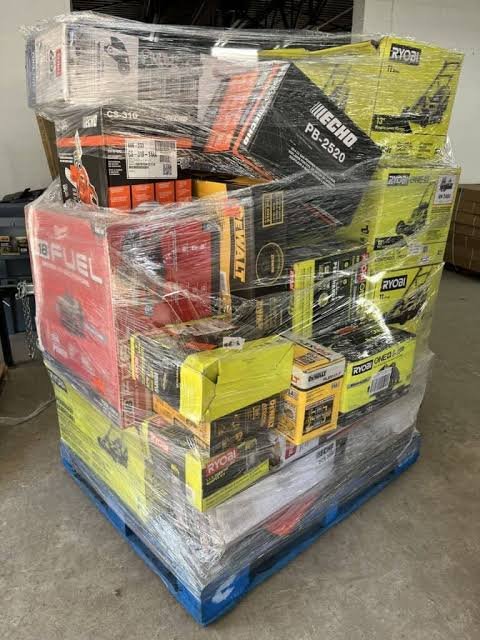
How to Read a Liquidation Pallet Manifest Before Buying
If you are planning to buy liquidation pallets for resale, learning how to read a liquidation pallet manifest is one of the most important skills you can develop. A manifest gives you information about the merchandise included in a liquidation pallet, helping you understand what you may be purchasing before you commit your money.
Instead of relying only on pallet photographs, product descriptions, or a seller’s estimated retail value, a liquidation pallet manifest can give you a more detailed view of the inventory. Depending on the liquidation source, a manifest may contain product descriptions, quantities, UPCs, SKUs, retail prices, brands, categories, condition information, and other details about the merchandise. Industry liquidation guides also note that manifest formats can vary significantly between sellers and auction platforms. Liquidation.com explains how common manifest fields such as UPC codes, quantities, retail prices, and product notes are used when evaluating liquidation lots.
This information matters because buying liquidation inventory involves risk. A pallet that appears attractive because it has a high advertised retail value may not necessarily provide the same amount of resale value. Your actual results can depend on product condition, brand demand, quantities, current market prices, processing costs, shipping, selling fees, and how quickly you can sell the inventory.
If you are still learning how liquidation inventory works, you can also explore our Liquidation Pallets for Beginners guide before making your first purchase. Understanding the fundamentals of liquidation inventory can make it much easier to evaluate a manifest correctly.
What Is a Liquidation Pallet Manifest?
A liquidation pallet manifest is an inventory document that provides information about the products expected to be included in a particular liquidation pallet or lot. It is commonly provided as a spreadsheet, PDF, or downloadable inventory file.
The exact information included in a liquidation pallet manifest depends on the seller, retailer, auction platform, and type of liquidation inventory. Some manifests provide detailed information for individual products, while others may provide only a category-level summary.
A detailed manifest might show the product name, brand, SKU, UPC, quantity, condition, original retail price, and other product information. These details allow a reseller to investigate the merchandise and estimate whether the pallet fits their business model.
For example, imagine you are considering a pallet containing electronics. A detailed liquidation pallet manifest could identify specific products and quantities instead of simply stating that the pallet contains “electronics.” That distinction is extremely important because two electronics pallets can have completely different resale potential.
Why a Liquidation Pallet Manifest Matters
A liquidation pallet manifest can help you replace some of the guesswork involved in liquidation buying with actual inventory information. It does not eliminate risk, but it gives you more information to work with before purchasing.
Consider the difference between these two listings:
- Unmanifested pallet: Mixed general merchandise with an estimated retail value.
- Manifested pallet: A detailed list showing individual products, quantities, identifiers, and condition information.
The second option gives you considerably more information to investigate. You can research individual products, compare current market prices, examine the condition information, estimate potential sales revenue, and determine whether the purchase makes sense for your resale operation.
However, you should never assume that a manifest is a guarantee of future profit. A manifest describes the expected inventory, but your actual resale results will depend on market conditions and your ability to process and sell the products. Some liquidation sources also warn that manifests can contain quantity variations or condition differences, so buyers should understand the seller’s terms before purchasing.
What Information Can You Find on a Liquidation Pallet Manifest?
Before buying a liquidation pallet, look carefully at every column available on the liquidation pallet manifest. Do not focus only on the total retail value. The individual details can tell you much more about the potential quality and resale difficulty of the load.
1. Product Description
The product description tells you what merchandise is supposedly included in the pallet. Look beyond broad descriptions such as “home goods” or “electronics.” Specific product names, models, sizes, and variations are much more useful.
For example, “wireless headphones” gives you limited information. A description containing a specific brand and model gives you something you can research. The more specific the product description in the liquidation pallet manifest, the easier it becomes to investigate potential resale prices.
2. Quantity
Quantity is another important part of a liquidation pallet manifest. Check how many units of each product are included and determine whether the listed quantity refers to individual units, cases, sets, or another measurement.
Quantity can dramatically change your calculations. One product listed at a high retail price may look attractive, but if there are only one or two units available, it may contribute very little to the overall inventory. On the other hand, a product with a lower individual value can become significant if the pallet contains dozens of units.
3. SKU, UPC, or Product Identifier
A SKU, UPC, barcode, ASIN, model number, or similar identifier can make your research much more accurate. Instead of searching for a generic product description, you can use the identifier to find the exact product or variation.
This is particularly valuable when you are evaluating electronics, appliances, branded clothing, tools, toys, and other products where different models or variations can have substantially different market prices.
4. Retail Price or MSRP
Many manifests include an original retail price or MSRP. This figure can be useful as a reference point, but it should never automatically be treated as your expected resale revenue.
This is one of the most important principles to understand when reading a liquidation pallet manifest: retail value is not the same as resale value.
A product that originally sold for $200 may currently sell for considerably less, especially if it is used, opened, returned, discontinued, incomplete, or competing sellers are offering the same product at lower prices. Your calculations should therefore consider realistic current market prices rather than simply adding up the advertised retail values.
Do Not Buy a Pallet Based Only on the Retail Value
One of the biggest mistakes new resellers make is seeing a large retail-value number and assuming that the pallet must be profitable. This is where properly reading a liquidation pallet manifest becomes extremely important.
Suppose a pallet has a stated retail value of $10,000. That does not mean you can automatically sell the merchandise for $10,000. Retail value may represent an original list price rather than what customers are currently willing to pay.
Instead, research the products individually and determine realistic selling prices. Consider the condition of the merchandise, current competition, marketplace fees, shipping expenses, returns, storage, labor, and other costs associated with turning the inventory into cash.
This approach gives you a much more realistic picture of the opportunity before you purchase.
Check the Condition Information Carefully
Condition is another critical section of a liquidation pallet manifest. Depending on the liquidation source, inventory may include overstock, shelf pulls, customer returns, open-box merchandise, used products, or items requiring repair.
Never assume that a product listed on the manifest is automatically brand new. Read the seller’s condition definitions and determine exactly what each grade means. Condition terminology can differ between liquidation companies, so the seller’s specific grading policy should always be reviewed.
For example, a pallet containing primarily new overstock merchandise may require considerably less processing than a pallet containing customer returns. Returned merchandise may require inspection, testing, cleaning, repackaging, or additional repairs before it can be resold.
You can learn more about condition grades in our detailed Liquidation Pallet Grading Explained guide.
Start With the Highest-Value Items
If a liquidation pallet manifest contains dozens or hundreds of products, you do not necessarily need to research every item before making an initial assessment. Start by identifying the products that appear to contribute the greatest amount of potential value.
Look for products with higher quantities, recognizable brands, strong demand, specific model numbers, and realistic resale potential. Research those products first and then examine the remaining inventory.
This method can help you quickly determine whether the pallet deserves further investigation or whether the inventory appears unsuitable for your business.
Once you understand how to read the major columns of a liquidation pallet manifest, you can move beyond simply looking at a pallet’s advertised retail value and start evaluating the actual inventory, condition, quantity, and potential resale opportunity.
10 Things to Check on a Liquidation Pallet Manifest Before Buying
Once you understand what a liquidation pallet manifest is, the next step is learning how to use the information on the document to make a smarter purchasing decision. A manifest should not simply be something you glance at before placing an order. It should be one of the main tools you use to evaluate the inventory, estimate potential resale value, identify risks, and determine whether the pallet fits your business.
Whether you are an experienced reseller or purchasing your first liquidation pallet, carefully reviewing the liquidation pallet manifest can help you avoid buying inventory that does not match your expectations. Below are the important areas to examine before committing your money.
1. Check the Product Names and Descriptions
The first thing to examine on a liquidation pallet manifest is the product description. Do not be satisfied with vague descriptions when more detailed information is available.
A manifest that says “electronics,” “home goods,” or “clothing” does not provide nearly as much useful information as one listing specific products, brands, models, sizes, or variations. Detailed descriptions allow you to research individual products and determine whether there is actual demand for them.
Look for product names that are specific enough to search online. If model numbers, SKUs, UPCs, or other identifiers are provided, record them because they can make product research significantly easier.
If you are buying a pallet for a particular customer base, also compare the products listed on the liquidation pallet manifest with what your customers normally purchase. A pallet can have excellent merchandise but still be a poor investment if the products do not match your market.
2. Verify the Quantity of Each Product
Quantity is one of the most important pieces of information on a liquidation pallet manifest. Look at how many units are included for each listed product and confirm whether the quantity refers to individual units, cases, packs, or sets.
Quantity affects your potential revenue calculations. If one product has a potentially attractive resale price but only one unit is included, it may have little impact on the overall pallet. Meanwhile, a lower-priced product appearing in large quantities may represent a significant portion of your inventory.
Add the quantities together and compare the total with the stated number of units for the pallet. If the numbers do not appear to match, ask the seller for clarification before purchasing.
3. Look at the Condition of the Merchandise
Never skip the condition column when reviewing a liquidation pallet manifest. The condition of merchandise can have a major effect on how much time and money you need to invest before selling it.
Common categories can include brand new, overstock, shelf pulls, open box, customer returns, used merchandise, damaged products, or salvage. However, terminology is not always standardized across liquidation sellers.
Always read the seller’s specific condition definitions rather than assuming that a particular grade means the same thing everywhere.
For example, customer returns may require inspection and testing before they can be resold. Products may be missing accessories, packaging, manuals, or other components. On the other hand, new overstock inventory may require significantly less processing.
For a deeper explanation of liquidation conditions, visit our Liquidation Pallet Grading Explained guide before evaluating your next purchase.
4. Examine the Retail Value Carefully
Many buyers immediately look at the total retail value displayed on a liquidation pallet manifest. While this number can be useful, you should never use it as the only measurement of whether a pallet is profitable.
Retail value may represent the original selling price, MSRP, or another reference value. The current market price could be substantially lower.
Instead of assuming that the entire retail value is recoverable, research the actual products and compare current prices from legitimate retail and resale marketplaces. This gives you a better understanding of what customers may realistically pay.
Your calculation should also account for selling fees, shipping, storage, labor, packaging, advertising, refunds, and other business expenses.
5. Calculate the Cost Per Unit
A liquidation pallet manifest becomes much more useful when you calculate the approximate acquisition cost per unit.
The basic calculation is:
Total Purchase Cost ÷ Total Number of Units = Approximate Cost Per Unit
For example, if a pallet costs $1,500 and contains 100 units, your average acquisition cost would be $15 per unit before additional expenses.
This does not mean every product should be sold for more than $15. Some products could sell for significantly more while others may sell for less. Instead, the calculation gives you a starting point for understanding the economics of the entire pallet.
6. Research the Actual Resale Prices
The next step is to research the products shown on the liquidation pallet manifest. Do not rely solely on the prices provided by the liquidation seller.
Search for the exact product name, model number, SKU, or UPC where available. Compare current prices from reputable retailers and appropriate resale platforms.
Pay attention to whether the prices you find represent active listings or actual completed sales. An item being listed for $100 does not necessarily mean customers are consistently paying $100 for it.
Current market conditions can change quickly, especially for electronics, seasonal merchandise, fashion, toys, and trending consumer products. Researching the market shortly before purchasing is therefore more useful than relying on old price information.
7. Identify the Brands and Product Categories
Review the brands listed on the liquidation pallet manifest. Recognizable brands can sometimes make inventory easier to market, but brand name alone does not guarantee demand or profitability.
Look at the product categories as well. A pallet containing a mixture of electronics, kitchenware, clothing, tools, and home goods may require a different sales strategy than a pallet concentrated in one category.
Consider whether your existing sales channels are suitable for the products listed. If you normally sell clothing but the manifest is dominated by electronics, you may need additional knowledge, testing equipment, storage, or sales channels.
8. Check for Missing or Incomplete Information
Missing information is an important warning sign when evaluating a liquidation pallet manifest. A manifest does not necessarily have to contain every possible detail, but you should know enough about the inventory to make an informed purchasing decision.
Look for missing quantities, unclear product descriptions, absent condition information, incomplete SKUs, or unexplained differences between the product list and the advertised pallet description.
If important information is missing, contact the seller and ask specific questions. Getting clarification before purchasing is generally much better than discovering an unexpected issue after the pallet arrives.
9. Check Whether the Manifest Matches the Listing
Compare the liquidation pallet manifest with the main product listing. The two should provide a consistent description of the inventory.
If the listing advertises a specific product category but the manifest contains a substantially different mix of merchandise, stop and investigate the difference.
Also compare the advertised number of units, condition, brands, estimated value, and other major details. If something appears inconsistent, ask the seller for an explanation before proceeding.
10. Check Shipping and Additional Costs
The final purchase price is not always the same as the price shown beside the liquidation pallet. When evaluating a liquidation pallet manifest, remember that shipping and other costs can affect your final acquisition cost.
Depending on the seller and destination, you may need to consider freight charges, residential delivery fees, liftgate services, storage, unloading, transportation from the freight terminal, or other logistics expenses.
Ask for the complete landed cost before deciding whether the pallet makes financial sense.
Use the Manifest to Build a Realistic Profit Estimate
After reviewing the liquidation pallet manifest, create a realistic estimate rather than simply subtracting the purchase price from the advertised retail value.
A simple framework is:
- Estimated resale revenue
- Minus pallet purchase cost
- Minus shipping and freight expenses
- Minus marketplace and payment fees
- Minus processing and packaging costs
- Minus storage and marketing expenses
- Equals your estimated operating profit before other business expenses
This approach gives you a more realistic picture of the potential opportunity. Remember that estimates are not guarantees. Some products may sell quickly while others may require discounts or remain in inventory for longer than expected.
Don’t Ignore the Products With Lower Retail Values
When reading a liquidation pallet manifest, it is easy to focus exclusively on the most expensive products. However, lower-priced products can sometimes contribute significantly to your total revenue when they are available in larger quantities.
For example, 50 units selling at $20 each represent $1,000 in potential gross sales. A single $500 product may look more impressive on the manifest, but quantity can make a major difference to the overall economics of the pallet.
Evaluate the entire inventory rather than selecting only the products with the highest individual retail prices.
Check Whether the Pallet Fits Your Reselling Strategy
A good liquidation pallet manifest is not necessarily one with the highest advertised value. The better question is whether the merchandise fits your business.
Consider your storage capacity, customer base, preferred selling platforms, available capital, product knowledge, transportation arrangements, and ability to process the merchandise.
If you are looking for different types of inventory, you can browse the Elite Pallet Liquidators Shop to explore available liquidation products and bulk inventory.
You can also review our Liquidation Pallets category when comparing different pallet opportunities.
Key Takeaway
A liquidation pallet manifest should be treated as a research tool, not simply as a document attached to a product listing. Before buying, examine the product descriptions, quantities, condition, retail values, identifiers, brands, resale prices, missing information, shipping costs, and consistency between the manifest and the listing.
The more carefully you analyze a liquidation pallet manifest, the better positioned you are to determine whether a particular pallet fits your business and resale strategy. Do your research, calculate realistic costs, and avoid making purchasing decisions based only on impressive retail-value numbers.
How to Calculate the Real Value of a Liquidation Pallet From the Manifest
Reading a liquidation pallet manifest is only the first step. The next step is turning the information on the manifest into numbers that can help you make a better purchasing decision. A pallet can look attractive because it has a high advertised retail value, but the number that matters most to a reseller is the amount of money the inventory can realistically generate after purchasing, processing, shipping, selling, and other business expenses.
This is why you should use the liquidation pallet manifest to calculate realistic resale potential instead of simply accepting the seller’s estimated retail value. Your goal is to understand what the inventory could reasonably be worth in your target market and whether the potential return justifies the purchase price.
Start With the Total Purchase Price
Begin your analysis by recording the total purchase price shown for the pallet. This is the amount you will pay for the merchandise itself. If you are evaluating several pallets, record the purchase price for each one so you can compare them objectively.
For example, suppose a liquidation pallet manifest shows that a pallet contains 100 units and the purchase price is $1,500. Your starting acquisition cost is $1,500.
However, do not stop there. The purchase price is only one part of your total investment. You may also have to pay freight, unloading, storage, packaging, marketplace fees, advertising expenses, repairs, cleaning costs, and other processing expenses.
Calculate the Average Cost Per Unit
One of the simplest calculations you can make from a liquidation pallet manifest is the average cost per unit.
Total Purchase Price ÷ Total Number of Units = Average Cost Per Unit
For example:
- Total pallet cost: $1,500
- Total quantity: 100 units
- Average acquisition cost: $15 per unit
This calculation does not mean every product must sell for more than $15. It simply provides an average starting point. Your manifest may contain products with very different values, so you should continue analyzing the individual products before deciding whether the pallet is worth purchasing.
Separate High-Value Products From Low-Value Products
A detailed liquidation pallet manifest allows you to identify products that could contribute significantly to the overall value of the load. Separate the merchandise into high-value, medium-value, and low-value groups when possible.
High-value products may attract more attention, but they should not automatically determine your entire purchasing decision. A pallet containing several expensive products can still perform poorly if most of the remaining inventory is difficult to sell.
Likewise, lower-priced merchandise can become valuable when the manifest shows substantial quantities. A product with a realistic resale price of $15 may not look impressive by itself, but 50 units could represent $750 in gross sales.
Retail Value Is Not the Same as Resale Value
This is one of the most important concepts to understand when evaluating a liquidation pallet manifest. Retail value and resale value are two different measurements.
Retail value generally represents an original or reference selling price. Resale value represents what you may realistically be able to receive from customers in your current market and selling environment.
Imagine a manifest lists a product with an original retail price of $100. That does not automatically mean you can sell the product for $100. You may discover that competing sellers are offering the same product for $65, or that customers are only willing to pay $55.
This is why every serious liquidation buyer should research current market prices before assigning a resale value to products listed on a liquidation pallet manifest.
Research Current Selling Prices
Use the product information on the liquidation pallet manifest to research current prices. Product names, model numbers, SKUs, UPCs, and other identifiers can help you locate the exact merchandise.
When researching prices, compare several sources instead of relying on a single listing. Look at established retailers and appropriate resale marketplaces to understand the current competitive environment.
You should also distinguish between an active listing and an actual completed sale. An item may be listed at $100 without receiving any buyers at that price. Your analysis becomes more useful when you focus on realistic market behavior rather than optimistic asking prices.
Account for Product Condition
Product condition can dramatically change the resale value shown in your liquidation pallet manifest calculations.
A brand-new, sealed product may command a very different price from an opened, used, damaged, incomplete, or customer-returned product. If the manifest identifies different conditions, calculate their expected values separately.
For example, do not assign the same resale price to a sealed product and a customer return simply because they have the same model number. The return may require testing, cleaning, repair, repackaging, or replacement parts before it is ready for resale.
You can learn more about condition terminology by reading our Liquidation Pallet Grading Explained guide.
Calculate Your Estimated Gross Resale Revenue
Once you have researched the products on the liquidation pallet manifest, create a realistic gross revenue estimate.
A simple calculation is:
Quantity of Product × Estimated Resale Price = Estimated Gross Revenue
For example, if a manifest shows 20 units of a product and your research suggests that you can realistically sell each unit for $30:
20 × $30 = $600 estimated gross revenue
Repeat this calculation for the major products listed on the liquidation pallet manifest. Then add the estimates together to create a preliminary gross-revenue figure.
Remember that this is still an estimate. Not every item will necessarily sell at your target price, and some inventory may take longer to move than expected.
Subtract the Costs That Affect Your Profit
Gross revenue is not profit. After estimating resale revenue from the liquidation pallet manifest, subtract the costs associated with turning the inventory into sales.
- Purchase price
- Freight and delivery expenses
- Unloading costs
- Storage costs
- Marketplace fees
- Payment processing fees
- Packaging materials
- Cleaning or testing expenses
- Repair or replacement costs
- Advertising expenses
- Customer returns and refunds
- Labor and processing costs
The exact costs will vary depending on your business model and selling channel. Nevertheless, including these expenses in your analysis can prevent you from overestimating the profitability of a liquidation pallet.
Estimate the Sell-Through Rate
Another factor that is often overlooked when reading a liquidation pallet manifest is sell-through rate. You should not automatically assume that every unit will sell.
Some products may sell quickly, while others may remain in storage for weeks or months. Some products may need to be discounted to attract buyers, and some may prove unsuitable for your primary sales channel.
Instead of calculating your potential revenue using 100% of the manifest inventory, consider creating multiple scenarios.
- Conservative scenario: Only a portion of the inventory sells.
- Expected scenario: Most suitable inventory sells at realistic market prices.
- Optimistic scenario: Strong demand allows you to sell most products near your target prices.
Comparing these scenarios can help you understand how sensitive your purchase is to changes in sales performance.
Look for Products With Strong Demand
A liquidation pallet manifest becomes more valuable when you can identify products with established customer demand. High demand can potentially reduce the amount of time inventory remains in storage.
Look for recognizable brands, popular product categories, frequently searched products, useful everyday merchandise, and items that have a proven market in your target sales channel.
However, do not confuse popularity with guaranteed profitability. A popular product can still be difficult to sell profitably if too many competitors have the same inventory or if acquisition and selling costs are too high.
Compare the Manifest Against Your Budget
Even when the numbers look attractive, make sure the pallet fits your available budget. A liquidation pallet manifest can show significant potential value, but you still need sufficient capital to purchase, transport, store, process, and market the inventory.
Avoid committing all of your available business capital to one shipment. Keeping adequate working capital can give you flexibility to handle unexpected expenses and continue operating while the inventory is being sold.
Check the Shipping Cost Before Making Your Final Calculation
Shipping can significantly affect your actual acquisition cost. Therefore, when evaluating a liquidation pallet manifest, do not calculate profitability using the merchandise price alone.
Ask for the shipping or freight cost to your delivery location and include it in your calculation. If additional services are required for delivery or unloading, include those expenses as well.
Your calculation should ultimately reflect what the inventory costs you to get into a condition where it can be sold.
Use a Simple Manifest Evaluation Formula
A practical way to evaluate a liquidation pallet manifest is to use the following framework:
Estimated Net Revenue = Estimated Resale Revenue − Total Acquisition and Selling Costs
Total acquisition and selling costs can include the pallet price, shipping, processing, storage, marketplace fees, packaging, repairs, advertising, and other expenses directly associated with selling the inventory.
This calculation will not predict your exact final profit, but it gives you a much more realistic starting point than simply comparing the purchase price against the stated retail value.
When a High-Value Manifest Can Still Be a Bad Deal
A liquidation pallet manifest can contain an impressive total retail value and still be a poor purchase. This can happen when the merchandise is outdated, difficult to sell, damaged, highly competitive, incomplete, or priced above what the current market supports.
For example, a pallet could have a listed retail value of $15,000 but contain products that currently sell for a fraction of their original prices. If the realistic resale revenue is only $5,000 and your total costs approach $4,000, the advertised retail value does not make the purchase attractive.
The lesson is simple: an impressive manifest is not automatically a profitable manifest. Research the actual merchandise and calculate the numbers before purchasing.
Use the Manifest to Compare Different Pallets
If you are comparing multiple liquidation pallets, evaluate each liquidation pallet manifest using the same criteria. Look at purchase price, quantity, condition, estimated resale revenue, shipping costs, product demand, and expected processing requirements.
This makes it easier to determine which pallet provides the best fit for your business rather than simply choosing the pallet with the largest advertised retail value.
You can browse the Elite Pallet Liquidators Shop to explore available liquidation inventory and compare different opportunities.
You can also visit our Liquidation Pallets category to find additional pallet inventory.
The Bottom Line
Learning how to calculate the real value of a liquidation pallet manifest can make a significant difference in your purchasing decisions. Start with the purchase price, calculate the average cost per unit, research current resale prices, evaluate product condition, estimate realistic revenue, account for shipping and operating costs, and consider how quickly you expect the inventory to sell.
Most importantly, do not let a large advertised retail value make the decision for you. A smart liquidation buyer uses the liquidation pallet manifest as a research tool and makes the final decision based on realistic numbers, customer demand, available capital, and the buyer’s ability to process and sell the inventory.
Liquidation Pallet Manifest Red Flags to Watch Before Buying
A liquidation pallet manifest can give you valuable information before you purchase inventory, but you also need to know how to recognize warning signs. A manifest may look impressive at first glance while still leaving important questions unanswered. Before spending your money, take time to examine the details and identify anything that could make the pallet more difficult or expensive to resell.
The goal is not to assume that every liquidation pallet is risky. Instead, the goal is to become a more informed buyer. A good liquidation pallet manifest should give you enough useful information to understand what you are buying and to make a reasonable assessment of the inventory.
1. Extremely High Retail Value With Very Little Detail
One of the first things to investigate is a liquidation pallet manifest that advertises a very high retail value but provides very little information about the actual merchandise.
For example, a listing might advertise thousands of dollars in retail value but provide only broad descriptions such as “general merchandise” or “assorted products.” Without specific product information, it becomes difficult to verify the advertised value or estimate realistic resale prices.
A high retail-value figure is not automatically a problem. The issue is whether you have enough supporting information to evaluate where that value comes from.
2. Vague Product Descriptions
Pay close attention to the descriptions on the liquidation pallet manifest. Vague descriptions can make product research difficult.
“Mixed electronics” tells you considerably less than a manifest listing specific products, models, brands, or identifiers. Similarly, “assorted clothing” does not tell you the sizes, brands, styles, quantities, or condition of the apparel.
The more specific the manifest information, the easier it is to research the inventory and determine whether it fits your business.
3. Missing Product Quantities
Quantity is essential when evaluating a liquidation pallet manifest. If the manifest identifies products but does not provide quantities, your ability to estimate potential revenue becomes limited.
A product that appears valuable may represent only one unit. Another product with a lower individual value could represent dozens or hundreds of units. Without quantities, you cannot accurately determine how much inventory you are actually purchasing.
If quantities are not clearly provided, ask the seller whether a more detailed inventory list is available.
4. No Condition Information
Another important warning sign is a liquidation pallet manifest that does not clearly explain merchandise condition.
Before buying, determine whether the products are new, overstock, shelf pulls, open-box items, customer returns, used merchandise, damaged goods, or salvage. Condition directly affects the amount of processing and testing that may be required before resale.
If the seller uses condition grades such as A, B, C, or D, make sure you understand exactly what those grades mean. Do not assume that a particular letter grade has the same meaning across every liquidation supplier.
For additional information, review our Liquidation Pallet Grading Explained guide before purchasing.
5. The Manifest Contains Only MSRP or Original Retail Prices
A liquidation pallet manifest that focuses heavily on MSRP or original retail prices should be evaluated carefully. Original retail prices can be useful for reference, but they do not necessarily represent today’s market value.
Products can become discounted, discontinued, outdated, or less desirable over time. Competitors may also sell identical products at lower prices.
Always perform your own market research before assigning a resale value to products listed on the manifest.
6. No Product Identifiers
Product identifiers such as SKUs, UPCs, model numbers, and other reference numbers can make a liquidation pallet manifest significantly easier to research.
When identifiers are available, you can often search for the exact product instead of relying on a generic description. This is particularly useful for electronics, appliances, tools, branded merchandise, and products with multiple versions.
A manifest does not necessarily need every possible identifier, but if expensive products are listed without enough information to identify them, ask for additional details before buying.
7. Unclear Shipping Information
Shipping is frequently overlooked when buyers evaluate a liquidation pallet manifest. A pallet price may look affordable until freight and delivery costs are added.
Before purchasing, determine whether shipping is included or charged separately. Also ask whether there are additional delivery costs associated with your location.
Your real acquisition cost should include the expenses required to get the merchandise from the supplier to your business or storage location.
8. Pressure to Buy Immediately
Be cautious if you are being pressured to purchase a pallet before you have had enough time to review the liquidation pallet manifest.
Legitimate inventory opportunities can still have limited availability, but you should have enough information to understand what you are purchasing. A countdown, urgent sales message, or claim that you must pay immediately should not replace proper product research.
Take the time you need to review the manifest, understand the terms, calculate your costs, and determine whether the inventory matches your business.
9. The Manifest and Product Listing Do Not Match
Always compare the liquidation pallet manifest against the product listing. Look for differences in product category, quantity, condition, brands, pallet count, or other important information.
If the listing says a pallet contains electronics but the manifest contains mostly household products, ask why. If the listing advertises new inventory but the manifest identifies customer returns, get clarification before proceeding.
Differences do not necessarily mean something is wrong, but unexplained inconsistencies should be investigated.
10. No Clear Terms and Conditions
Before purchasing a liquidation pallet, review the seller’s terms and conditions. Your liquidation pallet manifest tells you about the inventory, but the purchasing terms tell you about the transaction itself.
Check policies relating to cancellations, returns, damaged shipments, manifest discrepancies, shipping, payment, and other important aspects of the transaction.
Understanding these policies before paying can prevent unpleasant surprises later.
11. Unrealistic Profit Claims
Be skeptical of claims that a particular liquidation pallet manifest guarantees a specific profit. No manifest can guarantee that you will sell every product at a particular price.
Your actual results depend on product demand, condition, competition, pricing, selling fees, marketing, storage, shipping, and your ability to process the merchandise.
A responsible buyer should use the manifest to create a realistic estimate rather than expecting guaranteed profits.
12. Too Many Unknowns
Sometimes the biggest red flag is not one specific problem but the number of unanswered questions surrounding the liquidation pallet manifest.
If you cannot determine what products are included, how many units are present, what condition they are in, how much shipping will cost, or how the seller handles discrepancies, you may not have enough information to make a confident purchasing decision.
When several important details remain unknown, ask questions before placing your order. If the information cannot be verified, consider whether the potential opportunity justifies the additional uncertainty.
How to Respond When You Find a Manifest Red Flag
Finding a potential red flag does not always mean you should immediately walk away. Instead, investigate it.
Ask the seller direct questions and request clarification. For example, if the liquidation pallet manifest does not explain the condition of the products, ask for the condition breakdown. If quantities are unclear, request the unit count. If shipping is not listed, request a complete shipping estimate.
Keep written records of important information provided by the seller and compare those answers with the actual product listing and manifest.
Questions to Ask Before Buying a Manifested Pallet
Before purchasing a pallet, consider asking the following questions:
- Is the manifest complete or estimated?
- Does the listed quantity represent individual units or cases?
- What condition grades are represented?
- Are the products new, overstock, shelf pulls, or customer returns?
- Are product SKUs, UPCs, or model numbers available?
- Is the retail value based on MSRP or current market pricing?
- Are all products included in the manifest?
- Can the manifest change before shipment?
- Is shipping included in the advertised price?
- What happens if there is a discrepancy between the manifest and shipment?
- Are there any additional fees?
- What are the seller’s terms regarding damaged or missing merchandise?
Getting clear answers to these questions can help you evaluate the liquidation pallet manifest more effectively and understand the transaction before committing your money.
Don’t Let a Cheap Price Override Your Research
A low purchase price can be attractive, but price alone should never determine whether you buy a liquidation pallet. A cheap pallet filled with difficult-to-sell or heavily damaged merchandise can ultimately cost more than a properly evaluated pallet containing products with stronger resale potential.
Use the liquidation pallet manifest to investigate the inventory before allowing the price to influence your decision. Compare the merchandise, condition, quantity, current market value, shipping costs, and expected processing requirements.
Research Before You Buy
The best liquidation buyers do not simply look for the cheapest pallets. They look for inventory that fits their business model and has a realistic path to resale. A liquidation pallet manifest can help you identify those opportunities by giving you information you can research before purchasing.
If you are ready to explore available liquidation inventory, visit the Elite Pallet Liquidators Shop to see available products and wholesale opportunities.
You can also explore the Liquidation Pallets category when comparing different types of bulk inventory.
If you are still learning how liquidation buying works, our guide on How to Buy Liquidation Pallets can provide additional guidance before you make a purchase.
Final Warning: Read Before You Pay
A liquidation pallet manifest should give you enough information to investigate the inventory and understand the purchase. Look carefully for vague descriptions, missing quantities, unclear conditions, unrealistic retail values, incomplete product information, unexplained listing differences, and hidden shipping or transaction costs.
The purpose of checking these warning signs is not to eliminate every possible uncertainty. Liquidation inventory naturally involves variables. Instead, your objective should be to identify the risks you can control and make your purchasing decision using as much reliable information as possible.
The more carefully you examine a liquidation pallet manifest before buying, the better prepared you will be to estimate costs, plan your resale strategy, and decide whether the inventory makes sense for your business.