
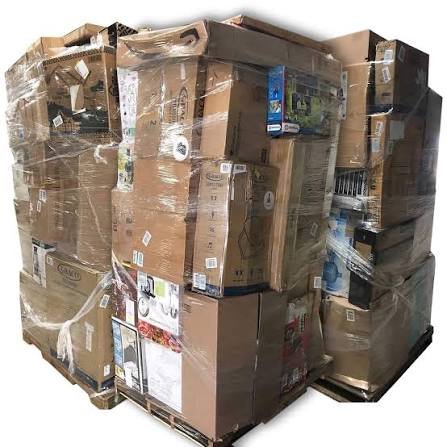
What Are Liquidation Pallets for Beginners?
Liquidation Pallets for Beginners can be an excellent starting point for people who want to enter the resale business without purchasing individual products at traditional wholesale prices. A liquidation pallet is generally a bulk lot of merchandise that may include overstock, shelf pulls, customer returns, refurbished products, or other inventory that a retailer or supplier is moving through the secondary market.
For someone new to reselling, Liquidation Pallets for Beginners offer an opportunity to purchase multiple products at once and then sell those products individually, in bundles, or through different sales channels. However, not every pallet is equally suitable for someone who is just starting out. Understanding the type, condition, quantity, and potential resale value of the merchandise is essential before making a purchase.
The best Liquidation Pallets for Beginners are usually those that are relatively easy to inspect, store, understand, photograph, price, and sell. Beginners should focus on learning how liquidation inventory works before committing large amounts of money to complicated or highly specialized merchandise.
Why Are Liquidation Pallets Popular With New Resellers?
One reason Liquidation Pallets for Beginners are popular is the variety they can provide. Instead of buying hundreds of individual products from different suppliers, a reseller can acquire a single pallet containing multiple units.
Depending on the liquidation source, a pallet may contain products from categories such as:
- Home and kitchen merchandise
- Clothing and apparel
- Toys and games
- Tools and hardware
- Small appliances
- General merchandise
- Electronics and accessories
- Beauty and personal-care products
- Pet products
- Office and school supplies
This variety can give a beginner the opportunity to test different markets and discover which products customers are most interested in purchasing. It can also help a new reseller learn how to inspect, photograph, price, list, package, and ship different types of merchandise.
What Types of Liquidation Inventory Can Beginners Find?
Before choosing Liquidation Pallets for Beginners, it is important to understand that liquidation merchandise can come in several different condition categories. The condition of the inventory can have a major effect on both the purchase price and the amount of work required before resale.
Common categories include new merchandise, overstock, shelf pulls, customer returns, refurbished products, used merchandise, and salvage inventory.
Liquidation.com explains that new merchandise is generally in original packaging, while shelf pulls may have been displayed or offered for sale but never purchased. Customer returns can have widely varying conditions, while salvage merchandise may require significant repair or may primarily be useful for parts. Learn more about liquidation merchandise conditions.
For beginners, understanding these differences is extremely important. A pallet advertised as customer returns should not automatically be treated as equivalent to a pallet of new merchandise.
Overstock Pallets
Overstock can be one of the more straightforward categories to consider when evaluating Liquidation Pallets for Beginners. Overstock generally refers to merchandise that was not sold through the original retail channel and is being moved to make room for other inventory.
Depending on the supplier, overstock merchandise may still be new and packaged. However, packaging can sometimes show signs of warehouse handling or transportation.
The main advantage for beginners is that new merchandise can require less testing and repair than used or untested customer returns. Nevertheless, you should still inspect the inventory carefully and confirm the supplier’s exact condition description before purchasing.
Shelf-Pull Pallets
Shelf pulls are another category worth understanding when researching Liquidation Pallets for Beginners. Shelf-pull merchandise has generally been available for retail sale but was removed from the sales floor or distribution system without being purchased by a customer.
According to Liquidation.com, shelf pulls can show signs of retail handling and may have price tags, stickers, or packaging differences. Liquidation.com’s buyer education guides provide additional information about evaluating liquidation lots and merchandise conditions.
For a beginner, shelf pulls can be interesting because the underlying products may still be unused, although the packaging and presentation may not always be perfect.
Customer Return Pallets
Customer returns are another major category in the liquidation industry. These pallets can potentially contain valuable merchandise, but they generally involve more uncertainty than new or overstock inventory.
Customer returns can be sent back for many different reasons. A customer may have ordered the wrong size, selected the wrong color, changed their mind, or experienced an actual problem with the product. As a result, the condition of returned merchandise can vary considerably.
This makes customer-return pallets potentially attractive but more demanding for beginners. You may need to inspect, clean, test, repair, repackage, or accurately grade products before offering them for sale.
B-Stock’s guidance on customer returns recommends sorting inventory when it arrives, cleaning or repairing items where necessary, photographing the merchandise, pricing it appropriately, and then listing it for sale. Read B-Stock’s guide to buying customer returns.
Why Condition Matters When Choosing Liquidation Pallets for Beginners
Condition is one of the most important factors to evaluate when selecting Liquidation Pallets for Beginners. A pallet containing new merchandise may require considerably less preparation than a pallet containing untested customer returns.
Beginners should therefore avoid looking only at the advertised retail value. A pallet with a very high estimated retail value may require extensive testing, repairs, cleaning, or replacement parts.
Instead, consider the relationship between the purchase price, expected sellable inventory, processing requirements, shipping costs, and realistic resale prices.
What Is a Manifest?
A manifest is a document that provides information about the products contained in a liquidation lot. Depending on the supplier, the manifest may include product names, quantities, product identifiers, retail prices, and notes about the merchandise.
Manifests are particularly useful when evaluating Liquidation Pallets for Beginners because they can provide more information about the potential contents before you commit to a purchase.
Liquidation.com explains that manifests can contain product names, quantities, UPC information, manufacturer’s suggested retail prices, and notes, although the information provided can vary from one auction to another. Learn how to read a liquidation manifest.
Do not assume that the total retail value shown on a manifest represents the amount you will actually earn from resale. Retail value and resale value are different concepts, and your final results will depend on demand, condition, competition, fees, shipping, and other expenses.
Manifested vs. Unmanifested Pallets
When comparing Liquidation Pallets for Beginners, you may encounter both manifested and unmanifested lots.
A manifested pallet provides a list or description of at least some of the expected inventory. An unmanifested pallet provides significantly less information about the exact products inside.
For someone who is new to liquidation, a manifested pallet can make the purchasing decision easier because you have more information to research before buying. You can investigate individual products, compare market prices, identify categories, and estimate how much preparation may be required.
An unmanifested pallet can involve greater uncertainty. That does not automatically make it a bad purchase, but beginners should understand that less information can make accurate profitability calculations more difficult.
Look Beyond the Retail Value
One of the biggest mistakes beginners make when evaluating Liquidation Pallets for Beginners is focusing too heavily on the advertised retail value.
Suppose a pallet has an estimated retail value of $5,000. That does not mean you will sell everything for $5,000. Some products may sell below retail price, some may have strong competition, some may require repairs, and some may not sell at all.
Your evaluation should instead focus on realistic resale value.
Consider:
- How much customers currently pay for similar products.
- How many competing sellers are offering the same products.
- Whether the merchandise is new, returned, used, or damaged.
- How much time will be required to process the pallet.
- How much shipping or freight will cost.
- How much storage space the pallet will require.
- What marketplace and payment fees will apply.
- Whether certain products are seasonal or difficult to sell.
Choose Products You Understand
A good strategy when looking at Liquidation Pallets for Beginners is to start with categories you already understand. If you are familiar with home goods, for example, you may be better positioned to identify quality products, understand their features, recognize defects, and explain their benefits to customers.
Likewise, someone who understands clothing may be more comfortable evaluating apparel sizes, materials, brands, and seasonal demand.
You do not need to know everything about every product category before starting. In fact, beginning with a familiar category can reduce the learning curve and make your first inventory easier to manage.
Consider Storage Before Buying
Storage is often overlooked when people research Liquidation Pallets for Beginners. A pallet is physically large, and after you break it down into individual products, you still need a practical system for storing, organizing, and retrieving the inventory.
Before purchasing, determine where the merchandise will be stored and how you will access it after the pallet arrives.
Products should ideally have designated locations so that when an item sells, you can find it quickly rather than searching through an entire room or warehouse.
Don’t Forget Shipping and Freight
The purchase price is not always the complete cost of a liquidation pallet. Freight and shipping can significantly affect your final cost, particularly when purchasing large or heavy lots.
B-Stock specifically recommends factoring shipping into the cost of a liquidation purchase rather than evaluating the winning bid or purchase price by itself. See B-Stock’s guidance on buying liquidation pallets.
This is especially important when comparing Liquidation Pallets for Beginners from different suppliers. A pallet that looks cheaper at first may become more expensive after transportation and other charges are included.
Start Small and Learn the Process
Beginners do not necessarily need to start with the largest pallet available. A smaller purchase can give you an opportunity to learn how liquidation inventory works without committing too much capital to your first experiment.
Use your first purchase to learn how long it takes to inspect products, create listings, communicate with customers, package orders, handle returns, and calculate actual profit.
Once you understand your process and know which categories perform well, you can gradually increase your inventory volume.
Explore Liquidation Inventory
If you are ready to explore different types of liquidation merchandise, you can also browse our liquidation pallets and bulk inventory. Comparing different inventory categories can help you determine which products are most appropriate for your resale business.
Final Thoughts on Liquidation Pallets for Beginners
Liquidation Pallets for Beginners can provide an accessible way to enter the world of product reselling, but the best first purchase is not necessarily the pallet with the highest advertised retail value or the lowest purchase price.
Beginners should prioritize understandable products, manageable quantities, clear condition information, realistic resale demand, reasonable shipping costs, and sufficient information to make an informed purchasing decision.
Take the time to understand manifests, condition grades, shipping costs, storage requirements, and resale prices before purchasing. Most importantly, remember that liquidation inventory involves uncertainty. A well-researched purchase can improve your chances of success, but no pallet can guarantee a particular profit.
7 Best Liquidation Pallets for Beginners in 2026
Choosing the right inventory is one of the most important decisions when starting a resale business. The best Liquidation Pallets for Beginners are generally those that are easy to understand, inspect, store, photograph, price, and sell. Beginners should also consider how much testing or repair a product category may require before purchasing a pallet.
There is no single pallet category that is perfect for every new reseller. Your ideal choice depends on your budget, available storage, local demand, preferred sales channel, and knowledge of the products. However, some categories can provide a more manageable starting point than others.
1. Home and Kitchen Liquidation Pallets
Home and kitchen merchandise can be one of the most approachable options when considering Liquidation Pallets for Beginners. This category can include kitchen accessories, storage products, household organizers, décor, cookware, cleaning accessories, and other everyday merchandise.
One advantage of home products is that many items have straightforward uses. A reseller does not necessarily need specialized technical knowledge to understand how a storage organizer, kitchen accessory, or household item works.
Home and kitchen products can also be marketed to a broad customer base. Instead of targeting a very specific niche, you may be able to sell useful household merchandise to customers looking for practical products for their homes.
However, beginners should still inspect products carefully. Kitchen and household merchandise may have damaged packaging, missing components, stains, scratches, or other defects. Make sure your listings accurately describe the condition of every item.
2. Clothing and Apparel Liquidation Pallets
Apparel is another category worth considering when researching Liquidation Pallets for Beginners. Clothing pallets can contain shirts, trousers, jackets, dresses, sportswear, children’s clothing, footwear, accessories, and other fashion merchandise.
One benefit of clothing is that individual products are usually easy to photograph and store compared with large appliances or bulky household products. A reseller can also sell through multiple channels, including an ecommerce website, social media, local marketplaces, and other online platforms.
However, clothing requires careful attention to sizes, colors, materials, condition, and brand information. Items should be inspected for stains, tears, missing buttons, broken zippers, or other defects before being listed.
Seasonality is also important. Winter jackets may have stronger demand during colder months, while summer clothing may be easier to sell during warmer seasons. Planning around seasonal demand can help prevent large amounts of slow-moving inventory.
3. Toys and Games Liquidation Pallets
Toys and games can also be an interesting choice among Liquidation Pallets for Beginners. Depending on the inventory source, these pallets may include children’s toys, board games, puzzles, outdoor toys, educational products, and recreational merchandise.
Many toy products are visually appealing, which can make them suitable for social-media marketing and product demonstrations. Resellers can photograph colorful products clearly and create engaging content showing how games or toys work.
However, beginners should pay close attention to age recommendations, missing components, packaging condition, and product safety requirements. Products intended for children can involve additional safety considerations, so do not assume that every toy received in a liquidation pallet is automatically suitable for resale.
Before listing children’s merchandise, review the applicable requirements for your target market and sales platform. The U.S. Consumer Product Safety Commission’s business guidance provides useful information about product safety responsibilities and requirements in the United States.
4. Tools and Hardware Liquidation Pallets
Tools and hardware can be another useful category for Liquidation Pallets for Beginners, especially for resellers who already understand basic tools and home-improvement products.
This category can include hand tools, measuring equipment, hardware accessories, workshop products, gardening tools, and other practical merchandise. Many products have a clear purpose, making it easier to create straightforward product descriptions.
Tools can also attract customers who are actively searching for specific products rather than simply browsing. This means that accurate product titles containing the brand, model, size, or specifications can be particularly important.
Inspect tools carefully before listing them. Check for broken components, rust, missing parts, damaged handles, electrical problems, or other issues that could affect functionality.
Power tools require additional care because batteries, chargers, electrical components, and moving parts may need to be tested. If you cannot verify that a product works correctly, clearly state its testing status rather than making an unsupported claim.
5. General Merchandise Liquidation Pallets
General merchandise is another option to consider when comparing Liquidation Pallets for Beginners. These pallets can contain a mixture of unrelated products from different categories.
The major advantage is variety. A general merchandise pallet can expose a beginner to several product categories at once and help identify which types of merchandise generate the most customer interest.
For example, a single pallet could potentially contain household accessories, office products, personal-care items, small electronics, toys, and other consumer merchandise.
The downside is that mixed inventory can require more organization. You may need to create different listings, research several types of products, use multiple marketing approaches, and store merchandise in different locations.
For a beginner who is willing to learn, however, general merchandise can provide valuable experience with different aspects of the resale process.
6. Small Appliance Liquidation Pallets
Small appliances can provide another opportunity when evaluating Liquidation Pallets for Beginners. Examples can include kitchen appliances, personal-care appliances, small home appliances, and other compact electrical products.
The potential advantage is that appliances can have clear practical uses and may attract customers who are actively looking for particular models or features.
However, this category requires more testing than many simple household products. A reseller should inspect power cords, switches, controls, removable components, and other relevant functions before listing an appliance as working.
Pay particular attention to electrical safety. If an appliance shows signs of electrical damage, overheating, exposed wiring, burning, or other potentially dangerous conditions, do not simply list it as a working product.
For products sold in the United States, the U.S. Consumer Product Safety Commission recall database can be used to check whether a consumer product has been subject to a safety recall.
7. Select Electronics and Accessories
Electronics can be attractive when choosing Liquidation Pallets for Beginners because consumer demand for technology products can be strong. However, electronics are also more complicated than many beginner-friendly categories.
Instead of immediately purchasing pallets filled with expensive or highly technical electronics, beginners may want to start with simpler accessories and lower-risk products.
Potential examples can include:
- Computer accessories
- Phone accessories
- Charging accessories
- Keyboard and mouse products
- Audio accessories
- Basic cables and adapters
- Desk technology accessories
Electronics should be tested whenever appropriate. Verify that the product powers on, connects correctly, charges properly, or performs its advertised function before listing it as working.
Amazon’s seller resources emphasize the importance of accurate product information and appropriate product condition when creating listings. You can review the Amazon Seller learning resources for additional guidance on selling products online.
How Should Beginners Choose Between These Pallets?
The best Liquidation Pallets for Beginners are not necessarily the pallets with the highest advertised retail value. Instead, choose inventory that fits your skills, budget, storage space, and preferred sales channel.
Ask yourself the following questions before buying:
- Do I understand the products in this category?
- Can I inspect and test the merchandise?
- Do I have enough storage space?
- Can I photograph and list the products efficiently?
- Are customers actively purchasing these products?
- Can I sell them through my preferred sales channels?
- Will shipping costs make the products difficult to sell?
- How much time will I need to process the pallet?
If you cannot answer these questions confidently, take some time to research the category before making a purchase.
Why Home Goods Can Be a Good Starting Point
Among the different Liquidation Pallets for Beginners, home and general merchandise can be particularly approachable because the products are often familiar to everyday consumers.
A beginner may already understand what a kitchen organizer, storage container, household accessory, or basic décor item does without requiring extensive technical training.
This familiarity can make it easier to write product descriptions, answer customer questions, create demonstrations, and identify obvious defects.
Why Beginners Should Be Careful With Electronics
Although electronics can offer interesting resale opportunities, they can also introduce additional risks. A product may look excellent externally but have an internal fault that is difficult to identify without proper testing equipment.
Some electronics may also require specific chargers, batteries, cables, software, or accessories. Missing components can reduce the resale value considerably.
Therefore, if you are new to liquidation, consider starting with simpler products before moving into large quantities of complex electronics.
Consider the Size and Weight of Your Inventory
Another factor to consider when selecting Liquidation Pallets for Beginners is the physical size of the products. Large or heavy merchandise can require more storage space and may cost more to ship to customers.
Smaller products can sometimes be easier for beginners because they require less storage and may be simpler to package. However, this does not mean that every small product is profitable. Always compare demand, purchase cost, fees, shipping, and realistic resale prices.
Choose a Category You Can Market
Marketing should also influence your choice of Liquidation Pallets for Beginners. Think about where you will find customers before purchasing the inventory.
If you plan to sell primarily through social media, visually appealing products may be easier to promote. If you intend to use search-driven marketplaces, products with specific brands, models, and identifiable features may be easier for customers to discover.
If you have an ecommerce store, you can organize products into dedicated categories and connect related products to make browsing easier.
You can also explore our liquidation pallets and bulk inventory for additional merchandise categories that may be suitable for resale.
Start With One Category Before Expanding
New resellers sometimes make the mistake of purchasing several unrelated pallets at the same time. This can create unnecessary complexity.
A better approach to Liquidation Pallets for Beginners is to start with one category, learn how the inventory performs, and then expand based on your results.
For example, you might begin with home goods. After selling your first pallet, review which products sold quickly, which products generated the strongest margins, and which items remained in storage.
That information can then guide your next purchase.
Final Thoughts on the Best Liquidation Pallets
The best Liquidation Pallets for Beginners are those that match your experience, budget, storage capacity, and ability to sell the merchandise. Home and kitchen products, apparel, toys, tools, general merchandise, small appliances, and selected electronics can all provide potential opportunities when properly evaluated.
However, every category has advantages and challenges. New merchandise may require less testing, while customer returns can require more inspection. Electronics may attract strong interest but can require technical testing. Clothing can be easy to store but requires careful attention to sizes and condition.
There is no universal “best” pallet for every beginner. The strongest starting point is the category you can understand, inspect, market, and sell efficiently.
How to Choose Liquidation Pallets for Beginners
Choosing your first pallet is one of the most important decisions you will make when starting a resale business. The right Liquidation Pallets for Beginners should fit your available budget, storage space, product knowledge, selling strategy, and ability to process inventory. A pallet that looks attractive because of a high advertised retail value may not necessarily be the right choice for a new reseller.
Before placing an order, take time to investigate the merchandise, understand its condition, estimate your total costs, and determine whether there is realistic demand for the products. The objective is not simply to buy a pallet at a low price. The objective is to purchase inventory that you can realistically turn into sales.
Set a Realistic Budget First
The first step when evaluating Liquidation Pallets for Beginners is determining how much money you can comfortably allocate to inventory. Your budget should not include only the advertised pallet price.
Consider the complete cost of acquiring and preparing the merchandise, including:
- Pallet purchase price
- Freight and shipping
- Marketplace fees
- Packaging materials
- Cleaning supplies
- Testing equipment
- Storage costs
- Repairs or replacement parts
- Advertising expenses
- Potential returns or losses
Keeping additional working capital available is important. You do not want to spend your entire budget on inventory and then discover that you cannot afford packaging, transportation, repairs, or marketing.
Determine What Type of Inventory You Want
There are different types of Liquidation Pallets for Beginners, and understanding the inventory condition can help you choose a suitable starting point.
New merchandise, overstock, shelf pulls, customer returns, refurbished products, and salvage inventory can require very different levels of preparation.
If you are completely new to reselling, inventory that requires minimal testing and repair may be easier to manage. Customer returns and salvage lots can potentially provide opportunities, but they may require more experience, labor, and technical knowledge.
Always read the supplier’s condition description carefully instead of assuming that every item will arrive in perfect condition.
Look for a Manifest When Possible
A manifest can be particularly valuable when evaluating Liquidation Pallets for Beginners. It may provide information about the products included in a lot and allow you to research individual items before committing to the purchase.
Depending on the supplier, a manifest may include product descriptions, quantities, product identifiers, retail values, and other information. However, the exact information provided can vary.
When you receive a manifest, do not simply add together the listed retail prices and assume that amount represents your potential profit. Instead, research actual resale prices for comparable products in similar conditions.
For example, if a manifest lists an item with a suggested retail price of $100, that does not automatically mean you can resell it for $100. Customers may currently be paying substantially less because of competition, promotions, used condition, or changes in demand.
Research Realistic Resale Prices
One of the most important steps when buying Liquidation Pallets for Beginners is researching what customers are actually willing to pay.
Search for individual products on the platforms where you intend to sell. Compare products with similar conditions, specifications, brands, and models.
Pay particular attention to completed or sold listings when the platform provides that information. Current asking prices show what sellers want to receive, while completed sales can provide a better indication of what customers have actually paid.
Do not base your entire calculation on the highest price you can find. Use realistic numbers and allow room for competition and negotiation.
Calculate the Potential Profit Before Buying
Before purchasing Liquidation Pallets for Beginners, create a simple profitability estimate.
A basic calculation is:
Estimated Net Profit = Expected Sales Revenue – Total Inventory Cost – Selling Expenses
Suppose you expect the realistically sellable products in a pallet to generate $2,000 in revenue. If the pallet costs $800, freight costs $250, packaging costs $50, marketplace fees total $200, and other expenses are $100, your estimated result would be:
$2,000 – $800 – $250 – $50 – $200 – $100 = $600
This is only an estimate. Actual results can be higher or lower depending on product condition, demand, selling prices, unsold inventory, returns, and unexpected expenses.
Don’t Confuse Retail Value With Resale Value
A common mistake among people researching Liquidation Pallets for Beginners is assuming that the retail value printed on a manifest represents their expected revenue.
Retail value can be useful as a reference point, but it is not the same as the price a reseller can realistically obtain.
Imagine a pallet contains products with an estimated retail value of $5,000. If similar products are currently selling for 40% below their original retail prices, the realistic resale opportunity could be considerably lower.
Then you still need to account for marketplace fees, shipping, returns, damaged items, discounts, and products that do not sell.
Always build your calculations around realistic resale prices rather than maximum theoretical retail value.
Consider the Condition of Every Product
Product condition should be a major consideration when selecting Liquidation Pallets for Beginners. A pallet can contain products in several different conditions, depending on the inventory source.
When evaluating a lot, look for descriptions such as:
- New
- New in box
- Open box
- Shelf pull
- Customer return
- Used
- Refurbished
- Untested
- Salvage
Do not assume that “untested” means “working.” Untested inventory should be treated as having an uncertain condition until you personally inspect and test it.
Estimate the Amount of Work Required
Time is another cost that should be considered when choosing Liquidation Pallets for Beginners. A pallet may appear profitable on paper but become less attractive if every product requires extensive cleaning, testing, photography, research, and repairs.
Ask yourself how many hours you expect to spend processing the pallet.
For example, a pallet containing 100 simple household products may be faster to process than a pallet containing 50 complicated electronics that require testing, troubleshooting, charging, and research.
Your time has value. The more efficiently you can process inventory, the easier it becomes to scale your resale business.
Think About Storage Space
Storage is another major consideration when selecting Liquidation Pallets for Beginners. Before purchasing, determine where the pallet will be stored and how individual products will be organized after unloading.
Large products can quickly consume available space. Fragile products may require special storage. Clothing needs a different organization system from electronics or household goods.
Create a simple inventory system that allows you to identify where each product is stored. This can save significant time when orders begin arriving.
Check Shipping and Freight Costs
Shipping can dramatically change the economics of Liquidation Pallets for Beginners. A pallet located far away may have a lower purchase price but significantly higher transportation costs.
Ask the supplier how the pallet will be shipped, what freight services are available, and whether additional charges may apply.
Also consider how you will ship individual products to your customers after the pallet arrives. Large and heavy merchandise may have higher outbound shipping costs than smaller products.
When comparing suppliers, calculate the total landed cost rather than comparing pallet prices alone.
Research the Supplier Before Purchasing
The supplier is just as important as the inventory when selecting Liquidation Pallets for Beginners. Before purchasing, research the company’s reputation, policies, inventory descriptions, shipping procedures, and customer feedback.
Check whether the supplier clearly explains product conditions and whether the listing provides sufficient information about the lot.
Be cautious about websites or sellers making unrealistic claims such as guaranteed profits, extremely high returns with no risk, or inventory values that appear too good to be true.
A legitimate liquidation purchase still involves uncertainty, so a transparent supplier should provide enough information for buyers to make an informed decision.
Understand the Difference Between Auction and Fixed-Price Inventory
Some Liquidation Pallets for Beginners are sold through auctions, while others are available at fixed prices.
Auctions can potentially provide opportunities to purchase inventory at competitive prices, but you must establish a maximum amount you are willing to pay before bidding. Otherwise, competitive bidding can cause you to pay more than your original profitability calculation allows.
Fixed-price inventory can make budgeting easier because you know the listed purchase price before placing your order.
Regardless of the purchasing method, calculate your maximum acceptable acquisition cost before committing.
Consider Your Selling Channel
Your preferred sales channel should influence which Liquidation Pallets for Beginners you purchase.
If you plan to sell through your own ecommerce website, consider products that can be organized into clear categories and supported with detailed product descriptions.
If you plan to sell locally, larger household items or furniture may be practical because customers can potentially collect them directly.
If you plan to use online marketplaces, smaller and easier-to-ship products may be more convenient.
There is no single selling channel that works for every reseller. Choose the channel that matches your products, customers, skills, and available resources.
Evaluate Competition
Competition is an important part of evaluating Liquidation Pallets for Beginners. Before buying a pallet, search for several of the products you expect to receive.
If dozens of established sellers are offering identical products at extremely low prices, your potential margin may be limited.
On the other hand, products with fewer competing listings may provide an opportunity to differentiate through better photographs, descriptions, customer service, bundles, or pricing.
Think About Product Seasonality
Some Liquidation Pallets for Beginners may contain seasonal merchandise. This can create both opportunities and challenges.
For example, summer apparel may have stronger demand during warmer months, while winter clothing and seasonal decorations may perform better during colder periods or holiday seasons.
If you purchase seasonal merchandise too late, you may have to store it for several months before demand increases again.
Before buying, consider when you expect the products to sell and whether you can afford to hold the inventory until the appropriate season.
Ask Questions Before Buying
When evaluating Liquidation Pallets for Beginners, do not hesitate to ask the supplier questions before purchasing.
Useful questions include:
- What is the condition of the merchandise?
- Is the pallet manifested?
- Are quantities guaranteed?
- Are products tested?
- Are there known damaged items?
- What is included in the pallet?
- How is the pallet packaged?
- How will shipping be calculated?
- What happens if the inventory differs significantly from the listing?
- What are the supplier’s return or dispute policies?
Getting answers before purchasing can prevent misunderstandings later.
Start With a Manageable First Purchase
For many new resellers, the safest way to approach Liquidation Pallets for Beginners is to start with a manageable purchase rather than immediately trying to build a large warehouse.
Your first pallet should be treated as a learning opportunity as well as an inventory investment. Pay attention to how long it takes to process the products, how many items are actually sellable, what customers want, and how much profit remains after expenses.
These lessons can help you make better purchasing decisions in the future.
Create a Simple Buying Checklist
Before buying any Liquidation Pallets for Beginners, use a checklist to make sure you have evaluated the most important factors.
- Confirm the product category.
- Check the inventory condition.
- Review the manifest if available.
- Research realistic resale prices.
- Calculate the total landed cost.
- Estimate marketplace and payment fees.
- Consider shipping costs.
- Check available storage space.
- Estimate processing time.
- Research the supplier.
- Evaluate competition.
- Consider seasonal demand.
- Set a maximum purchase price.
This checklist can help you avoid making an emotional purchase based only on an attractive photograph, advertised retail value, or low starting price.
Explore Inventory Before Making Your Decision
If you are comparing different Liquidation Pallets for Beginners, reviewing available inventory categories can help you understand what types of products may fit your resale strategy.
You can explore our liquidation pallets and bulk inventory to see the types of products available for resellers and businesses looking to expand their inventory.
Final Thoughts on Choosing Your First Pallet
Selecting your first pallet should be based on research rather than excitement. The best Liquidation Pallets for Beginners are those that you can realistically afford, understand, store, process, market, and sell.
Look beyond advertised retail value and focus on realistic resale prices. Consider the condition of the merchandise, shipping costs, supplier reliability, competition, seasonality, and the amount of work required to turn the inventory into sellable products.
Most importantly, start with a strategy that allows you to learn. Your first purchase can provide valuable information about what works for your business and what you should change before making a larger investment.
Common Mistakes to Avoid With Liquidation Pallets for Beginners
Buying inventory at a potentially discounted price can be exciting, but successful reselling requires careful planning. Liquidation Pallets for Beginners can provide excellent opportunities, but inexperienced buyers can also make costly mistakes if they focus only on the advertised value of a pallet. Understanding the most common problems before purchasing can help you protect your budget and make more informed decisions.
The goal should not be to find the cheapest pallet available. Instead, you should look for inventory that has realistic resale potential, manageable processing requirements, reasonable shipping costs, and a condition that matches your experience level.
1. Choosing a Pallet Only Because It Looks Cheap
One of the most common mistakes when purchasing Liquidation Pallets for Beginners is assuming that a low purchase price automatically represents a good deal.
A very cheap pallet may contain damaged, incomplete, outdated, difficult-to-sell, or salvage merchandise. If a large percentage of the inventory cannot be resold, the low purchase price may not provide the value you expected.
Instead of asking only, “How cheap is this pallet?” ask, “What can I realistically sell, and what will it cost me to process and sell it?”
2. Focusing Too Much on Advertised Retail Value
Another common mistake with Liquidation Pallets for Beginners is treating the advertised retail value as guaranteed resale revenue.
A pallet may have a listed retail value of several thousand dollars, but that does not mean a reseller will receive that amount from customers. Retail prices, resale prices, liquidation prices, and actual transaction prices are different concepts.
Competition, product condition, demand, brand popularity, seasonality, and marketplace fees can all affect the amount you ultimately receive.
When researching a pallet, compare actual market prices rather than relying exclusively on the retail value provided by the supplier.
3. Ignoring the Condition of the Merchandise
Condition is one of the most important factors in evaluating Liquidation Pallets for Beginners. New merchandise, open-box products, customer returns, used products, untested inventory, and salvage merchandise can have dramatically different resale potential.
Never assume that customer returns are equivalent to new products. Some returns may be unused, while others may have missing components, cosmetic damage, functional problems, or signs of heavy use.
If a supplier describes a pallet as untested, treat the merchandise as unverified until you have personally inspected it.
For additional information about merchandise conditions, you can review Liquidation.com’s merchandise condition guidance.
4. Buying Without Reviewing a Manifest
When available, a manifest can provide valuable information about Liquidation Pallets for Beginners. However, some new resellers skip this step because they are attracted by the overall pallet description or photographs.
If a manifest is available, examine it carefully. Identify the products, quantities, brands, models, and other information provided. Then research several of the most important products before purchasing.
A manifest is not necessarily a guarantee of profitability, but it can give you more information for your decision-making process.
5. Assuming Every Product Will Be Sellable
Beginners sometimes calculate their potential revenue by assuming that every product in a pallet will sell at the expected price. This can make Liquidation Pallets for Beginners appear much more profitable than they actually are.
In reality, some products may be damaged, incomplete, defective, difficult to identify, outdated, or simply unwanted by customers.
Your financial calculations should account for a percentage of inventory that may require discounts, repairs, bundling, recycling, or other handling.
6. Forgetting About Shipping and Freight
Shipping is another expense that can significantly affect the economics of Liquidation Pallets for Beginners.
A pallet can have an attractive purchase price but become considerably more expensive after freight charges are included. The same issue can occur when shipping individual products to customers after you receive the inventory.
Always calculate your total landed cost before deciding whether a pallet is affordable.
B-Stock’s liquidation business guide also emphasizes the importance of considering shipping when evaluating liquidation inventory.
7. Buying Too Much Inventory Too Quickly
Another mistake in Liquidation Pallets for Beginners is scaling before understanding the resale process.
Buying several pallets at once may seem like a way to increase potential profits, but it can also create storage problems, increase your financial exposure, and leave you with more inventory than you can process.
If one pallet contains 100 or more individual products, imagine the time required to inspect, clean, photograph, research, list, store, package, and ship those items.
Start with a manageable amount of inventory and increase your purchasing volume as your processes become more efficient.
8. Ignoring Storage Requirements
Storage is easy to overlook when considering Liquidation Pallets for Beginners. Before purchasing, determine exactly where the inventory will go after delivery.
Large pallets can quickly fill garages, spare rooms, warehouses, or storage units. Once individual products are removed from the pallet, you also need a system that allows you to locate products efficiently when they sell.
Organize inventory using shelves, labeled containers, bins, racks, or another system that fits your available space.
9. Buying Products You Don’t Understand
It can be tempting to purchase unfamiliar merchandise simply because the estimated resale value looks attractive. However, this can make Liquidation Pallets for Beginners more difficult to manage.
If you do not understand the products, you may struggle to identify defects, test functionality, write accurate descriptions, answer customer questions, or determine realistic prices.
Starting with categories you already understand can reduce the learning curve and make your first liquidation experience easier to manage.
10. Underestimating the Time Required
Money is not the only investment involved in Liquidation Pallets for Beginners. Your time is also valuable.
Consider everything that happens after the pallet arrives:
- Unloading the pallet
- Sorting the products
- Inspecting condition
- Testing merchandise
- Cleaning products
- Researching market prices
- Taking photographs
- Writing descriptions
- Creating listings
- Answering customer questions
- Packaging orders
- Handling returns
If a pallet requires extensive work, calculate whether the potential profit justifies the amount of time involved.
11. Ignoring Product Safety and Recalls
Safety should never be overlooked when dealing with Liquidation Pallets for Beginners. Some liquidation merchandise may have been returned because of safety concerns, defects, or recalls.
This is especially important for children’s products, electrical products, appliances, tools, cosmetics, and other regulated or safety-sensitive merchandise.
Before reselling applicable products in the United States, check relevant recall information. The U.S. Consumer Product Safety Commission recall database is a useful resource for checking consumer-product recalls.
If you discover that an item has been recalled or presents a significant safety concern, do not simply list it for sale without investigating the applicable requirements.
12. Failing to Research the Supplier
The supplier you purchase from can have a major impact on your experience with Liquidation Pallets for Beginners.
Before making a purchase, investigate the supplier’s reputation, terms, condition descriptions, shipping process, customer service, and dispute policies.
Look for clear information rather than relying solely on impressive photographs or claims about potential profits.
Be especially cautious if a seller promises guaranteed returns or claims that every pallet will contain a specific amount of profit. Liquidation inventory involves variables that make guaranteed resale profits unrealistic.
13. Failing to Read the Terms and Conditions
Before purchasing Liquidation Pallets for Beginners, read the supplier’s terms and conditions carefully.
Look for information about:
- Returns
- Refunds
- Damaged merchandise
- Shipping responsibilities
- Manifest accuracy
- Product condition
- Dispute procedures
- Payment requirements
Understanding these policies before purchasing can prevent unpleasant surprises later.
14. Assuming High-Demand Products Always Mean High Profits
Popular products can attract many customers, but high demand does not automatically guarantee strong margins. In Liquidation Pallets for Beginners, popular products can also attract large numbers of competing sellers.
If many resellers have access to the same product, prices may decrease as sellers compete for customers.
Before purchasing a pallet because it contains a popular brand or product, research how many competing listings exist and what customers are actually paying.
15. Ignoring Marketplace Fees
Another mistake when evaluating Liquidation Pallets for Beginners is forgetting about selling fees.
Depending on your sales channel, you may encounter listing fees, transaction fees, payment-processing fees, advertising expenses, subscription costs, and other charges.
These expenses reduce your final profit, so they should be included in your calculations before you purchase inventory.
Always review the current fee structure of the marketplace you intend to use. For Amazon sellers, the official Amazon selling plan and fee information can help you understand the costs associated with selling through the platform.
16. Setting Unrealistic Selling Prices
Pricing is another area where beginners can make mistakes with Liquidation Pallets for Beginners.
You may want to recover your investment quickly, but setting prices far above the current market can leave your inventory sitting in storage.
Research comparable products and consider condition, brand, demand, competition, shipping, and marketplace fees before setting your price.
It can be better to sell a product at a realistic margin and reinvest the capital than to hold inventory indefinitely while waiting for an unrealistic price.
17. Buying Without a Clear Sales Plan
Before purchasing Liquidation Pallets for Beginners, decide where you intend to sell the products.
Will you use your own ecommerce website? An online marketplace? Social media? Local sales? A combination of channels?
Your answer should influence the type of inventory you purchase. Products that are easy to ship may be better suited to online sales, while large products may make more sense for local pickup.
Having a sales plan before buying inventory can help prevent unnecessary storage and slow-moving stock.
18. Not Tracking Your Results
Once you start selling Liquidation Pallets for Beginners, track your results carefully.
Record how much you spent, how many products were sellable, how many items sold, how much revenue was generated, how much was spent on fees and shipping, and how much inventory remains.
This information can help you determine whether a particular supplier or product category is worth purchasing again.
19. Buying Based on Emotion
Excitement can influence purchasing decisions, especially when a liquidation listing appears to offer a large amount of merchandise at a seemingly low price.
However, Liquidation Pallets for Beginners should be purchased using numbers and research rather than emotion.
Set a maximum budget before bidding or purchasing. If the price rises beyond your calculated limit, walk away. There will always be other inventory opportunities.
20. Expecting Guaranteed Profits
Finally, one of the most important lessons about Liquidation Pallets for Beginners is that liquidation reselling is not a guaranteed-profit business.
Every pallet can have different products, conditions, demand levels, and resale outcomes. Even experienced resellers can encounter unexpected defects, slow-moving products, shipping problems, or changes in market demand.
The best way to reduce unnecessary risk is to research carefully, start at a manageable scale, calculate your costs realistically, and continuously improve your sourcing strategy.
How to Avoid These Common Mistakes
A simple buying process can help you avoid many of the problems associated with Liquidation Pallets for Beginners.
- Choose a product category you understand.
- Set a realistic purchasing budget.
- Review the merchandise condition.
- Study the manifest when one is available.
- Research realistic resale prices.
- Calculate shipping and other expenses.
- Estimate your processing time.
- Check available storage space.
- Research the supplier.
- Understand marketplace fees and policies.
- Check relevant product safety information.
- Set a maximum purchase price.
- Track your results after the inventory is sold.
Following these steps can make your first liquidation purchase more structured and help you avoid decisions based purely on advertised retail values or attractive photographs.
Explore Liquidation Inventory Carefully
If you are ready to compare different Liquidation Pallets for Beginners, you can explore our liquidation pallets and bulk inventory. Review each product carefully and consider its condition, category, potential demand, and suitability for your resale strategy before making a purchasing decision.
Final Thoughts on Avoiding Liquidation Mistakes
Liquidation Pallets for Beginners can create opportunities for new resellers, but those opportunities are strongest when purchases are based on careful research. Avoid focusing exclusively on low prices or high advertised retail values.
Instead, evaluate the complete picture: merchandise condition, realistic resale prices, shipping, fees, storage, processing time, supplier reputation, competition, and customer demand.
Starting small, keeping accurate records, and learning from every purchase can help you develop a more reliable reselling process. As your experience grows, you can make more informed decisions about which liquidation categories deserve a larger portion of your budget.
How to Build a Successful Liquidation Pallets for Beginners Strategy
After understanding the different types of inventory, learning how to evaluate a pallet, and avoiding common purchasing mistakes, the next step is creating a practical strategy. The best Liquidation Pallets for Beginners strategy is not simply about buying large quantities of merchandise. It is about purchasing inventory you understand, controlling your costs, organizing your products, reaching the right customers, and continuously improving your sourcing decisions.
Whether you plan to resell through an ecommerce store, online marketplaces, social media, or local sales, having a structured process can make it easier to manage your inventory and measure your results.
Start With a Clear Reselling Goal
Before purchasing more Liquidation Pallets for Beginners, decide what you want your resale business to accomplish. Your goal could be to generate additional income, build a full-time business, develop an ecommerce store, or simply learn how liquidation inventory works.
Your goal should influence how much inventory you purchase and how aggressively you scale.
For example, someone testing liquidation for the first time may want to purchase a manageable quantity and focus on learning the process. An established reseller with warehouse space, employees, and proven sales channels may be comfortable purchasing larger quantities.
Choose One Product Category to Start
A focused approach can make Liquidation Pallets for Beginners easier to manage. Rather than purchasing completely unrelated merchandise, consider starting with one or two product categories that you already understand.
Potential categories include:
- Home and kitchen products
- Apparel and footwear
- Toys and games
- Tools and hardware
- General merchandise
- Small appliances
- Selected electronics and accessories
Once you identify a category that consistently produces good results, you can gradually expand into additional categories.
Create a Maximum Purchase Price
One of the most useful strategies when buying Liquidation Pallets for Beginners is establishing a maximum acquisition price before purchasing.
Calculate your expected revenue, subtract your estimated selling expenses, and determine how much you can afford to spend on the inventory while leaving room for unexpected costs.
Having a maximum price can also prevent emotional bidding. If an auction exceeds the amount you originally calculated, you can walk away instead of allowing competition to push your costs beyond a reasonable level.
Calculate Your Total Landed Cost
Your pallet purchase price is only one part of the overall investment. When evaluating Liquidation Pallets for Beginners, calculate your total landed cost.
A simple formula is:
Total Landed Cost = Purchase Price + Freight + Additional Acquisition Costs
After the inventory arrives, you can then include other operating expenses such as cleaning, repairs, packaging, marketplace fees, advertising, and payment processing when calculating your final profit.
This approach gives you a more realistic understanding of what each product actually costs your business.
Separate Sellable and Unsellable Inventory
When your Liquidation Pallets for Beginners inventory arrives, do not immediately begin listing everything online.
First, sort the products into appropriate groups.
- New: Products that appear unused and are in appropriate original packaging.
- Open box: Products that have been opened but may still be functional and complete.
- Used: Products showing evidence of previous use.
- Needs testing: Products requiring functional inspection before listing.
- Needs repair: Products that may have resale value after appropriate repair.
- Unsellable: Products that should not be offered for sale because of serious damage, safety concerns, or other issues.
Accurate sorting can help prevent you from accidentally advertising damaged or incomplete products as new.
Inspect Products Before Listing Them
Inspection is particularly important when processing Liquidation Pallets for Beginners. Check each product for visible damage, missing components, stains, scratches, broken packaging, and other issues that could affect the customer’s experience.
For electrical products and appliances, perform appropriate functional tests before describing them as working.
For clothing, inspect seams, zippers, buttons, stains, labels, and sizing information.
For toys and games, check whether important pieces or accessories are missing.
The inspection process should match the product category.
Build an Inventory Tracking System
A simple inventory system can make managing Liquidation Pallets for Beginners much easier as your business grows.
Record information such as:
- Product name
- SKU or product identifier
- Quantity
- Condition
- Acquisition cost
- Listing price
- Storage location
- Date listed
- Date sold
- Actual selling price
- Fees and shipping expenses
This information allows you to determine which products are performing well and which products may need a price adjustment.
Use Accurate Product Descriptions
Accurate descriptions are essential when selling products from Liquidation Pallets for Beginners. Do not hide defects or describe used merchandise as new.
Clearly communicate the product’s condition, included accessories, measurements, model information, and any known imperfections.
Honest listings can help reduce customer complaints and returns while building trust with your buyers.
Take High-Quality Product Photos
Good photographs can significantly improve the presentation of products from Liquidation Pallets for Beginners.
Whenever possible, use clear photographs showing:
- The complete product
- Front and rear views
- Labels and model numbers
- Important features
- Packaging
- Accessories
- Any visible defects
For used or returned merchandise, photographs of imperfections can help customers understand exactly what they are purchasing.
Price Based on the Current Market
Pricing is one of the most important factors affecting the performance of Liquidation Pallets for Beginners. Your price should reflect current market conditions rather than simply the original retail price.
Research comparable products and consider their condition, brand, specifications, and included accessories.
If a product has been sitting unsold for an extended period, consider whether the price should be adjusted or whether the item would perform better as part of a bundle.
Use Bundles to Move Slow Inventory
One useful strategy for Liquidation Pallets for Beginners is bundling related products.
For example, instead of selling several inexpensive kitchen accessories separately, you could potentially create a kitchen starter bundle. Similarly, related office supplies, children’s products, accessories, or household items may work well together when the combination provides genuine value to the customer.
Bundling can also reduce the amount of time spent creating individual listings for very low-value items.
Choose the Right Sales Channels
There are several ways to sell products acquired through Liquidation Pallets for Beginners.
You could use:
- Your own ecommerce website
- Online marketplaces
- Social media platforms
- Local marketplaces
- Physical retail locations
- Pop-up sales
- Wholesale or bulk sales
You do not necessarily need to rely on a single sales channel. Different products may perform better in different environments.
For example, smaller products may be convenient for nationwide ecommerce shipping, while large household products may be more practical for local customers.
Keep Track of Your Actual Profit
Revenue is not the same thing as profit. This distinction is extremely important when working with Liquidation Pallets for Beginners.
Use a simple calculation such as:
Net Profit = Sales Revenue – Inventory Cost – Shipping – Selling Fees – Operating Expenses
Suppose you generate $3,000 in sales from a pallet. If your inventory cost was $1,200 and your other expenses totaled $900, your estimated net profit would be $900.
The exact calculation will depend on your business structure and expenses, but tracking these numbers helps you understand whether your sourcing strategy is actually working.
Measure Your Sell-Through Rate
Another useful metric for Liquidation Pallets for Beginners is sell-through rate.
Sell-through rate helps you understand how much of your available inventory has actually sold during a particular period.
A simple formula is:
Sell-Through Rate = Units Sold ÷ Units Available × 100
If you purchased 100 units and sold 70 during your measurement period, your sell-through rate would be 70%.
This information can help you identify whether you are buying too much inventory or selecting products with weak demand.
Identify Your Best-Performing Products
As you sell inventory from Liquidation Pallets for Beginners, pay attention to which products generate the strongest results.
Look for products that:
- Sell quickly
- Have consistent customer demand
- Require little preparation
- Have manageable shipping costs
- Produce healthy margins
- Generate few returns
These products can help guide your future purchasing decisions.
Learn From Slow-Moving Inventory
Slow-moving inventory can also provide useful information about Liquidation Pallets for Beginners. Instead of simply considering unsold products a failure, investigate why they are not moving.
Possible reasons include:
- Price is too high
- Weak product demand
- Poor photographs
- Unclear product description
- Seasonal demand
- Too much competition
- High shipping cost
- Product condition
Identifying the reason can help you make better decisions with future pallets.
Reinvest Carefully
Once you begin generating sales from Liquidation Pallets for Beginners, avoid automatically reinvesting every dollar into more inventory.
Keep enough money available for operating expenses, unexpected costs, customer refunds, shipping issues, and future opportunities.
As your sales history becomes more reliable, you can gradually increase purchasing volume.
Build Relationships With Reliable Suppliers
A successful liquidation business can become easier to manage when you identify reliable sources of inventory.
After testing several Liquidation Pallets for Beginners, compare suppliers based on product quality, accuracy of descriptions, shipping experience, communication, consistency, and overall results.
If one supplier consistently provides inventory that matches your expectations, you may have a stronger basis for purchasing from that source again.
Keep Improving Your Buying Strategy
Your first liquidation purchase should not be your final strategy. Treat every pallet as a learning opportunity.
Record what happened from the moment the inventory arrived until the final product was sold. Then use those results to improve your next purchasing decision.
Over time, you may discover that certain categories, brands, product conditions, or pallet sizes consistently perform better for your business.
Use Trusted Resources for Research
Research is an important part of succeeding with Liquidation Pallets for Beginners. In addition to researching individual products, familiarize yourself with marketplace requirements, consumer safety information, and ecommerce best practices.
The U.S. Consumer Product Safety Commission business guidance can help sellers understand important consumer-product safety responsibilities.
For sellers using Amazon, the Amazon Seller learning center provides educational resources covering various aspects of selling online.
Where to Find Liquidation Inventory
Once you have established your purchasing criteria, you can compare available Liquidation Pallets for Beginners based on category, condition, quantity, and your intended resale channel.
Our liquidation pallets and bulk inventory can be another resource to explore when looking for inventory for your resale business.
Before purchasing any pallet, review the available product information carefully and make sure the inventory fits your strategy and budget.
Is Reselling Liquidation Pallets Worth It for Beginners?
For people willing to research products, manage inventory, understand costs, and learn from their results, Liquidation Pallets for Beginners can provide an interesting way to enter the resale market.
However, liquidation reselling is not a guaranteed-profit business. Results depend on the quality and condition of the inventory, customer demand, purchasing costs, selling prices, operating expenses, and the reseller’s ability to process and market the products effectively.
The strongest approach is to start at a manageable level, carefully track your numbers, and scale only after you understand what is working.
Final Takeaway for Liquidation Pallets for Beginners
Liquidation Pallets for Beginners can be a useful starting point for building a resale business when purchases are approached with realistic expectations and careful research.
The most important principles are simple: understand what you are buying, evaluate merchandise condition, research realistic resale prices, calculate your complete costs, plan your storage, choose appropriate sales channels, and track your actual results.
Do not purchase a pallet simply because it has a high advertised retail value or because the price looks unusually low. Instead, determine whether the inventory fits your business model and whether you have a realistic plan for turning the merchandise into sales.
Start small, learn from every purchase, and reinvest based on actual results rather than assumptions. As your knowledge and sales process improve, you can gradually increase the amount and variety of liquidation inventory you handle.
With the right preparation, Liquidation Pallets for Beginners can become more than a one-time inventory purchase. They can form part of a structured sourcing strategy that helps you build experience, identify profitable product categories, and develop a sustainable resale operation.