
What Are Amazon Mystery Boxes and How Do They Work?
Amazon Mystery Boxes have become increasingly interesting to shoppers, bargain hunters, and resellers looking for inexpensive merchandise with the possibility of finding valuable products. The basic idea is simple: a buyer purchases a box or package without knowing every individual item that will be inside. The contents may consist of customer returns, overstock merchandise, clearance products, shelf pulls, or other inventory obtained through liquidation channels.
However, there is an important distinction that buyers should understand before spending money. Not every product advertised online as an Amazon Mystery Box is an official Amazon product or an Amazon-operated mystery-box program. Some mystery boxes are created and sold by independent liquidation companies, resellers, auction businesses, or other third-party sellers.
That distinction matters because the source of the merchandise, condition of the products, seller’s return policy, and buyer protections can vary considerably.
How Amazon Handles Customer Returns
To understand where some mystery-box merchandise can originate, it helps to understand what happens to products after customers return them.
Amazon explains that returned products are sent to return centers where they are inspected and evaluated. Depending on their condition, returned products can be resold, returned to selling partners, liquidated, donated, or recycled. Amazon also states that products sold through Amazon Resale can undergo additional inspection and receive condition classifications such as “Like New,” “Very Good,” “Good,” or “Acceptable.”
You can read Amazon’s explanation of the process directly in its official article, How the returns process works at Amazon.
This means that the idea of buying merchandise originating from Amazon returns is based on a real secondary-market process. However, it does not mean that every mystery box advertised as an Amazon return box comes directly from Amazon.
Are Amazon Mystery Boxes Official Amazon Products?
This is one of the most important questions to answer before buying Amazon Mystery Boxes.
Amazon operates an official B2B liquidation marketplace through B-Stock called Amazon Liquidation Auctions. The marketplace provides qualified business buyers with access to liquidation inventory from Amazon, including pallets and truckloads. Buyers can find different categories and inventory conditions depending on the available auctions.
The official Amazon Liquidation Auctions marketplace on B-Stock identifies itself as Amazon’s official B2B liquidation storefront.
These official liquidation auctions are different from a random mystery box advertised through social media, an unfamiliar website, or an online marketplace. A seller using the phrase “Amazon Mystery Box” should not automatically be assumed to be affiliated with Amazon.
What Can Be Inside an Amazon Mystery Box?
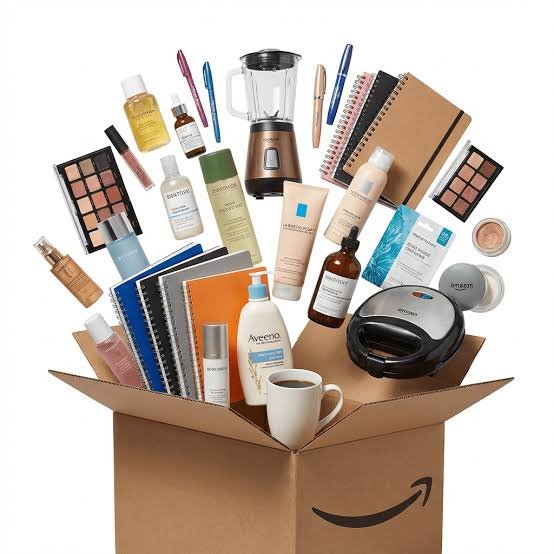
The contents of Amazon Mystery Boxes can vary significantly depending on the source and type of inventory. A box may contain several products from one category or a mixture of unrelated merchandise.
Potential categories can include:
- Consumer electronics
- Mobile phone accessories
- Home and kitchen products
- Tools
- Clothing and accessories
- Beauty and personal-care products
- Toys and games
- Office and school supplies
- Household merchandise
- General merchandise
However, buyers should not assume that every box will contain high-value products. A mystery box is unpredictable by design, and the actual contents depend on the seller’s sourcing process and the terms of the specific offer.
Why Do Sellers Create Mystery Boxes?
Mystery boxes can provide sellers with a way to move merchandise that may be difficult to sell individually. Instead of listing every low-value, mixed, returned, or surplus item separately, a seller can combine products into a box and sell the assortment as one package.
For liquidation businesses, this approach can be useful for moving mixed inventory efficiently. For buyers, it creates the possibility of discovering products that can potentially be used personally or resold.
This is also why the contents can be unpredictable. A seller may not have a reason to guarantee a specific brand, model, or retail value unless those details are explicitly included in the offer.
Amazon Mystery Boxes vs. Liquidation Pallets
Although the terms are sometimes used interchangeably online, Amazon Mystery Boxes and liquidation pallets are not exactly the same thing.
A mystery box generally contains a smaller assortment of products packed into a box, while a liquidation pallet can contain a much larger quantity of merchandise arranged on a pallet. Pallets may also come with a manifest or more detailed information about the inventory, although the amount of information available varies by seller and liquidation channel.
For example, official Amazon Liquidation Auctions currently offers B2B inventory in pallet and truckload formats rather than presenting every liquidation purchase as a mystery box. The marketplace also publishes specific auction information and buyer requirements.
For businesses that want more control over what they purchase, a manifested liquidation load can sometimes be easier to evaluate than a completely unknown mystery box.
Why Are Amazon Mystery Boxes Attractive to Resellers?
For new entrepreneurs, Amazon Mystery Boxes can be appealing because they may provide access to multiple products without requiring the buyer to source each item individually.
A reseller may purchase a box, inspect the contents, identify products with resale potential, and then list individual items through appropriate sales channels. Products that are not suitable for individual resale may potentially be bundled, discounted, donated, or used for another appropriate purpose.
The key is to treat the purchase as an inventory investment rather than a guaranteed profit opportunity.
Before buying, calculate how much you can realistically recover from the merchandise after considering shipping, marketplace fees, testing, cleaning, repairs, packaging, and your time.
Not Every Mystery Box Is a Good Deal
The word “mystery” can make a product sound exciting, but it should not replace due diligence. A box advertised with an extremely high “retail value” does not necessarily mean the buyer will receive products that can actually be resold for that amount.
Retail value and resale value are two different concepts. A product may originally have sold for $100 but currently have a much lower market value, especially if it is used, incomplete, outdated, damaged, or difficult to sell.
This is why experienced resellers focus on realistic market prices rather than simply adding up the manufacturer’s suggested retail prices.
Check the Seller Before Buying Amazon Mystery Boxes
Before purchasing Amazon Mystery Boxes from any third-party seller, research the company carefully. Look for clear business information, contact details, purchasing terms, shipping information, and a transparent description of the merchandise.
Be cautious when a seller refuses to explain the source or condition of the merchandise, makes unrealistic profit promises, pressures you to pay immediately, or insists on payment methods that provide little buyer protection.
If you are considering liquidation inventory for your resale business, you can also explore the Elite Pallet Liquidators Shop to compare available wholesale and liquidation merchandise.
What Should You Look for Before Buying?
Before purchasing Amazon Mystery Boxes, ask the seller several important questions:
- Where does the merchandise come from?
- Is the inventory customer returns, overstock, shelf pulls, or another category?
- Is the merchandise tested?
- What condition should buyers expect?
- Is there a guaranteed number of items?
- Are specific brands or categories guaranteed?
- Are damaged or incomplete products possible?
- What is included in the purchase price?
- How much will shipping cost?
- What is the return or refund policy?
The answers to these questions can help you determine whether the purchase is a reasonable inventory opportunity or simply an attractive-looking gamble.
Final Thoughts on Amazon Mystery Boxes
Amazon Mystery Boxes can be interesting for bargain hunters and resellers, but buyers should understand exactly what they are purchasing. Some mystery-box merchandise may originate from liquidation streams involving returns, overstock, or other secondary-market inventory, but the term itself does not guarantee that the box is directly supplied by Amazon.
Amazon’s own returns process confirms that returned merchandise can eventually enter secondary markets through liquidation and other channels. At the same time, Amazon’s official B2B liquidation marketplace operates through a specific business-to-business auction platform, which is very different from an anonymous mystery-box listing.
Understanding this difference is the first step toward making smarter purchasing decisions.
What Can You Actually Find Inside Amazon Mystery Boxes?
One of the biggest attractions of Amazon Mystery Boxes is the uncertainty surrounding the contents. Unlike a traditional product purchase where you know exactly which item you are ordering, a mystery box can contain a variety of merchandise depending on the seller, inventory source, condition, and type of liquidation stock being offered.
For resellers, this uncertainty can create both an opportunity and a risk. You may discover products that can be sold individually for a good margin, but you may also receive items that require testing, cleaning, repair, discounting, or disposal. That is why understanding the potential contents of Amazon Mystery Boxes is important before deciding whether a particular offer makes financial sense.
1. Electronics and Technology Accessories
Electronics are among the product categories that can appear in mixed liquidation inventory. Depending on the source, an Amazon Mystery Box may contain items such as headphones, Bluetooth accessories, charging cables, adapters, keyboards, computer accessories, smart-home products, or other consumer electronics.
Electronics can be attractive to resellers because certain products have strong consumer demand. However, electronics also require careful inspection. A product may be returned because it was defective, incomplete, incompatible with another device, or simply unwanted by the original purchaser.
Never assume that an electronic product works simply because it is inside unopened-looking packaging. Test products whenever possible before listing them for resale.
2. Home and Kitchen Products
Home and kitchen merchandise can also be found in mixed liquidation inventory. Potential examples include small kitchen accessories, storage products, household tools, organizers, cookware accessories, lighting products, and other everyday items.
These products can be attractive for resellers because they appeal to a broad customer base. Smaller household products can also be relatively easy to photograph, package, and ship individually.
However, inspect products carefully for missing components, broken parts, damaged packaging, stains, or signs of previous use. If an item is incomplete, describe its condition accurately rather than presenting it as new.
3. Clothing, Shoes, and Fashion Accessories
Some Amazon Mystery Boxes may contain apparel and fashion-related merchandise. Depending on the source, this could include clothing, shoes, bags, accessories, or other wearable products.
Fashion inventory requires a different inspection process from electronics. Resellers should check sizes, labels, fabric condition, stains, tears, missing buttons, damaged zippers, odors, and signs of wear.
Packaging can also affect resale value. A new item with original tags may be easier to market than a customer-returned product without its original packaging.
4. Beauty and Personal-Care Products
Beauty and personal-care merchandise may also appear in mixed inventory, but this category deserves additional attention. Products such as cosmetics, grooming accessories, personal-care devices, and related merchandise can have specific storage, packaging, expiry, safety, or hygiene considerations.
Do not automatically list a beauty or personal-care product simply because it looks unused. Inspect the packaging, seals, labels, and expiration information where applicable.
When selling products online, accurate condition information is especially important. Google Merchant Center recognizes specific product-condition values such as new, used, and refurbished, and requires sellers to provide accurate condition information. :contentReference[oaicite:0]{index=0}
5. Toys, Games, and Children’s Products
Toys and games can sometimes be attractive liquidation products because they can have strong seasonal demand. However, resellers should inspect these products carefully for missing pieces, damaged packaging, broken components, or other issues.
Products intended for children can also have additional safety considerations. Do not assume that an item is suitable for resale simply because it appears in a mystery box. Research the product and applicable safety requirements before listing it.
6. Tools and Hardware
Tools can be another potentially useful category for resellers. Hand tools, accessories, hardware, small equipment, and related products can appeal to homeowners, contractors, hobbyists, and DIY customers.
For powered tools and equipment, testing is particularly important. Check whether the product powers on, whether batteries or chargers are included, and whether important components are missing.
A tool that looks valuable based on its original retail price may have considerably less resale value if it is incomplete or non-functional.
7. General Merchandise and Everyday Products
One of the defining characteristics of Amazon Mystery Boxes is that the merchandise can be mixed. You may encounter products from several unrelated categories within the same shipment.
This can include office supplies, household accessories, pet products, seasonal merchandise, storage solutions, sporting goods, hobby products, and other general merchandise.
Mixed inventory can be beneficial for resellers because it allows them to test multiple product categories. At the same time, it requires more work because each item needs to be identified, evaluated, photographed, priced, and listed appropriately.
Customer Returns Can Have Different Conditions
If an Amazon Mystery Box contains customer-return merchandise, the condition of the products can vary considerably. A returned product may be essentially unused, while another product may have visible wear or functional problems.
Amazon’s own explanation of its returns process shows that returned products can go through evaluation and may ultimately be resold, liquidated, donated, or recycled depending on their condition and circumstances.
That is why buyers should never interpret “Amazon returns” as meaning that every product is new or fully functional.
Overstock Is Different From Customer Returns
Another important distinction is between overstock and customer returns.
Overstock generally refers to merchandise that a seller has more of than it currently needs or can sell through its normal channels. Depending on the circumstances, overstock items may be new and unused, although packaging and presentation can still vary.
Customer returns, on the other hand, have previously been purchased and returned. They may be unopened, opened, used, incomplete, or defective.
Understanding the difference can help a reseller estimate the amount of inspection and preparation required before selling the merchandise.
Do Amazon Mystery Boxes Contain High-Value Products?
Potentially, but there is no reason to assume that every Amazon Mystery Box will contain expensive merchandise.
Some sellers promote mystery boxes using large estimated retail values. However, the original retail price of a product is not the same as its current resale value.
For example, a product that originally sold for $100 might have a much lower resale price if it is outdated, used, missing accessories, or available from many competing sellers.
Smart resellers therefore evaluate inventory based on realistic current selling prices rather than relying exclusively on advertised retail values.
How to Evaluate the Contents After Delivery
When your Amazon Mystery Boxes arrive, do not immediately list everything for sale. Create an inspection process.
- Count the items: Compare the quantity with the seller’s description or purchase terms.
- Identify each product: Record the brand, model, size, and other relevant information.
- Inspect the condition: Look for damage, wear, missing parts, and packaging problems.
- Test where appropriate: Electronics and powered products should be tested before resale whenever possible.
- Research market prices: Determine what similar products are actually selling for.
- Separate inventory: Create groups for resale-ready, repairable, incomplete, and unsuitable products.
- Calculate potential revenue: Estimate realistic sales proceeds rather than using inflated retail values.
This process turns an unpredictable box into measurable inventory that you can analyze as a business investment.
Document the Condition of Every Product
Keeping accurate inventory records becomes especially important when dealing with mixed Amazon Mystery Boxes. Record the condition of each product before listing it.
For example, you might categorize inventory as new, open-box, used, damaged, incomplete, or requiring further testing. Your exact categories should match the merchandise and your sales channel.
When selling through Google Merchant Center, make sure the condition shown on your product page and the condition submitted in your product data are consistent. Google specifically warns that mismatched condition information can result in product issues or disapprovals. :contentReference[oaicite:1]{index=1}
Can You Resell Everything From a Mystery Box?
No. One of the biggest mistakes beginners make is assuming that every item inside Amazon Mystery Boxes will automatically be profitable.
Some products may have little demand. Others may have a low resale value after marketplace fees and shipping. Some may require repairs, while others may be unsuitable for resale because of damage, missing parts, condition issues, or applicable restrictions.
A successful reseller knows when to sell, bundle, discount, repair, donate, or otherwise handle different types of inventory.
Turn Mystery Inventory Into a Resale Strategy
The biggest opportunity in Amazon Mystery Boxes is not simply finding one expensive item. It is learning how to evaluate an entire shipment and extract value from different categories of merchandise.
For example, one box might contain several inexpensive products that sell quickly, one higher-value item, and several products that require additional work. Your profitability depends on the total economics of the box rather than one exciting discovery.
If you are comparing mystery boxes with larger wholesale inventory, you can also explore our available liquidation products and compare different inventory options before deciding what fits your resale strategy.
Final Thoughts on Mystery Box Contents
Amazon Mystery Boxes can contain a wide variety of products, including electronics, household merchandise, clothing, accessories, tools, toys, beauty products, and general merchandise. The exact contents and condition depend heavily on the source and terms of the particular offer.
The most important lesson for resellers is to avoid judging a mystery box solely by its advertised retail value. Instead, focus on the actual products, condition, realistic market prices, selling costs, and amount of work required to prepare the merchandise for resale.
Once you understand what can be inside a mystery box, the next question becomes even more important: are Amazon Mystery Boxes actually worth the money?
Are Amazon Mystery Boxes Worth the Money?
After understanding what can be found inside Amazon Mystery Boxes, the next question is the one most buyers and resellers ultimately want answered: are they actually worth the money?
The honest answer is that it depends. Amazon Mystery Boxes can be worthwhile when the purchase price is reasonable, the merchandise has realistic resale potential, and the buyer understands the risks involved. However, a mystery box is not automatically profitable simply because the seller advertises a high estimated retail value.
For resellers, the right way to evaluate an Amazon Mystery Box is to treat it as an inventory investment. You need to consider the purchase price, shipping, product condition, potential selling prices, marketplace fees, repairs, storage, and the time required to prepare and sell the merchandise.
Retail Value Is Not the Same as Resale Value
One of the biggest mistakes beginners make when evaluating Amazon Mystery Boxes is focusing too heavily on the advertised retail value.
A seller might advertise a box containing products with a combined original retail value of $1,000. That does not mean you will be able to sell those products for $1,000.
A product’s current resale value can be significantly lower than its original retail price because of competition, changing consumer demand, product condition, outdated models, missing accessories, or other factors.
For example, a product originally sold for $100 may currently sell for $40 on the secondary market. If the product is used or incomplete, its realistic resale value could be even lower.
When evaluating Amazon Mystery Boxes, focus on realistic current selling prices rather than relying entirely on the manufacturer’s suggested retail price or an estimated retail-value figure provided by the seller.
Calculate the Total Cost Before You Buy
The purchase price is only one part of the cost of an Amazon Mystery Box. Shipping and other expenses can have a major impact on your final profit.
Before purchasing, calculate your estimated total investment:
- Purchase price of the mystery box
- Shipping and freight
- Taxes or import costs where applicable
- Marketplace selling fees
- Payment processing fees
- Testing and inspection costs
- Cleaning costs
- Repair costs
- Replacement accessories
- Packaging materials
- Storage expenses
- Advertising costs
Once you calculate these expenses, you can determine the amount of revenue you would need to generate before the purchase becomes profitable.
Example: Calculating the Potential Profit
Suppose a reseller purchases an Amazon Mystery Box for $300 and pays another $75 for shipping. The initial investment is therefore $375.
After inspecting the merchandise, the reseller estimates that the products could realistically generate $650 in total sales. However, selling fees, packaging, repairs, and other expenses amount to $125.
The estimated calculation would look like this:
- Mystery box: $300
- Shipping: $75
- Total initial cost: $375
- Estimated sales revenue: $650
- Additional selling expenses: $125
- Estimated remaining profit: $150
This is only an example, not a guarantee of what any particular box will generate. The important lesson is that you should calculate your expected return using realistic numbers before purchasing.
What If Some Products Cannot Be Sold?
Another factor that affects the profitability of Amazon Mystery Boxes is unsellable inventory.
You may receive products that are damaged, incomplete, defective, outdated, difficult to identify, or simply not in demand. These products still form part of your purchase cost even though they may generate little or no revenue.
This is why you should never calculate profitability by assuming that every item inside a mystery box will sell at its maximum possible price.
A more conservative approach is to estimate that some percentage of the inventory will require discounting, repair, bundling, donation, or another form of disposal.
Condition Can Make or Break Your Profit
The condition of products inside Amazon Mystery Boxes can have a major effect on resale value.
A sealed, unused product may command a completely different price from a used product with cosmetic damage. An electronic device that works perfectly may be significantly more valuable than one that requires repair.
Before listing an item, determine whether it is new, open-box, used, refurbished, damaged, or incomplete. Your description should accurately reflect the actual condition.
Accurate condition information is particularly important when selling online because customers expect the product they receive to match the description.
Amazon Liquidation Auctions Can Be Different
It is also important to distinguish third-party Amazon Mystery Boxes from official Amazon liquidation inventory.
Amazon Liquidation Auctions, operated through B-Stock, is Amazon’s official B2B liquidation storefront. Its inventory can include categories such as consumer electronics, home goods, apparel, footwear, and other merchandise. The marketplace also lists different inventory types, including overstock and customer returns.
The official marketplace provides specific auction information rather than simply promising a random box filled with valuable products. Buyers should therefore compare the transparency of an inventory offer before deciding where to source.
You can learn more about Amazon Liquidation Auctions through its official B-Stock storefront.
When Amazon Mystery Boxes Can Be Worth It
Amazon Mystery Boxes can make sense in several situations.
1. You Buy at a Reasonable Cost
If the purchase price leaves enough room for shipping, selling expenses, unsellable items, and profit, the opportunity may be worth considering.
2. You Know How to Evaluate Inventory
Experienced resellers are often better positioned to identify products with demand, recognize valuable brands, test electronics, and estimate realistic selling prices.
3. You Have Multiple Sales Channels
Having several legitimate channels for selling inventory can give you more flexibility. You may sell some products through your online store, others through marketplaces, and certain items locally depending on the product and applicable selling rules.
4. You Can Handle Mixed Inventory
Mystery boxes can contain unrelated products. If you already have a system for photographing, testing, categorizing, storing, and listing different types of merchandise, mixed inventory can be easier to manage.
5. You Understand the Risk
The most important factor is accepting that a mystery box does not guarantee profit. If you can afford the possibility of receiving lower-value merchandise and still operate profitably, the purchase may make more sense.
When Amazon Mystery Boxes May Not Be Worth It
There are also situations where buying Amazon Mystery Boxes may not be a good decision.
- You are relying entirely on the advertised retail value.
- You have no experience testing returned merchandise.
- You cannot afford to lose part of your investment.
- The seller refuses to explain the inventory source.
- Shipping costs consume a large portion of your budget.
- The seller provides unrealistic profit guarantees.
- You have no practical way to sell the products.
- The return policy is unclear or nonexistent.
- The seller pressures you to pay immediately.
The Federal Trade Commission recommends researching sellers, comparing prices, reviewing terms and refund policies, and using payment methods that provide appropriate protections when shopping online. :contentReference[oaicite:0]{index=0}
Be Careful With Unrealistic Mystery Box Promises
If a seller claims that every Amazon Mystery Box contains thousands of dollars in guaranteed merchandise for a tiny purchase price, approach the offer with caution.
There is nothing wrong with selling mystery inventory, but a legitimate business should be able to explain what the buyer is actually purchasing, the expected condition, shipping arrangements, and applicable terms.
Be particularly careful when someone insists that you pay using a method that makes recovering your money difficult. The FTC specifically warns consumers about sellers who insist on payment through cryptocurrency, wire transfers, gift cards, or similar methods that can make funds difficult to recover. :contentReference[oaicite:1]{index=1}
Use a Conservative Profit Calculation
One of the best ways to protect yourself when buying Amazon Mystery Boxes is to use conservative assumptions.
Instead of assuming that every item will sell at the highest price you find online, calculate your potential revenue using realistic market prices. Also assume that some products may be damaged, incomplete, slow-moving, or difficult to sell.
For example, if you estimate that a box could generate $800 in sales, do not automatically treat the entire $800 as guaranteed revenue. Consider reducing your estimate to account for returns, discounts, fees, and unsellable products.
This approach gives you a more realistic picture of the potential return on your investment.
Compare Mystery Boxes With Other Liquidation Inventory
If your primary goal is building a resale business, you should not limit yourself to Amazon Mystery Boxes.
Liquidation pallets, manifested lots, overstock inventory, customer-return pallets, shelf pulls, and truckloads can provide different levels of transparency and purchasing risk.
A mystery box may be suitable for someone who enjoys uncertainty and wants a smaller quantity of mixed products. A reseller looking for greater control over inventory may prefer a pallet with more detailed information about the products.
You can browse our wholesale and liquidation inventory to compare available products and determine which type of inventory fits your business model.
Are Amazon Mystery Boxes Worth It for Beginners?
For a complete beginner, Amazon Mystery Boxes can be an educational way to learn about inventory evaluation, product research, pricing, and resale. However, beginners should start cautiously rather than investing a large amount of money into an unknown shipment.
A smaller purchase can allow you to learn how the process works without exposing your entire business budget to one inventory decision.
Before buying, research the seller, calculate the total cost, understand the condition, and have a plan for selling the products before they arrive.
Are Amazon Mystery Boxes Worth It for Experienced Resellers?
Experienced resellers may have an advantage because they already understand sourcing, pricing, testing, listing, customer service, and inventory management.
However, experience does not eliminate the risk. The profitability of every Amazon Mystery Box still depends on the actual merchandise received and the price paid.
A professional reseller should evaluate the deal based on expected economics rather than excitement about potentially discovering a valuable product.
Final Verdict: Are Amazon Mystery Boxes Worth It?
So, are Amazon Mystery Boxes worth it?
They can be, but they are not automatically profitable.
The value of a mystery box depends on the purchase price, inventory quality, product condition, shipping cost, resale demand, selling expenses, and the buyer’s ability to efficiently process and sell the merchandise.
The safest approach is to treat a mystery box as an uncertain inventory purchase rather than a guaranteed bargain. Research the seller, understand the terms, calculate your total cost, use conservative resale estimates, and never risk money you cannot afford to lose.
For resellers who want more control over what they purchase, comparing mystery boxes with transparent liquidation lots and pallets can be a smarter sourcing strategy.
Amazon Mystery Box Risks, Scams, and Mistakes to Avoid
While Amazon Mystery Boxes can create opportunities for bargain hunters and resellers, they also come with risks that should not be ignored. The biggest mistake is assuming that every mystery box advertised online is automatically connected to Amazon or that every box will contain valuable merchandise.
A successful purchase starts with understanding the risks. By identifying suspicious offers, checking the seller, understanding the merchandise condition, and protecting your payment, you can make much more informed decisions before buying.
1. Not Every Amazon Mystery Box Comes From Amazon
This is one of the most important things to understand. The term Amazon Mystery Boxes can be used by independent sellers to describe boxes containing merchandise they claim originated from Amazon returns, overstock, or liquidation inventory.
However, the use of the Amazon name does not automatically mean that Amazon is the seller.
Amazon has an official B2B liquidation marketplace through B-Stock, where qualified business buyers can purchase liquidation inventory through Amazon Liquidation Auctions. This is different from purchasing a mystery box from an unfamiliar website or social-media seller.
Before buying, determine who is actually selling the merchandise and whether the seller can provide credible information about its inventory source.
You can learn more about Amazon’s official liquidation marketplace before comparing it with third-party offers.
2. Beware of Unrealistic “Guaranteed” Profits
One of the most common mistakes beginners make with Amazon Mystery Boxes is believing claims that guarantee enormous profits.
For example, an advertisement may claim that you can pay $100 and receive $1,000 worth of merchandise. While a particular box could theoretically contain valuable products, no buyer should assume that an advertised retail-value figure automatically translates into $1,000 in resale revenue.
Retail value, estimated value, and actual resale value are different measurements.
A responsible reseller should calculate potential revenue using realistic current market prices and should account for products that may be damaged, incomplete, difficult to sell, or worth less than expected.
3. Do Not Judge a Box by Its Pictures Alone
High-quality photographs can make Amazon Mystery Boxes look extremely attractive. However, promotional images may not represent the exact merchandise you will receive.
Ask whether the photographs show actual inventory or are simply examples of what might be included.
If a seller displays expensive electronics, premium fashion products, and other desirable merchandise but refuses to explain whether those items are guaranteed, you should be cautious.
Whenever possible, request photographs of the actual inventory, packaging, pallets, boxes, labels, or manifest associated with the purchase.
4. Be Careful With Fake Liquidation Websites
Some fraudulent websites are designed to look like legitimate wholesale or liquidation businesses. They may use professional-looking logos, product photographs, fake testimonials, copied descriptions, and extremely low prices to create a sense of trust.
Before purchasing Amazon Mystery Boxes from an unfamiliar company, research the business independently.
Look for:
- A verifiable company identity
- Clear contact information
- Consistent business information
- Transparent shipping terms
- Clear refund or dispute policies
- Independent customer feedback
- Professional and consistent product information
The Federal Trade Commission recommends researching unfamiliar sellers and checking reviews and complaints before making online purchases. It also recommends considering the total cost and understanding the seller’s terms before paying.
Read the FTC’s online shopping guidance for additional consumer-protection information.
5. Avoid Pressure to Pay Immediately
Be cautious if someone selling Amazon Mystery Boxes tells you that you must pay immediately or that the offer will disappear within minutes.
Pressure is often used to prevent buyers from researching a seller or comparing prices.
A legitimate business should allow you enough time to understand what you are purchasing, review the terms, calculate shipping, and make an informed decision.
If you feel that you are being rushed into a payment, stop the transaction and investigate the offer further.
6. Be Careful With High-Risk Payment Methods
The payment method can be just as important as the seller itself. If something goes wrong, the ability to dispute a transaction or recover funds can depend heavily on how you paid.
Be especially cautious when a seller insists that you use cryptocurrency, gift cards, wire transfers, or another payment method that provides limited protection.
The FTC warns that scammers commonly use payment methods that make it difficult for victims to recover their money.
You can review the FTC’s guidance on payment scams to better understand why certain payment requests should raise concerns.
7. Understand the Condition of the Merchandise
Another major risk with Amazon Mystery Boxes is misunderstanding the word “returns.” Customer-return merchandise is not necessarily new merchandise.
A returned product may be unopened, opened, used, damaged, incomplete, defective, or otherwise unsuitable for immediate resale.
Amazon explains that returned products can go through evaluation and may be resold, returned to selling partners, liquidated, donated, or recycled depending on their condition and circumstances.
That means you should never purchase a mystery box assuming every product will arrive in perfect working condition.
Read Amazon’s explanation of what happens to customer returns to understand the broader returns process.
8. Do Not Assume Every Item Will Be Resellable
A box can contain products that look interesting but have little practical resale value.
For example, you might receive:
- Outdated electronics
- Products missing accessories
- Damaged packaging
- Incomplete sets
- Used merchandise
- Products with cosmetic damage
- Low-demand products
- Items requiring repairs
These products still contribute to the amount you paid for the box, even if they generate little revenue.
Experienced resellers therefore evaluate the entire inventory rather than focusing on the most valuable-looking product inside the shipment.
9. Do Not Ignore Shipping Costs
A cheap Amazon Mystery Box can become an expensive purchase once shipping is added.
Always calculate the delivered cost before making a buying decision.
For example, a $150 box with $100 shipping has an effective acquisition cost of $250 before taxes, marketplace fees, repairs, packaging, and other expenses.
Comparing only the advertised product price can therefore give you a misleading impression of the deal.
10. Avoid Buying Without a Resale Plan
Another common mistake is purchasing Amazon Mystery Boxes before deciding how the merchandise will actually be sold.
Before ordering, consider:
- Who is your target customer?
- Which platforms will you use?
- How much competition exists?
- What prices are similar products currently selling for?
- How much will shipping cost your customers?
- How long can you afford to hold the inventory?
Having a resale plan can help prevent you from accumulating inventory that sits in storage without generating revenue.
11. Research Products Before Listing Them
Do not automatically copy the product title or description supplied by the seller. Identify the actual product and verify its specifications before creating your listing.
Check the brand, model number, size, color, condition, included accessories, and other important details.
If you sell through Google Merchant Center, accurate product information is particularly important because Google requires submitted product data to accurately represent the products being offered.
Review Google’s product condition requirements when preparing product listings.
12. Keep Evidence When Your Box Arrives
When your Amazon Mystery Boxes arrive, document the shipment before you start distributing the merchandise.
Take photographs or video of the package, shipping label, packaging condition, and contents. Keep your invoice, order confirmation, seller communications, and any available manifest.
If the shipment contains significantly different merchandise from what was advertised, your documentation can help when communicating with the seller or filing a dispute through the applicable payment or marketplace system.
13. Watch Out for Fake “Recovery” Services
If you lose money to a fraudulent seller, be careful about what happens next.
Someone may contact you claiming to be a recovery agent, investigator, lawyer, government representative, or cybersecurity professional who can retrieve your money for an upfront fee.
This can be another scam.
The FTC warns that refund and recovery scammers specifically target people who have already lost money and promise to recover those funds in exchange for additional payment or personal information.
If you encounter this situation, read the FTC’s refund and recovery scam guidance before sending additional money.
14. Understand That Mystery Boxes Are Not Guaranteed Profit
The most important lesson for anyone purchasing Amazon Mystery Boxes is that uncertainty is part of the product.
If you need to know exactly what products you are buying and how much each item is worth, a completely random mystery box may not be the best inventory source for your business.
Consider comparing mystery boxes with manifested liquidation pallets, customer-return pallets, overstock lots, shelf pulls, and other wholesale inventory where more information may be available before purchase.
How to Protect Yourself Before Buying Amazon Mystery Boxes
Use this checklist before making your next purchase:
- Research the seller independently.
- Confirm who is actually selling the merchandise.
- Determine whether the inventory is official liquidation stock or third-party merchandise.
- Ask about product condition.
- Ask whether the photographs represent actual inventory.
- Review the shipping cost.
- Read the return and refund policy.
- Calculate your complete acquisition cost.
- Research realistic resale prices.
- Avoid guaranteed-profit claims.
- Avoid unnecessary pressure to pay immediately.
- Use an appropriate payment method.
- Keep copies of all transaction records.
- Inspect and document the shipment when it arrives.
Final Thoughts on Amazon Mystery Box Risks
Amazon Mystery Boxes can be an interesting source of inventory, but they should be approached with the same level of caution as any other wholesale or liquidation purchase.
The biggest risks usually come from misunderstanding the source of the merchandise, overestimating resale value, ignoring product condition, underestimating shipping and selling costs, or trusting an unfamiliar seller without performing proper research.
You do not need to avoid mystery boxes completely. Instead, learn how to evaluate them properly.
If you are looking for additional liquidation inventory to compare with mystery boxes, you can browse our wholesale and liquidation products and compare different inventory options based on your budget and resale strategy.
How Resellers Can Approach Amazon Mystery Boxes Profitably
After looking at what can be inside Amazon Mystery Boxes, how their value should be calculated, and the risks buyers need to avoid, we can answer the bigger question: how can a reseller approach mystery-box inventory intelligently?
The key is to stop thinking of Amazon Mystery Boxes as a guaranteed bargain and start treating them as an inventory-sourcing opportunity. Your results will depend on the price you pay, the quality of the merchandise, your ability to identify products with demand, and how efficiently you can turn inventory into sales.
1. Start With a Budget You Can Afford
Before buying Amazon Mystery Boxes, establish a sourcing budget. Do not put your entire business capital into one unknown shipment simply because the advertised retail value looks attractive.
A smaller purchase can allow you to learn how the seller operates, evaluate the quality of the merchandise, understand the amount of work involved, and determine whether mystery-box inventory fits your business.
Once you have experience with a particular supplier and understand its inventory quality, you can make more informed decisions about larger purchases.
2. Calculate Your Maximum Purchase Price
One of the smartest ways to approach Amazon Mystery Boxes is to determine your maximum acceptable purchase price before placing an order.
Start with your realistic expected sales revenue. Then subtract your estimated selling expenses, shipping, repairs, packaging, marketplace fees, and desired profit.
For example, if you reasonably expect the merchandise to generate $800 in sales and estimate $200 in additional expenses while targeting a $200 profit, your maximum acquisition cost would be approximately $400.
This approach prevents you from paying an excessive amount simply because a seller advertises a high estimated retail value.
3. Research Actual Market Prices
Do not base your calculations entirely on the original retail price of the products inside Amazon Mystery Boxes.
Research current prices for comparable products in similar conditions. Pay attention to what customers are actually paying rather than simply looking at the highest listing price you can find.
Condition, brand, model, demand, competition, seasonality, and included accessories can all affect the price a product can realistically achieve.
4. Sort Your Inventory Immediately
When your Amazon Mystery Boxes arrive, organize the merchandise into categories immediately.
A simple system can include:
- Ready to sell: Products that have been inspected and are ready for listing.
- Needs testing: Electronics or other products that require functional testing.
- Needs cleaning: Products that are usable but require preparation.
- Needs repair: Items that may be profitable after reasonable repairs.
- Incomplete: Products missing accessories or components.
- Low-value: Products that may be better bundled or discounted.
- Unsuitable: Items that should not be resold in their current condition.
This process helps you understand the real composition of your purchase instead of making decisions based only on the first few products you discover.
5. Test Electronics Before Reselling Them
If your Amazon Mystery Boxes contain electronics, testing should be part of your standard workflow.
Check important functions such as power, charging, display, buttons, connectivity, speakers, microphones, cameras, and other features appropriate to the product.
If accessories are required, confirm whether chargers, cables, batteries, remotes, adapters, or other components are included.
A product that works correctly and includes its necessary accessories will generally be easier to market than an incomplete or untested item.
6. Create Accurate Product Listings
Once you have inspected your Amazon Mystery Boxes, create accurate listings for the products you intend to sell.
Include the correct brand, product name, model number, size, condition, specifications, and included accessories. Use clear photographs of the actual product whenever possible.
Do not describe a used or returned item as new simply because it came from an Amazon-related liquidation source. Your product description should accurately represent the merchandise you are selling.
Accurate listings can help build customer trust and reduce unnecessary returns and disputes.
7. Use Multiple Sales Channels
Having more than one legitimate sales channel can make it easier to move mixed inventory from Amazon Mystery Boxes.
Depending on the product and the rules of the platform, resellers may use their own online store, established marketplaces, social-commerce channels, local sales, or other appropriate channels.
Different products may perform differently on different platforms. A small household item might sell quickly through one channel, while a higher-value electronic product could perform better through another.
The objective is to match the product with the right customer rather than forcing every item through one sales channel.
8. Do Not Hold Slow-Moving Inventory Forever
One of the hidden costs of Amazon Mystery Boxes is inventory that does not sell.
Products sitting in storage tie up your capital and consume space. If an item has been listed for a reasonable period without attracting buyers, consider adjusting the price, improving the listing, bundling the product, or moving it through another appropriate sales channel.
Experienced resellers understand that recovering most of the cost from a slow-moving product can sometimes be better than holding it indefinitely while waiting for an unrealistic price.
9. Track Every Purchase
Keep detailed records for every Amazon Mystery Box you purchase.
Record:
- Purchase price
- Shipping cost
- Taxes and duties where applicable
- Number of items received
- Condition of each item
- Estimated resale price
- Actual selling price
- Marketplace fees
- Repair costs
- Packaging costs
- Unsold or unsellable products
- Total profit or loss
After several purchases, these records can help you determine whether mystery-box sourcing is actually producing acceptable returns for your business.
10. Compare Mystery Boxes With Liquidation Pallets
Not every reseller needs to buy Amazon Mystery Boxes. Your preferred inventory format should depend on your business model, budget, experience, storage capacity, and tolerance for uncertainty.
| Inventory Type | Potential Advantage | Potential Challenge |
|---|---|---|
| Amazon Mystery Boxes | Smaller quantity and potentially diverse merchandise | Less certainty about exact contents |
| Liquidation Pallets | Larger quantity and potential for bulk savings | Requires more capital and storage |
| Manifested Lots | More information about expected inventory | Manifest information does not eliminate condition risk |
| Truckloads | Large-scale sourcing and potentially lower unit costs | Higher capital, freight, and storage requirements |
For a beginner, a smaller purchase may be easier to manage. For an established reseller with storage and distribution capabilities, larger liquidation lots may offer more opportunities to scale.
11. Consider Manifested Inventory When You Need More Control
If uncertainty is your biggest concern, consider purchasing liquidation inventory with a detailed manifest when one is available.
A manifest can provide information about products included in a lot, but buyers should still understand that the exact level of accuracy, completeness, and condition information can vary between sellers.
A manifest is therefore a tool for making a more informed decision, not a guarantee that every item will arrive in perfect condition or sell at a particular price.
12. Build a Reliable Sourcing Strategy
Successful reselling is rarely based on finding one amazing Amazon Mystery Box. It is based on developing a repeatable sourcing system.
Once you identify suppliers that provide consistent inventory quality, reasonable pricing, transparent terms, and reliable shipping, you can compare their offers and determine which ones deserve further business.
Keep records of supplier performance, including product quality, order accuracy, shipping experience, communication, and the profitability of the inventory you receive.
13. Know When to Walk Away
Sometimes the best purchase decision is not buying anything.
Walk away from an Amazon Mystery Box when the seller refuses to answer basic questions, the total cost is unclear, the payment method creates unnecessary risk, the promised value appears unrealistic, or the expected resale revenue does not provide enough room for expenses and profit.
There will always be another inventory opportunity. Protecting your capital is more important than chasing a deal that looks exciting.
Are Amazon Mystery Boxes Worth It for Resellers?
After examining the contents, costs, risks, and potential resale opportunities, the answer is straightforward: Amazon Mystery Boxes can be worth it for the right buyer, but they are not suitable for every reseller.
They can work particularly well for buyers who understand inventory evaluation, have multiple sales channels, can inspect and test merchandise, and are comfortable with some uncertainty.
They may be less suitable for beginners who expect guaranteed profits or who do not yet understand how to calculate landed inventory costs.
When a Mystery Box Makes Sense
An Amazon Mystery Box may make sense when:
- The seller is properly researched and appears legitimate.
- The inventory source and condition are clearly explained.
- The purchase price leaves room for profit.
- Shipping costs are reasonable.
- You have a clear resale strategy.
- You can afford some unsellable or low-value merchandise.
- You understand the risks of customer-return inventory.
- You can inspect and accurately list the products.
When a Mystery Box Does Not Make Sense
You should reconsider buying when:
- The seller guarantees unrealistic profits.
- The merchandise source cannot be verified.
- The condition is deliberately unclear.
- The seller refuses to provide basic transaction information.
- The total delivered cost is too high.
- You have no way to test or sell the merchandise.
- You would be using money needed for essential business expenses.
Final Verdict on Amazon Mystery Boxes
So, are Amazon Mystery Boxes worth it? They can be—but the value comes from buying intelligently, not from the mystery itself.
A good purchase is one where the potential resale revenue comfortably exceeds your complete acquisition and selling costs. A bad purchase is one where you rely on an impressive advertised retail value without researching the actual market.
For resellers, the most important principles are simple: research the seller, understand the inventory, calculate the complete cost, inspect every product, research realistic selling prices, and protect your capital.
Remember that not every box marketed as an “Amazon Mystery Box” is directly sold by Amazon. If you want to compare mystery-box sourcing with other wholesale options, you can visit the Elite Pallet Liquidators Shop and explore available liquidation inventory.
Start Small, Learn, and Scale Carefully
If you are new to liquidation reselling, there is no need to begin with the largest purchase available. Start with an amount that allows you to learn without putting your entire business budget at risk.
Track your results carefully. If your first purchase performs well, identify why it worked. If it performs poorly, determine whether the problem was the supplier, purchase price, product condition, shipping cost, selling channel, or your resale strategy.
Use that information to improve your next purchase.
The long-term goal is not to find a magical box filled with expensive products. The goal is to build a repeatable sourcing process that allows you to acquire inventory at a price that makes sense, sell it efficiently, and generate sustainable profit.
Conclusion
Amazon Mystery Boxes can provide an interesting entry point into liquidation and resale, but they should always be approached with realistic expectations. The contents can vary, product conditions can differ, and the advertised retail value does not guarantee actual resale revenue.
For bargain hunters, mystery boxes can provide an element of excitement. For resellers, however, profitability should always come before excitement.
Research before buying, calculate before spending, inspect before listing, and track your results after selling.
If you follow those principles, you will be in a much stronger position to determine whether Amazon Mystery Boxes deserve a place in your inventory-sourcing strategy.
Buy based on numbers, not hype—and let your actual results determine whether mystery-box sourcing is right for your business.