
How to Start a Liquidation Reselling Business: 7 Proven Steps for Beginners
Starting a liquidation reselling business can be an attractive way to enter the retail market without purchasing every product at traditional wholesale prices. Liquidation inventory can include pallets, truckloads, overstock, customer returns, shelf pulls, excess inventory, and other merchandise that businesses need to move through alternative sales channels.
However, successful liquidation reselling is not simply about finding cheap products and selling them for more money. A profitable operation requires careful sourcing, realistic budgeting, inventory inspection, market research, accurate pricing, and an effective sales strategy. Beginners who understand these fundamentals can make better purchasing decisions and reduce some of the common mistakes associated with bulk inventory.
In this guide, we will walk through 7 practical steps for starting a liquidation reselling business, from choosing your business model and determining your budget to sourcing inventory, preparing products, pricing merchandise, and developing a strategy for long-term growth.
What Is a Liquidation Reselling Business?
A liquidation reselling business purchases merchandise through liquidation or surplus inventory channels and then resells those products to consumers or other businesses. The merchandise may originate from retailers, manufacturers, distributors, warehouses, or other businesses that need to clear excess or unwanted inventory.
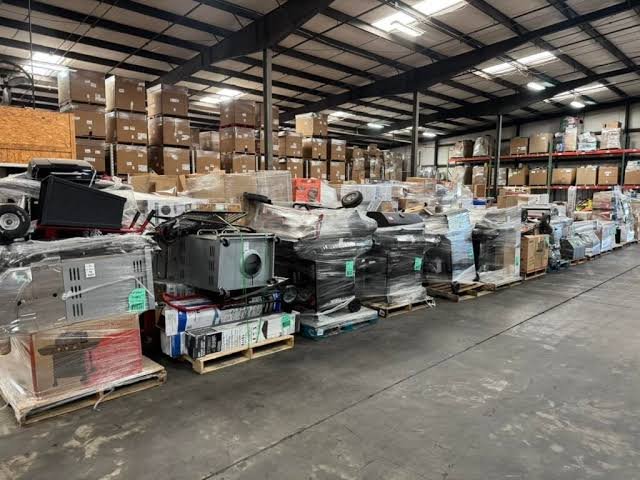
Liquidation inventory can come in many forms. Some loads may contain new overstock, while others may contain customer returns, open-box merchandise, shelf pulls, discontinued products, or mixed-condition inventory. The exact condition and contents depend on the specific inventory source.
This variety is one reason liquidation reselling can appeal to entrepreneurs and established retailers. A business can specialize in one category, such as electronics, apparel, tools, or household goods, or develop a broader inventory strategy using general merchandise.
Why Start a Liquidation Reselling Business?
One of the main attractions of liquidation reselling is the ability to purchase merchandise in bulk. Instead of sourcing individual products from many different suppliers, a reseller can purchase pallets or larger loads containing multiple units.
This can create opportunities for businesses that have suitable storage, established sales channels, and the ability to process inventory efficiently. However, lower acquisition prices do not automatically guarantee profits. The reseller still needs to determine whether the products have sufficient market demand and whether the potential selling prices justify the total investment.
A successful liquidation reselling business therefore focuses on the complete economics of each purchase rather than simply looking at the advertised retail value of the merchandise.
Choose Your Liquidation Reselling Business Model
Before purchasing your first pallet, decide how you intend to make money from the inventory. Your business model will influence the type of merchandise you should purchase, how much you need to invest, and where you should sell your products.
Some resellers purchase pallets and sell individual items directly to consumers. Others purchase larger quantities and sell products wholesale to smaller retailers. You can also combine multiple approaches depending on the merchandise you receive.
- Online resale: Sell individual products through your eCommerce store and other online sales channels.
- Physical retail: Display liquidation merchandise in a physical store or retail location.
- Wholesale resale: Sell products in larger quantities to other businesses.
- Social selling: Promote selected products through social media and direct customer sales.
- Local resale: Sell merchandise directly to customers within your local market.
Choosing your sales strategy before buying inventory can help prevent you from purchasing products that do not match your customers or available selling channels.
Start With a Realistic Budget
One of the most important steps in building a liquidation reselling business is determining how much money you can comfortably invest. Your budget should not be based solely on the purchase price of the pallet or truckload.
Consider the complete cost of acquiring and preparing the merchandise. Your expenses may include inventory, freight, storage, cleaning, testing, repairs, packaging, advertising, payment processing, marketplace fees, and customer returns.
For example, a pallet may appear inexpensive when you only consider its purchase price, but shipping and processing costs can significantly increase the actual investment. Calculating the total cost before buying allows you to establish more realistic resale prices and profit expectations.
Start Small and Learn the Process
New resellers often make the mistake of purchasing a large truckload before understanding how liquidation inventory works. Starting with a manageable quantity can allow you to learn how to receive, inspect, photograph, list, price, store, and sell products without immediately committing a large amount of working capital.
A smaller purchase can also help you discover which product categories perform best with your customers. Once you have reliable sales data and a repeatable inventory process, you can consider increasing your purchasing volume.
Find Reliable Liquidation Inventory Sources
Finding the right inventory source is one of the most important steps when building a liquidation reselling business. The quality of your sourcing decisions can directly affect your product selection, operating costs, customer satisfaction, and potential resale margins.
When researching liquidation inventory, look for suppliers that provide clear information about the merchandise. Product descriptions should explain what type of inventory is available and, when possible, provide information about product condition, estimated quantities, brands, categories, or other relevant characteristics.
Do not evaluate a supplier based solely on an attractive advertised price. A low purchase price may not provide a good opportunity if the merchandise has limited demand, requires extensive repairs, or generates significant additional costs before it can be sold.
Evaluate the Supplier Before Purchasing
Before placing an order, take time to research the supplier and understand the purchasing process. A professional sourcing process should include reviewing available product information, shipping terms, payment requirements, return policies where applicable, and any other conditions associated with the purchase.
It is also important to understand whether the inventory is manifested or unmanifested. A manifest can provide additional information about the expected contents of a load, while an unmanifested load may provide less certainty about the specific products you will receive.
Neither option automatically guarantees profitability. The important thing is to understand the level of information available and determine whether you are comfortable with the associated purchasing risk.
Understand the Difference Between Pallets and Truckloads
One of the biggest decisions for a liquidation reselling business is determining whether to purchase individual pallets or larger truckload quantities. The right option depends on your budget, storage capacity, sales volume, and experience.
Liquidation Pallets
Pallets are generally more manageable for businesses that are starting out or testing a particular product category. A pallet can provide enough inventory to evaluate demand without requiring the same level of capital and storage space as a full truckload.
For beginners, pallets can also make the receiving and inspection process easier. You can learn which products sell quickly, which categories generate the strongest response, and which types of inventory may not fit your customer base.
Liquidation Truckloads
Truckloads involve significantly larger quantities of merchandise and therefore require more preparation. A truckload can make sense for established businesses with adequate warehouse space, multiple sales channels, sufficient working capital, and the ability to process inventory efficiently.
Although purchasing larger quantities can provide economies of scale in some situations, it can also increase your exposure to unsold inventory. Before purchasing a truckload, make sure your business has a realistic plan for receiving, storing, processing, marketing, and selling the merchandise.
Choose the Right Product Category
Not every liquidation category will be suitable for every reseller. Your product selection should be based on your existing customers, market knowledge, sales channels, available storage, and ability to process the merchandise.
Common liquidation categories can include:
- Electronics and electronic accessories
- General merchandise
- Apparel and footwear
- Household products
- Toys and games
- Tools and hardware
- Beauty and personal-care products
- Seasonal merchandise
A reseller who understands one category well may have an advantage over someone who purchases random merchandise without understanding the market. For example, if your customers regularly purchase electronics, building your inventory around technology products may be more practical than buying unrelated merchandise simply because it appears inexpensive.
Research the Demand Before Buying
Market research should happen before you purchase inventory, not after the products arrive. Search for comparable products and investigate what customers are currently paying for similar merchandise.
Look at multiple listings rather than relying on one seller’s price. Consider whether products are actually selling, how long similar listings remain available, and whether competitors are offering the same merchandise at significantly lower prices.
Search trends and industry information can also help you understand broader consumer demand. However, your own sales history is often one of the most valuable sources of information. Track which products sell quickly, which products require discounts, and which products remain in storage.
Calculate Potential Resale Value Carefully
When evaluating a potential liquidation reselling business purchase, avoid assuming that the total estimated retail value represents your actual potential revenue. Original retail prices and realistic liquidation resale prices can be very different.
Instead, estimate what customers are realistically willing to pay for the specific products and conditions you expect to receive.
For example, if a pallet contains products with an estimated retail value of $10,000, that does not mean you will necessarily generate $10,000 in sales. Some items may sell below retail, some may require discounts, and some may take considerably longer to sell.
A conservative estimate can provide a more useful basis for deciding whether the purchase makes financial sense.
Consider Condition and Processing Requirements
Product condition is another major factor when choosing liquidation inventory. New and sealed merchandise may require less preparation than customer returns or untested products, while open-box and used inventory may require additional inspection.
Ask yourself how much time and money will be required to prepare the merchandise for resale. Products may need cleaning, testing, repackaging, repairs, missing components, or new product photographs.
These costs should be included in your calculations before you decide how much you are willing to pay for the inventory.
Build Relationships With Reliable Suppliers
Once you identify suppliers that consistently provide inventory that fits your business, developing a professional purchasing relationship can become valuable. Keep records of your purchases, product performance, shipping experiences, and overall results.
Over time, this information can help you determine which sources consistently provide inventory that matches your business model. Instead of constantly searching for the cheapest available load, focus on developing a sourcing process that produces predictable and manageable results.
Receive Your Liquidation Inventory Properly
Once you have purchased your inventory, the next important stage of building a liquidation reselling business is receiving and processing the merchandise correctly. Your work does not end when the pallet or truckload arrives. Proper receiving procedures can help you understand exactly what you purchased and prepare the products for resale.
Before unloading the shipment, make sure you have enough space to organize the merchandise. If you are receiving a large truckload, plan the unloading process in advance and ensure that your storage area can accommodate the inventory.
Keep your purchase documentation, inventory information, shipping records, and any available manifest accessible during the receiving process. These records can help you compare the merchandise received with the information provided when you made the purchase.
Inspect the Inventory Before Listing It
One of the most important steps in a liquidation reselling business is inspecting products before they are offered to customers. Do not immediately list every item without first understanding its condition.
Separate the merchandise into different condition categories where appropriate. For example, you may create groups for new and sealed products, open-box products, used merchandise, damaged items, incomplete products, and items that require additional testing.
This process can help you determine which products are ready for sale and which require additional work.
Check Product Condition Carefully
Product condition can have a significant impact on resale value. Two products that appear identical may have very different market values if one is brand new and the other has visible damage or missing components.
During inspection, look for:
- Visible scratches, dents, cracks, or other physical damage
- Missing parts or accessories
- Damaged or opened packaging
- Signs of previous use
- Product labels and model information
- Broken components
- Functionality issues where testing is possible
- Expired or outdated products where applicable
Document significant issues as you work through the inventory. Taking notes or photographs can make it easier to create accurate product listings later.
Test Products When Appropriate
Some liquidation merchandise requires functional testing before it can be accurately described. Electronics, appliances, tools, and other products with mechanical or electrical components may need additional inspection.
If an item can be safely tested, verify the functions that are relevant to the product. For electronics, this may include checking whether the device powers on, whether major controls work, and whether important components operate as expected.
Do not advertise an item as fully functional if you have not verified its functionality. If a product remains untested, clearly communicate that condition in the product listing.
Organize Your Inventory by Category
After inspection, organize your merchandise into logical categories. A well-organized inventory system can save considerable time once customers begin placing orders.
You can organize products according to category, brand, condition, SKU, product type, or storage location. The best system depends on the size and complexity of your liquidation reselling business.
For example, electronics can be stored separately from household products, while new merchandise can be separated from customer returns and open-box inventory. Assigning storage locations can also make it easier to locate products when orders arrive.
Calculate Your True Cost Per Product
One common mistake among new liquidation resellers is calculating profitability using only the purchase price of the inventory. Your actual cost can be considerably higher once additional expenses are included.
Consider the following costs:
- Inventory purchase price
- Freight and shipping
- Handling and unloading
- Storage
- Cleaning
- Testing
- Repairs
- Replacement components
- Packaging materials
- Advertising
- Payment processing fees
- Marketplace fees
Adding these expenses to your calculations gives you a better understanding of how much you actually invested in the merchandise.
Separate Saleable and Unsaleable Merchandise
Not every item received in a liquidation shipment will necessarily be suitable for immediate resale. Some products may be damaged beyond economical repair, missing essential components, or otherwise unsuitable for your target market.
Separate these products from your saleable inventory rather than allowing them to become mixed together. You may be able to recover some value from certain items through parts, recycling, bundles, discounted sales, or other appropriate channels, depending on the product.
The objective is to understand the condition and potential value of the entire shipment instead of assuming every unit will generate the same return.
Clean and Prepare Products for Sale
Products that require cleaning should be prepared before photography and listing. Remove dust, dirt, packaging residue, and other removable imperfections where appropriate.
Be careful when cleaning electronics and other sensitive products. Follow suitable manufacturer guidance and avoid using cleaning methods that could damage the merchandise.
Good presentation can make a difference when selling online. Clean products with clear photographs and accurate descriptions can provide customers with a better understanding of what they are purchasing.
Create Accurate Product Listings
Once the inventory has been inspected and prepared, create detailed product listings. Include the product name, condition, relevant specifications, quantity, features, and any important limitations.
If an item has noticeable damage or missing accessories, disclose it clearly. Avoid exaggerating the condition or making claims that cannot be verified.
Accurate listings can help reduce customer confusion and minimize disputes after the sale. They can also help establish trust as your liquidation reselling business grows.
Photograph the Actual Merchandise
When possible, photograph the actual products you are selling rather than relying entirely on generic manufacturer images. This is particularly important for used, open-box, customer-return, or mixed-condition inventory.
Take clear photographs from multiple angles and show important details. If there is a defect or visible sign of wear, photograph it and mention it in the product description.
For larger inventory loads, you can also photograph groups of similar products while maintaining accurate records of individual units.
Keep Detailed Inventory Records
Record how many products you received, their condition, purchase cost, preparation status, listing price, sale price, and selling date. These records can become extremely valuable as your business grows.
Tracking your inventory performance allows you to identify which products generate the strongest results and which categories may not be worth purchasing again.
For example, if electronics consistently sell within a few days while certain household products remain in storage for several months, your future purchasing decisions can reflect that information.
Price Your Liquidation Products for Profit
After receiving, inspecting, and organizing your inventory, the next major step in building a successful liquidation reselling business is setting the right prices. Your pricing strategy needs to balance profitability with what customers are realistically willing to pay.
One of the most common mistakes new resellers make is pricing products based entirely on their original retail value. Retail value can help you understand the general positioning of a product, but it does not necessarily represent its current resale value. Instead, research comparable products and consider their current market prices, condition, specifications, demand, shipping costs, and selling fees.
For additional guidance when planning your business finances and startup costs, the U.S. Small Business Administration Business Guide provides resources covering business planning, startup costs, financial management, marketing, and growth.
Use Different Pricing Strategies
Not every product in your inventory needs to follow the same pricing strategy. Depending on the merchandise, you may use different approaches to maximize your overall return.
- Competitive pricing: Price products close to comparable market listings.
- Premium pricing: Use higher prices for desirable products in excellent condition.
- Clearance pricing: Reduce slow-moving inventory to recover working capital and storage space.
- Bundle pricing: Combine related products and offer them as a package.
- Volume pricing: Offer discounts to customers purchasing multiple units.
The objective is not necessarily to obtain the highest possible price for every individual item. A successful liquidation reselling business also needs to consider inventory turnover. Selling products consistently can allow you to recover your investment and reinvest the money into new inventory.
Choose the Right Sales Channels
Having good merchandise is only one part of the business. You also need effective channels for reaching customers. The right sales channel depends on your product category, target audience, location, and business model.
Your Own Online Store
Your own eCommerce store gives you greater control over your product presentation, branding, customer experience, and pricing. It can also provide a central location where customers can browse your inventory and contact your business about larger purchases.
If you are looking for liquidation and wholesale inventory, you can browse our Shop to explore available products and bulk inventory opportunities.
For businesses interested in expanding their online sales strategy, the U.S. Small Business Administration’s e-commerce resource provides additional information about using digital opportunities to reach customers.
Online Marketplaces
Online marketplaces can provide access to established audiences that are already searching for products. Depending on your merchandise, different marketplaces may be suitable for electronics, apparel, household goods, tools, accessories, and other categories.
However, marketplace selling can involve listing fees, commissions, payment processing costs, shipping requirements, and seller policies. Include these expenses when calculating your actual profit.
Social Media Selling
Social media can also be useful for promoting liquidation merchandise. Product photographs, short videos, demonstrations, promotions, and inventory announcements can help attract potential customers.
Social selling can be especially useful for products that benefit from visual presentation. Showing customers what has recently arrived can create interest and encourage repeat visits.
Local Sales
Local customers can provide another useful sales channel, particularly for larger or heavier merchandise where shipping may be expensive. Depending on your location and business model, you may sell directly to local consumers, retailers, contractors, or other businesses.
Create Strong Product Listings
Once you have selected your sales channels, focus on creating professional product listings. A good listing should give customers enough information to understand what they are purchasing without making unsupported claims.
Include important information such as:
- Product name
- Brand and model
- Product condition
- Quantity
- Relevant specifications
- Included accessories
- Known defects or limitations
- Shipping information
- Price
For liquidation merchandise, condition information is particularly important. Customers should be able to distinguish between new, open-box, used, customer-return, overstock, shelf-pull, and untested merchandise when those conditions apply.
Use High-Quality Product Images
Product photography can have a significant impact on online sales. Customers cannot physically inspect an item through a website, so photographs provide an important part of their purchasing decision.
Use clear, well-lit images that show the actual merchandise whenever possible. Photograph products from multiple angles and include close-up images of important features or imperfections.
For used or returned products, showing the actual condition can help customers make informed decisions and reduce misunderstandings after the sale.
Write Descriptions That Help Customers Buy
Your product descriptions should explain what the customer is receiving and why the product may be useful. Avoid filling descriptions with exaggerated claims or unrealistic promises.
Instead, focus on measurable and verifiable information. Explain the product’s features, condition, quantity, intended use, and any important details that customers should know before ordering.
Accurate descriptions can also support your organic search strategy when relevant keywords are used naturally. Avoid excessive keyword repetition because the primary goal should be providing useful information to potential customers.
For example, when selling electronics, you can connect customers with related products through your wholesale inventory collection rather than forcing unrelated keywords into the product description.
Market Your Liquidation Inventory
Marketing is essential if you want your liquidation reselling business to grow. Even excellent products can remain unsold if potential customers do not know that the inventory is available.
Consider creating regular content around new inventory arrivals, product demonstrations, special offers, clearance products, and useful information related to your product categories.
Blog content can also support your organic search strategy by answering questions that potential customers are already asking. Educational articles about liquidation pallets, wholesale sourcing, inventory management, and reselling can help establish your website as a useful resource.
Understanding broader retail behavior can also help you make better marketing decisions. The National Retail Federation’s Center for Retail & Consumer Insights provides research and data-driven insights into retail and consumer behavior.
Use Promotions Strategically
Discounts can be useful, but they should not become the only reason customers purchase from your business. Consider using promotions strategically for new inventory, slow-moving products, seasonal merchandise, and volume purchases.
For example, you could offer a discount when customers purchase multiple units or create a bundle containing complementary products. This can help increase the average order value while moving more inventory.
Build Customer Trust
Trust is especially important in the liquidation market because customers may have questions about product condition, quantities, inventory sources, and warranties. Provide clear information and communicate honestly about what you are selling.
Make your contact information easy to find, provide clear purchasing terms, and explain shipping and return policies where applicable. Responding professionally to customer questions can also encourage repeat business.
Do not describe customer-return or open-box merchandise as brand new unless its condition has been properly verified. Accurate condition descriptions can help set realistic customer expectations and create a stronger buying experience.
Track Which Products Actually Sell
Do not rely on assumptions when deciding which products to purchase in the future. Track your sales performance and use the information to improve your sourcing strategy.
Record metrics such as:
- Purchase cost
- Resale price
- Gross revenue
- Processing expenses
- Time required to sell
- Quantity sold
- Quantity remaining
- Customer demand
After several inventory cycles, this information can show you which categories and products are producing the best results for your liquidation reselling business.
Improve Your Strategy With Real Sales Data
The strongest resellers continuously adjust their strategy based on actual results. If a particular category consistently sells quickly and produces healthy margins, you may decide to source more of it. If another category remains in storage for long periods, you may reduce your purchasing volume or change your pricing strategy.
This process turns your business from a simple buying-and-selling operation into a data-driven resale business. Your own customers, sales records, and inventory performance can become some of your most valuable sources of information.
As your business grows, consider reviewing your financial performance regularly and setting measurable sales and inventory goals. The SBA also recommends planning, managing finances, marketing and sales, and preparing for growth as part of running a small business. Learn more through the SBA Business Guide.
Once you have learned how to source, inspect, price, market, and sell liquidation merchandise, the next challenge is deciding when and how to scale. Growing too quickly can create storage, cash-flow, and inventory-management problems, while growing too slowly can limit your ability to take advantage of profitable opportunities.
Scale Your Liquidation Reselling Business Carefully
Once you have successfully sourced, inspected, priced, marketed, and sold liquidation inventory, the next step is deciding how to grow your liquidation reselling business. Scaling can increase your sales potential, but growth should be based on proven demand rather than simply purchasing larger quantities of inventory.
A common mistake in a liquidation reselling business is moving from small pallet purchases directly into large truckloads without having the storage, cash flow, staff, or sales channels necessary to process the additional merchandise. Before increasing your purchasing volume, review your previous sales performance and determine whether your business can comfortably handle more inventory.
If your existing inventory consistently sells within a reasonable period and your cash flow remains healthy, increasing your purchasing volume may make sense. If products are regularly sitting in storage for extended periods, focus on improving inventory turnover before purchasing significantly more merchandise.
Manage Your Cash Flow
Cash flow management is one of the most important parts of operating a sustainable liquidation reselling business. Revenue from sales does not always arrive at the same time as your inventory expenses, shipping costs, advertising expenses, and other business obligations.
Keep a clear record of money coming into the business and money going out. Separate inventory purchasing funds from money that you use for personal expenses whenever possible. This makes it easier to determine how much working capital is actually available for your next purchase.
Before purchasing another pallet or truckload, consider whether you will still have enough funds to cover shipping, storage, marketing, operating expenses, and unexpected costs after paying for the inventory. Maintaining sufficient working capital can help your liquidation reselling business remain operational even when some products take longer to sell.
For additional guidance on managing and growing a small business, the U.S. Small Business Administration Business Guide provides resources covering business planning, financial management, marketing, and growth.
Know When to Move From Pallets to Truckloads
As your liquidation reselling business becomes more established, you may consider purchasing larger inventory quantities. Moving from pallets to truckloads can provide access to significantly more merchandise, but it also increases the financial and operational responsibility of the buyer.
A truckload may be appropriate when you have:
- Consistent demand for the product category
- Adequate warehouse or storage space
- Multiple sales channels
- Sufficient working capital
- A reliable inventory-processing system
- Experience evaluating liquidation merchandise
- A realistic plan for selling the entire load
If these requirements are not yet in place, continuing with smaller pallet purchases may allow you to strengthen your liquidation reselling business before taking on larger inventory commitments.
Improve Inventory Turnover
Inventory turnover measures how efficiently your business converts merchandise into sales. Products that remain in storage for long periods tie up capital and occupy valuable space.
Review your inventory regularly and identify products that have been sitting for too long. Depending on the circumstances, you may be able to improve turnover through price adjustments, promotions, bundles, improved product photographs, better descriptions, or additional marketing.
Do not allow your original purchase price to prevent you from making practical decisions. If an item is not selling at its current price, determine whether a realistic price adjustment could help you recover capital and move the product.
Build a Repeat Customer Base
Acquiring new customers is important, but repeat customers can become a valuable part of a growing liquidation reselling business. Customers who have already purchased from you and had a positive experience may be more likely to return when you receive new inventory.
Keep customers informed about new arrivals, relevant products, promotions, and other updates. However, focus on providing useful information rather than overwhelming customers with unnecessary messages.
Professional communication, accurate descriptions, reliable order fulfillment, and transparent policies can all contribute to customer trust. These practices can help turn one-time buyers into repeat customers and give your liquidation reselling business a stronger foundation for long-term growth.
Develop a Consistent Brand
As your liquidation reselling business grows, your brand becomes increasingly important. A professional website, consistent product photography, clear descriptions, recognizable branding, and reliable customer service can help differentiate your business from other resellers.
Your website should make it easy for customers to understand what you sell and how they can purchase from you. Keep your product categories organized and make important information easy to find.
You can direct customers to your Elite Pallet Liquidators Shop to browse available liquidation and wholesale inventory and discover products that match their needs.
Create Content That Attracts Potential Buyers
Content marketing can support the long-term growth of your liquidation reselling business. Instead of using your website only as a place to display products, create helpful articles that answer questions potential customers may have about liquidation inventory.
Useful topics can include how liquidation pallets work, how to evaluate customer returns, how to calculate resale margins, how to inspect electronics, how to choose between pallets and truckloads, and how to start a resale business.
These educational resources can attract people who are researching liquidation inventory before they are ready to make a purchase. When appropriate, connect these articles naturally to relevant products and pages on your website.
A strong content strategy can therefore support both the visibility and credibility of your liquidation reselling business while giving potential customers useful information before they make purchasing decisions.
Avoid Common Liquidation Reselling Mistakes
Growing your liquidation reselling business also requires understanding the mistakes that can reduce profitability. Avoid purchasing inventory simply because the advertised retail value looks high. Estimated retail value does not guarantee that the merchandise will sell for that amount.
Other common mistakes include failing to calculate shipping costs, buying more inventory than you can store, ignoring product condition, failing to test merchandise, using inaccurate product descriptions, and setting prices without researching current market conditions.
Another important mistake is putting all of your available capital into inventory. A business needs working capital for unexpected expenses, marketing, shipping, returns, and future opportunities. Keeping a reasonable cash reserve can make your liquidation reselling business more resilient when unexpected expenses occur.
Keep Learning About the Market
The liquidation and resale market can change as consumer preferences, retail trends, product availability, and purchasing behavior change. Successful resellers should continue learning and reviewing their own business data.
Industry research can provide useful context, while your own sales history can show what is actually working for your business. The National Retail Federation’s research and insights section provides information about retail trends and consumer behavior that may be useful when evaluating broader market conditions.
Keeping up with market changes can help your liquidation reselling business identify promising product categories and avoid purchasing inventory with declining demand.
Use Your Sales Data to Make Better Decisions
Your business records should become an important part of your sourcing strategy. Track which categories generate revenue, which products sell quickly, which products require discounts, and which inventory creates the highest processing costs.
For example, if a particular electronics category consistently sells quickly with healthy margins, you may decide to allocate more of your purchasing budget toward that category. If another category requires significant storage space and sells slowly, you may reduce future purchases.
This approach allows your liquidation reselling business to become increasingly data-driven instead of relying entirely on assumptions.
Reinvest Your Profits Strategically
Once your liquidation reselling business begins generating consistent profits, avoid automatically spending all of the money. Consider how much should be reinvested into inventory, marketing, equipment, storage, technology, and other areas that can improve the operation.
Reinvestment should support measurable business objectives. For example, purchasing better photography equipment may improve product listings, while additional storage may allow you to handle a larger inventory volume.
The goal should be controlled growth rather than growth for its own sake. Every major investment should contribute to improving the efficiency, customer experience, or profitability of your liquidation reselling business.
Build a Long-Term Liquidation Reselling Strategy
A sustainable liquidation reselling business is built around repeatable processes. Create a system for sourcing inventory, receiving shipments, inspecting products, organizing merchandise, creating listings, processing orders, tracking expenses, and reviewing sales results.
Document these processes so that they remain consistent as your business grows. If you eventually hire employees or contractors, documented procedures can also make it easier to train them and maintain consistent standards.
Over time, your objective should be to create a liquidation reselling business that does not depend on guessing which products might sell. Instead, use your customer data, sales history, inventory performance, and market research to make increasingly informed purchasing decisions.
Final Thoughts on Starting a Liquidation Reselling Business
Starting a liquidation reselling business can provide opportunities for entrepreneurs, retailers, wholesalers, and online sellers who understand how to evaluate and manage bulk inventory. However, purchasing liquidation merchandise is only the beginning.
Successful reselling requires careful sourcing, realistic budgeting, thorough inspection, accurate product descriptions, competitive pricing, effective marketing, organized inventory management, and consistent customer service.
Start with an inventory quantity that matches your experience and available resources. Learn from each purchase, track your results, and gradually increase your purchasing volume when your sales performance supports expansion.
If you are ready to explore liquidation and wholesale inventory for your resale operation, visit the Elite Pallet Liquidators Shop to review available products and inventory opportunities.
Whether you are starting with your first pallet or preparing to purchase larger loads, the most important principle is to make informed decisions. Evaluate the merchandise, understand your complete costs, research your market, and build your business around sustainable inventory turnover rather than simply chasing the largest possible load.
7 Steps to Remember
- Choose your business model and identify your target customers.
- Set a realistic budget that includes all purchasing and operating costs.
- Find reliable liquidation inventory sources and evaluate each purchase carefully.
- Inspect and organize your merchandise before listing products for sale.
- Price products realistically based on current market conditions and your complete costs.
- Market your inventory effectively through your website, online channels, social media, and other appropriate sales channels.
- Scale strategically by using sales data, managing cash flow, and reinvesting profits carefully.
By following these steps and continuously improving your processes, you can build a more organized and sustainable approach to liquidation reselling while creating a foundation for long-term business growth.