
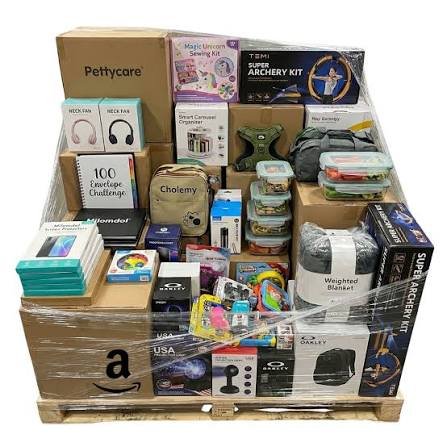
Best Amazon Liquidation Pallets for Beginners: Complete 2026 Guide
If you’re looking for an affordable way to start a resale business, Amazon liquidation pallets can be an interesting option. These pallets may contain customer returns, overstock, shelf-pull merchandise, and other liquidation inventory that can potentially be resold for profit.
However, buying Amazon liquidation pallets is not simply about finding the cheapest pallet available. Beginners need to understand pallet conditions, product categories, resale value, shipping costs, and the potential risks before making a purchase.
In this guide, you’ll learn how Amazon liquidation pallets work, what beginners should look for, how to evaluate a pallet, and how to avoid common mistakes when buying liquidation inventory.
According to Amazon’s guide to case packs and pallets , businesses can purchase returned merchandise in bulk and resell suitable products. This makes liquidation inventory an established part of the broader resale market.
What Are Amazon Liquidation Pallets?
Amazon liquidation pallets are bulk collections of merchandise that are sold through liquidation channels instead of being sold individually through normal retail listings. Depending on the source, an Amazon liquidation pallet may contain customer returns, overstock, excess inventory, shelf pulls, or merchandise in different conditions.
This means that not every Amazon liquidation pallet is the same. One pallet may contain mostly new or unopened products, while another may contain returned merchandise that needs inspection, cleaning, testing, repackaging, or repair before it can be resold.
For beginners, understanding the condition of the merchandise is one of the most important steps when purchasing Amazon liquidation pallets. A pallet with a high advertised retail value does not automatically mean it will produce a high profit.
Your actual resale opportunity depends on several factors, including:
- The condition of the merchandise
- The number of sellable products
- The categories included in the pallet
- Your purchase price
- Shipping and handling costs
- Marketplace and selling fees
- Testing, cleaning, or repair costs
- Demand in your target market
- Your expected resale prices
Why Are Amazon Liquidation Pallets Popular With Beginners?
One of the reasons Amazon liquidation pallets are popular with new resellers is the ability to purchase multiple products in one transaction. Instead of sourcing individual products one at a time, a reseller can acquire a larger inventory lot and then separate the merchandise for individual resale.
Depending on the pallet, the inventory may include apparel, home goods, accessories, electronics, general merchandise, and other consumer products. This can give beginners an opportunity to test different product categories and identify what their customers are most interested in buying.
However, beginners should never assume that every pallet contains high-value products. The liquidation market includes different product conditions and varying levels of risk. The best Amazon liquidation pallets for beginners are usually those that match the buyer’s budget, storage capacity, selling experience, and target market.
If you’re ready to explore available inventory, visit our liquidation pallets for sale and compare the available options before making a purchasing decision.
Are Amazon Liquidation Pallets Good for Beginners?
Amazon liquidation pallets can be suitable for beginners, but choosing the right pallet is important. New resellers should start with products they can understand, inspect, store, price, and sell without excessive complexity.
For example, apparel, home goods, accessories, and general merchandise can be easier for some beginners to process than products that require extensive technical testing or specialized knowledge.
Before buying an Amazon liquidation pallet, ask yourself:
- Can I afford the total cost of purchasing and receiving the pallet?
- Do I understand the condition of the merchandise?
- Do I know where I will sell the products?
- Is there enough demand for these products in my target market?
- Do I have enough space to receive, organize, and store the inventory?
Answering these questions before purchasing can help beginners make more informed decisions and reduce unnecessary losses.
Amazon Liquidation Pallets vs. Mystery Pallets
Beginners researching Amazon liquidation pallets will often encounter the term “mystery pallet.” These terms should not automatically be considered the same.
A manifested liquidation lot provides information about some or all of the products included in the lot, depending on the seller and liquidation program. An unmanifested or mystery pallet provides significantly less information about the exact contents.
For a first purchase, having more information can make it easier to estimate potential resale value. A manifest may allow you to research individual products, compare market prices, and identify products that could require additional work before resale.
Buyers should always review the terms associated with a liquidation listing. The Amazon liquidation marketplace on B-Stock provides information about purchasing liquidation inventory and the terms buyers should review before placing an order.
Start With Research Before Buying Amazon Liquidation Pallets
One of the biggest mistakes beginners make is purchasing Amazon liquidation pallets simply because an advertisement appears to offer a huge discount.
Successful liquidation reselling starts with research. Before purchasing an Amazon liquidation pallet, investigate the seller, inventory condition, manifest availability, shipping costs, additional fees, expected resale prices, and demand for the products.
Before buying, research the following:
- The seller or liquidation marketplace
- The condition of the merchandise
- Whether a manifest is available
- The estimated quantity of products
- Current resale prices
- Shipping and handling costs
- Additional buyer fees
- Your preferred selling platform
- Demand in your target market
- Potential repair, cleaning, or testing costs
A pallet advertised at a significant discount is only a good deal if the merchandise can realistically generate enough revenue to justify your total investment. Experienced resellers therefore focus on total landed cost and realistic resale potential rather than relying only on advertised retail value.
What Should Beginners Look for in Amazon Liquidation Pallets?
When comparing Amazon liquidation pallets, beginners should prioritize transparency. A good liquidation listing should provide enough information for you to understand what you are potentially purchasing.
Look for listings that clearly explain:
- What type of inventory is included
- The condition of the merchandise
- The quantity or estimated quantity
- Whether a manifest is available
- Where the inventory is located
- Shipping arrangements
- Buyer requirements
- Return or dispute policies
- Additional fees or charges
Be cautious about advertisements promising guaranteed profits, extremely expensive products for unrealistic prices, or “secret” pallets that provide little information about the actual inventory.
Amazon liquidation pallets can provide access to discounted inventory, but liquidation purchases still involve risk. The objective is not to eliminate every risk but to understand the inventory and manage the potential risks before making a purchase.
Choose the Right Liquidation Pallet for Your Business
The best Amazon liquidation pallets for beginners are not necessarily the most expensive or the pallets with the highest advertised retail value. The right choice depends on your budget, experience, selling platform, available storage, and customer demand.
If you’re interested in starting with other types of liquidation inventory, you can also explore our liquidation pallet categories to find products that match your resale strategy.
Before purchasing, calculate your expected total investment and compare it with realistic resale prices. This simple step can help you determine whether a particular Amazon liquidation pallet makes sense for your business.
Ready to Explore Liquidation Pallets?
Buying Amazon liquidation pallets can be an opportunity to source inventory in bulk and build a resale business, but successful reselling begins with informed purchasing decisions.
Take time to understand the inventory, compare prices, evaluate product condition, calculate your potential costs, and choose merchandise that fits your target customers.
Ready to explore available inventory? Browse our liquidation pallets and discover available products for your resale business.
Types of Amazon Liquidation Pallets: Which Is Best for Beginners?
Understanding the different types of Amazon liquidation pallets is one of the most important steps for anyone entering the liquidation and resale business. Not every Amazon liquidation pallet contains the same type or condition of merchandise. Some pallets may contain customer returns, while others may contain overstock, shelf pulls, excess inventory, or products that require inspection before resale.
Choosing the right type of Amazon liquidation pallets can make a significant difference to your resale experience. Beginners should consider product condition, expected resale value, demand, storage requirements, and the amount of work required to prepare products for customers.
1. Amazon Customer Return Pallets
Amazon customer return pallets contain merchandise that has previously been purchased and subsequently returned. Returns can happen for many reasons, including a change of mind, incorrect sizing, damaged packaging, missing accessories, or a product that did not meet the customer’s expectations.
Because customer returns can come back in different conditions, buyers should inspect the merchandise carefully after receiving the pallet. Some products may be unused and still in their original packaging, while others may need testing, cleaning, repackaging, or minor repairs.
For beginners, customer return Amazon liquidation pallets can provide opportunities to find products at discounted acquisition costs, but buyers should always account for the possibility that some inventory may not be immediately ready for resale.
Amazon explains that returned products can be purchased in bulk and resold, making customer returns an important part of the liquidation resale market. You can learn more from Amazon’s official guide to case packs and pallets .
2. Amazon Overstock Pallets
Amazon overstock pallets contain merchandise that may have remained in inventory beyond what a retailer or fulfillment operation needs. Overstock does not necessarily mean that the products are defective. In many cases, the merchandise may still be new and suitable for resale.
Overstock Amazon liquidation pallets can be attractive to beginners because products may require less preparation than heavily used customer returns. However, the exact condition and contents still depend on the individual liquidation listing.
Before purchasing an overstock pallet, review the available product information, quantity, condition, and expected resale demand. A pallet full of products that nobody wants to buy can still become expensive inventory, even when the original acquisition price appears low.
3. Amazon Shelf Pull Pallets
Amazon shelf pull pallets generally refer to merchandise removed from retail or distribution inventory because it is being replaced, rotated, or otherwise cleared from normal selling channels.
Shelf-pull merchandise may have little or no evidence of actual customer use, but packaging can vary. Some products may have opened or damaged packaging even when the actual item has never been used.
For beginners researching Amazon liquidation pallets, shelf pulls can be worth considering because the merchandise may offer a balance between discounted inventory and potentially resalable product condition. However, every pallet should still be evaluated individually.
4. Amazon Mixed Merchandise Pallets
Amazon mixed merchandise pallets can contain products from several categories. Depending on the listing, a pallet could include household products, apparel, accessories, electronics, tools, toys, personal care items, or other consumer merchandise.
Mixed Amazon liquidation pallets can be useful for experienced resellers who already understand multiple product categories. For beginners, however, mixed inventory can require more time to sort, research, photograph, price, list, and organize.
If you decide to purchase mixed merchandise, consider whether you have enough storage space and whether your preferred sales channels can support different product categories.
5. Amazon Electronics Liquidation Pallets
Electronics are among the product categories that can attract strong interest from liquidation resellers. However, Amazon electronics liquidation pallets can require more knowledge and testing than simpler categories.
Electronics may need to be tested for power, connectivity, battery condition, accessories, screens, ports, software functionality, or other specifications. A product that looks new may still have a technical issue that affects its resale value.
Beginners interested in electronics should therefore avoid calculating profit based only on the manufacturer’s suggested retail price. Instead, research actual resale prices and account for products that may require repair or may not be sellable.
6. Amazon Apparel Liquidation Pallets
Amazon apparel liquidation pallets can include clothing, footwear, accessories, swimwear, seasonal products, and other fashion-related merchandise. Apparel can be attractive for beginners because individual pieces can often be photographed, sized, categorized, and sold separately.
However, clothing requires careful organization. Resellers should sort products by category, brand, size, style, condition, and season. Accurate product descriptions and clear photographs can also make a major difference when selling apparel online.
If apparel is the category you want to explore, you can check our liquidation pallets available in our shop for available inventory.
7. Amazon Home Goods Liquidation Pallets
Amazon home goods liquidation pallets can contain household products, kitchen items, storage products, décor, organization products, and other merchandise used around the home.
This category can be appealing to beginners because many household products have straightforward uses and can be sold through online marketplaces, local stores, social media, or physical resale businesses.
Before buying home goods Amazon liquidation pallets, check product dimensions, packaging condition, breakability, and shipping requirements. Large or fragile items can have higher handling and transportation costs.
Which Amazon Liquidation Pallets Are Best for Beginners?
There is no single pallet type that is guaranteed to be the best for every beginner. The right choice depends on your budget, experience, customer base, storage capacity, and selling strategy.
However, beginners may find it easier to start with products that have:
- Clear product information
- Consistent consumer demand
- Simple inspection requirements
- Reasonable storage requirements
- Easy-to-understand resale values
- Accessible local or online customers
If you are new to Amazon liquidation pallets, avoid purchasing a large quantity of complicated merchandise simply because the advertised retail value looks impressive. Start by learning how to evaluate inventory and calculate realistic resale potential.
Manifested vs. Unmanifested Amazon Liquidation Pallets
Another important difference when comparing Amazon liquidation pallets is whether the pallet is manifested or unmanifested.
Manifested Pallets
A manifested pallet provides information about the products contained in the liquidation lot. The amount of information can vary depending on the seller or liquidation marketplace, but a manifest can make it easier to research individual products before purchasing.
For beginners, this additional information can be valuable because it allows you to estimate potential resale prices and identify products that may be difficult to sell.
Unmanifested Pallets
An unmanifested pallet provides limited information about the exact contents. This can create more uncertainty because you may not know the exact products, quantities, brands, or conditions until the pallet arrives.
Unmanifested Amazon liquidation pallets can sometimes have attractive purchase prices, but beginners should understand that greater uncertainty also means greater purchasing risk.
Before buying from a liquidation marketplace, always review the marketplace terms, listing information, and buyer requirements. The official Amazon liquidation marketplace information on B-Stock provides additional information about Amazon liquidation inventory and the purchasing process.
How to Choose the Right Amazon Liquidation Pallet
Choosing Amazon liquidation pallets should be based on numbers, product condition, and market demand rather than excitement about a potentially valuable product.
Before placing an order, compare the purchase cost with your expected total investment. Include shipping, taxes or applicable fees, marketplace charges, storage, repairs, cleaning, packaging, and other expenses.
Then research realistic selling prices. Do not assume that an item’s original retail price is the same as its current resale value. Customers may be willing to pay significantly less for returned, used, open-box, or incomplete products.
Start Your Liquidation Resale Journey
Understanding the different types of Amazon liquidation pallets can help beginners make more informed purchasing decisions. Customer returns, overstock, shelf pulls, mixed merchandise, electronics, apparel, and home goods each come with different opportunities and considerations.
If you are ready to explore liquidation inventory, visit our liquidation pallets shop to see currently available products and find inventory that matches your resale strategy.
How Much Do Amazon Liquidation Pallets Cost? Pricing, Value & Profit Guide
One of the first questions beginners ask when researching Amazon liquidation pallets is: How much does an Amazon liquidation pallet cost? The answer depends on several factors, including the type of merchandise, product condition, quantity, estimated retail value, marketplace fees, shipping costs, and the liquidation source.
There is no universal price for Amazon liquidation pallets. Two pallets that appear similar can have completely different values because their contents, condition, brands, quantities, and resale demand may be different. For that reason, beginners should focus on the total cost and realistic resale potential instead of looking only at the advertised pallet price.
What Determines the Price of Amazon Liquidation Pallets?
Several factors influence the price of Amazon liquidation pallets. Understanding these factors can help you compare different liquidation deals and avoid paying too much for inventory.
1. Product Condition
Product condition is one of the most important factors when evaluating Amazon liquidation pallets. New, unused, open-box, customer-returned, damaged, incomplete, and salvage merchandise can have significantly different resale values.
A pallet containing mostly new products may require less preparation before resale, while customer-return inventory may require testing, cleaning, repackaging, or repairs. This additional work should be considered when calculating the potential profitability of an Amazon liquidation pallet.
2. Product Category
The category of merchandise also affects the value of Amazon liquidation pallets. Electronics, fashion, home goods, tools, toys, appliances, accessories, and general merchandise all have different levels of consumer demand and resale potential.
Beginners should choose categories they understand. If you know how to evaluate clothing but have limited experience testing electronics, an apparel liquidation pallet may be easier for you to manage than an electronics pallet.
3. Estimated Retail Value
Many Amazon liquidation pallets are marketed using an estimated retail value. This figure can help buyers understand the approximate original value of the merchandise, but it should not be treated as guaranteed resale revenue.
The amount a product originally sold for does not necessarily represent what a reseller can obtain today. Market competition, product condition, current demand, discontinued models, missing accessories, and other factors can reduce the actual resale price.
4. Quantity of Products
A pallet containing hundreds of individual items may have a different value proposition from a pallet containing a smaller number of higher-value products. When comparing Amazon liquidation pallets for sale, consider both the number of units and the expected value per sellable unit.
More products do not automatically mean more profit. A large pallet can require significantly more time for sorting, testing, photographing, listing, packaging, and selling.
5. Shipping and Additional Costs
Shipping can have a major impact on the final cost of Amazon liquidation pallets. Beginners sometimes focus on the listed pallet price and forget that transportation, handling, taxes, marketplace fees, storage, and packaging can increase the total investment.
Always calculate your landed cost before deciding whether a liquidation pallet is a good deal.
How to Calculate the Real Cost of an Amazon Liquidation Pallet
The purchase price is only one part of the calculation. To understand what you are actually investing in Amazon liquidation pallets, use the following basic formula:
Total Landed Cost = Pallet Purchase Price + Shipping + Taxes/Fees + Processing Costs
Processing costs can include cleaning, testing, repairs, replacement accessories, packaging materials, transportation, storage, and other expenses required to prepare products for resale.
For example, imagine you purchase a liquidation pallet for $1,500 and spend another $300 on transportation and $200 on processing and packaging. Your effective investment is not $1,500. It is $2,000.
This calculation is especially important when comparing Amazon liquidation pallets for beginners because a pallet that looks cheap initially may become significantly more expensive after all additional costs are included.
How to Estimate the Resale Value of Amazon Liquidation Pallets
Estimating resale value is one of the most important skills for anyone buying Amazon liquidation pallets. Instead of assuming that every item will sell for its original retail price, research realistic prices for the actual condition of the products.
Start by identifying the products included in the pallet. If a manifest is available, research the individual products and compare current prices across reputable marketplaces and retail websites.
Pay attention to the difference between:
- Original retail price
- Current new-product price
- Open-box selling price
- Used-product selling price
- Completed or sold-listing prices
- Your expected net selling price after fees
This process gives you a more realistic picture of what your Amazon liquidation pallet could potentially generate.
What Is a Good Profit Margin on Amazon Liquidation Pallets?
There is no single profit margin that applies to every Amazon liquidation pallet. Profitability depends on your acquisition cost, selling channel, product category, operating expenses, and how quickly you can sell the inventory.
Instead of asking whether a pallet has a specific guaranteed profit margin, calculate your potential revenue and subtract every relevant expense.
A simple calculation is:
Estimated Net Profit = Total Revenue – Total Landed Cost – Selling Expenses
Selling expenses may include marketplace commissions, payment processing, advertising, packaging, delivery, storage, returns, repairs, and other operating costs.
Why Retail Value Is Not the Same as Profit
One of the biggest mistakes beginners make when buying Amazon liquidation pallets is assuming that the advertised retail value represents their potential profit.
Suppose a pallet has an advertised retail value of $10,000 and costs $2,000. That does not mean you will make $8,000 in profit. Some products may sell for less than retail, some may require repairs, some may remain unsold, and selling costs can reduce your final revenue.
The correct approach is to calculate realistic resale revenue and then subtract your total expenses.
Are Cheap Amazon Liquidation Pallets Always Better?
Not necessarily. A low-priced Amazon liquidation pallet can become expensive if a large portion of the inventory is damaged, incomplete, difficult to sell, or expensive to process.
On the other hand, a more expensive pallet can potentially provide better value if it contains products with strong demand, good condition, and realistic resale prices.
The objective should therefore be to find the best value, not simply the lowest purchase price.
How Beginners Can Reduce Risk When Buying Amazon Liquidation Pallets
Beginners can reduce unnecessary risk by taking a research-first approach to Amazon liquidation pallets.
- Set a realistic budget: Never spend more than you can comfortably afford to have tied up in inventory.
- Research the inventory: Review the product information and manifest when available.
- Calculate landed cost: Include shipping, fees, taxes, processing, and other expenses.
- Research resale prices: Compare realistic current selling prices rather than original retail prices.
- Consider unsellable inventory: Leave room for damaged, incomplete, or slow-moving products.
- Choose products you understand: Familiar categories are generally easier for beginners to evaluate.
Where Can You Buy Amazon Liquidation Pallets?
Buyers can find Amazon liquidation pallets for sale through liquidation marketplaces, wholesalers, liquidation companies, auctions, and other inventory suppliers. The source you choose should provide enough information for you to understand the transaction before purchasing.
One established marketplace to research is Amazon Liquidation Auctions on B-Stock . Buyers should carefully review each individual listing, bidding requirements, shipping information, and marketplace terms before placing an order.
If you are comparing different liquidation sources, do not judge them only by price. Consider transparency, product information, inventory condition, shipping arrangements, customer support, and purchasing terms.
What Should You Do Before Buying Amazon Liquidation Pallets?
Before buying Amazon liquidation pallets, create a simple purchasing checklist. Confirm what products are included, understand their condition, calculate your total investment, research current resale prices, and determine where you will sell the inventory.
You should also consider how quickly you can process and sell the products. Inventory that remains in storage for months can tie up your capital and create additional costs.
If you’re looking for additional liquidation inventory, visit our liquidation pallets shop to review available products and compare inventory options.
Final Thoughts on Amazon Liquidation Pallet Pricing
The cost of Amazon liquidation pallets varies based on product category, condition, quantity, estimated value, demand, shipping, and other expenses. The most important lesson for beginners is that the cheapest pallet is not automatically the most profitable pallet.
Before buying Amazon liquidation pallets, calculate the complete landed cost, research realistic resale prices, consider processing requirements, and leave room for products that may not sell.
By understanding the numbers before purchasing, you can make better decisions and build a more sustainable liquidation resale strategy.
Ready to explore inventory? Browse our available liquidation pallets and find products that fit your business and resale goals.
How to Choose the Best Amazon Liquidation Pallets for Resale
Choosing the right Amazon liquidation pallets is one of the most important decisions a new reseller can make. A low purchase price does not automatically mean that a pallet is profitable. The best Amazon liquidation pallets are the ones that match your budget, product knowledge, customer demand, storage capacity, and selling strategy.
Whether you are searching for Amazon liquidation pallets for sale, customer return pallets, overstock pallets, or mixed merchandise, you should evaluate the inventory carefully before committing your money. A systematic approach can help you identify better opportunities and avoid inventory that could be difficult to resell.
1. Research the Products Before Buying
The first step when evaluating Amazon liquidation pallets is researching the products. If a manifest is available, review as many products as possible before making your purchasing decision.
Search for the exact product names, model numbers, brands, and variations. Compare current prices from reputable retailers and marketplaces rather than relying only on an advertised retail value.
Product research can help you identify whether the merchandise has genuine demand and whether there is enough room between your acquisition cost and realistic resale prices.
2. Check the Condition of the Amazon Liquidation Pallet
Condition is extremely important when buying Amazon liquidation pallets. Inventory can range from new and unopened products to customer returns, open-box merchandise, damaged products, or items that require repair.
Before buying an Amazon liquidation pallet, find out whether the listing provides information about product condition. If the condition is unclear, factor the additional uncertainty into your purchasing decision.
Common conditions you may encounter include:
- New: Merchandise that has not been used and may be in its original packaging.
- Like New: Products that may have been opened or returned but remain in excellent condition.
- Open Box: Products with opened packaging that may require inspection before resale.
- Customer Returns: Products returned by previous customers for various reasons.
- Damaged: Merchandise that may require repair, replacement parts, or additional processing.
- Salvage: Products that may have limited resale value or may be suitable primarily for parts or recovery.
Not every liquidation marketplace uses identical condition definitions, so always review the specific terminology used in the listing before purchasing.
3. Look for Products With Strong Resale Demand
The best Amazon liquidation pallets for resellers usually contain products that people actually want to buy. High original retail value is not enough if there is little current demand.
Before purchasing, investigate current consumer interest and competition. Products with consistent demand can be easier to move than products that are highly seasonal, outdated, or difficult to identify.
Consider whether the products can be sold through your preferred channels, including online marketplaces, social media, local stores, physical shops, or direct sales.
4. Consider the Product Category
Different product categories have different levels of complexity. Beginners should consider their existing knowledge before choosing Amazon liquidation pallets.
Apparel
Clothing and fashion products can be attractive because individual pieces can be sorted and sold separately. However, you need to manage sizes, styles, seasons, brands, and product condition carefully.
Home Goods
Home goods can include kitchen products, household accessories, storage products, décor, and other everyday merchandise. These products may appeal to local and online customers, although bulky or fragile items can increase handling and transportation costs.
Electronics
Electronics can have strong resale demand, but they often require more testing. Missing chargers, damaged screens, battery problems, software issues, and other faults can reduce the value of an Amazon liquidation pallet.
Beauty and Personal Care
Beauty and personal care products can have strong consumer demand, but resellers should pay close attention to product condition, packaging, expiration information where applicable, and marketplace rules.
5. Calculate the Potential Resale Value
Never purchase Amazon liquidation pallets based solely on the claimed retail value. Instead, estimate how much the products could realistically sell for in their actual condition.
If a pallet contains 100 products and you estimate that 80 are realistically sellable, calculate your potential revenue using the expected selling price of those 80 products rather than assuming that all 100 will generate full retail value.
You should also account for selling fees, discounts, returns, shipping, packaging, repairs, and products that may take longer to sell.
6. Understand the Difference Between Revenue and Profit
A common beginner mistake when buying Amazon liquidation pallets is confusing sales revenue with profit.
If you purchase a pallet for $2,000 and eventually generate $5,000 in sales, your profit is not automatically $3,000. You still need to subtract shipping, marketplace fees, packaging, advertising, repairs, storage, returns, taxes, and other business expenses.
A simple way to think about the calculation is:
Profit = Sales Revenue − Inventory Cost − Operating Expenses
Understanding this calculation before buying Amazon liquidation pallets can help you avoid making purchasing decisions based on unrealistic profit expectations.
7. Check the Manifest When Available
A manifest can be one of the most useful resources when evaluating Amazon liquidation pallets. It may provide information such as product names, quantities, estimated values, brands, and other inventory details.
However, you should still verify the terms of the specific liquidation listing. A manifest does not necessarily mean that every item will arrive in perfect condition or that every product will sell at the estimated value.
Use the manifest as a research tool rather than treating it as a guarantee of profit.
8. Evaluate the Seller Before Purchasing
The supplier matters just as much as the merchandise when buying Amazon liquidation pallets. Research the company or marketplace before sending payment.
Look for:
- Clear company information
- Transparent product descriptions
- Clear purchasing terms
- Accessible customer support
- Detailed shipping information
- Clear condition descriptions
- Transparent fees
- Established business information
Avoid making purchasing decisions solely because a seller advertises an unusually large discount. A professional liquidation supplier should provide enough information for buyers to understand the transaction.
9. Avoid These Common Amazon Liquidation Pallet Mistakes
Mistake 1: Buying Because the Retail Value Looks Huge
A high estimated retail value does not guarantee high resale revenue. Always research current market prices and product condition before buying Amazon liquidation pallets.
Mistake 2: Ignoring Shipping Costs
Large pallets can be expensive to transport. Always calculate shipping and handling before determining whether an Amazon liquidation pallet is affordable.
Mistake 3: Buying More Inventory Than You Can Handle
Beginners sometimes purchase multiple pallets before learning how quickly they can process and sell inventory. Start at a manageable scale and increase your purchasing volume as your resale operation grows.
Mistake 4: Ignoring Product Condition
Customer returns and open-box products may require additional work. Make sure you understand the condition of the merchandise before calculating potential profit.
Mistake 5: Assuming Every Product Will Sell
Some products will sell quickly while others may remain in inventory for longer periods. Your calculations should account for slow-moving and potentially unsellable products.
Mistake 6: Failing to Research the Market
Before purchasing Amazon liquidation pallets for resale, investigate your target customers. A product can be inexpensive to acquire but difficult to sell if there is insufficient demand in your market.
10. Choose Amazon Liquidation Pallets Based on Your Selling Strategy
Your selling strategy should influence the type of Amazon liquidation pallets you purchase.
If you sell through social media, you may prefer products that are visually appealing and easy to demonstrate. If you operate a physical discount store, you may be able to handle a wider variety of merchandise. If you sell through online marketplaces, you may prioritize products with identifiable model numbers, strong search demand, and manageable shipping requirements.
The best pallet is therefore not necessarily the pallet with the highest advertised value. It is the pallet that fits your business model.
11. Start Small and Learn the Process
If this is your first purchase, starting with a manageable quantity can help you understand how Amazon liquidation pallets work without exposing your business to unnecessary inventory risk.
Your first pallet can teach you how much time it takes to receive, inspect, sort, photograph, list, package, and sell liquidation inventory. You can then use that experience to improve your purchasing strategy.
As you gain experience, you can identify the product categories that perform best for your customers and focus future purchases around those categories.
12. Where to Find Amazon Liquidation Pallets for Sale
Buyers searching for Amazon liquidation pallets for sale should compare multiple sources before purchasing. One established source worth researching is Amazon Liquidation Auctions on B-Stock .
You can also compare available inventory from reputable liquidation suppliers and wholesalers. Always verify the seller, product condition, shipping terms, fees, and purchasing requirements before placing an order.
If you’re looking for additional liquidation inventory, visit our liquidation pallets shop to view available products.
How to Build a Profitable Amazon Liquidation Resale Business
Building a resale business around Amazon liquidation pallets requires more than finding cheap inventory. You need a repeatable system for sourcing, evaluating, processing, pricing, marketing, and selling products.
A simple resale workflow can look like this:
- Research potential liquidation pallets.
- Calculate the total landed cost.
- Estimate realistic resale prices.
- Purchase inventory that fits your strategy.
- Inspect and organize the merchandise.
- Clean, test, or repair products when necessary.
- Photograph and create accurate product listings.
- Market products to your target customers.
- Track sales, expenses, and profit.
- Use your results to improve your next purchase.
This approach turns liquidation buying into a business process instead of relying on luck.
Explore Liquidation Inventory
Whether you are searching for Amazon liquidation pallets, apparel pallets, home goods, accessories, or other wholesale liquidation inventory, choosing products based on condition, demand, and realistic resale potential can help you make better purchasing decisions.
Explore our liquidation pallet categories or visit our shop to see currently available inventory.
The key is to research before buying, calculate your real costs, understand the condition of the merchandise, and choose inventory that fits your customers.
What’s Next?
Amazon Liquidation Pallets for Beginners: Final Buying Guide and Resale Strategy
By now, you should have a clearer understanding of how Amazon liquidation pallets work, the different types of liquidation inventory available, how pallet pricing is determined, and what you should evaluate before purchasing. The final step is putting that knowledge into a practical buying and resale strategy.
Whether you’re looking for Amazon liquidation pallets for beginners, customer returns, overstock inventory, or mixed merchandise, the objective should always be the same: buy inventory that you understand, calculate your real costs, and have a realistic plan for selling the products.
Beginner’s Checklist for Buying Amazon Liquidation Pallets
Before purchasing Amazon liquidation pallets, use the following checklist to evaluate the opportunity carefully.
- Identify the pallet type: Determine whether the inventory consists of customer returns, overstock, shelf pulls, new merchandise, mixed inventory, or another condition.
- Review the product information: Check the available product descriptions, quantities, brands, categories, and other information provided by the seller.
- Check the condition: Understand whether the products are new, open-box, returned, damaged, incomplete, or salvage inventory.
- Look for a manifest: If a manifest is available, use it to research products and estimate realistic resale prices.
- Calculate the total cost: Include the pallet price, shipping, taxes, fees, processing, packaging, repairs, and other expenses.
- Research resale demand: Make sure there are customers willing to purchase the products at realistic prices.
- Estimate your potential revenue: Do not rely exclusively on the original retail value. Use current market prices and realistic product conditions.
- Consider unsellable products: Leave room in your calculations for damaged, incomplete, slow-moving, or unsellable merchandise.
- Plan your selling channel: Decide whether you will sell through your website, online marketplaces, social media, local stores, or direct customers.
- Start within your budget: Your first purchase should be large enough to learn from but small enough that an unexpected loss will not seriously damage your business.
How to Make Money With Amazon Liquidation Pallets
Buying Amazon liquidation pallets is only the beginning. The real business opportunity comes from turning bulk inventory into individual sales. A successful reseller needs a clear process for sorting, inspecting, pricing, marketing, and selling the products.
One common strategy is to purchase a pallet at a discounted bulk price, separate the merchandise into individual products or smaller bundles, and then sell those products through different sales channels.
For example, a reseller may sell higher-value products individually while grouping lower-value products into bundles. Products that are more suitable for local customers can be sold locally, while smaller products can potentially be listed online.
The exact strategy depends on the product category and the market you are targeting.
Choose the Right Selling Platform
The best selling platform depends on the type of products inside your Amazon liquidation pallets and where your customers shop.
Some resellers use their own websites, while others use online marketplaces, social media platforms, local classified listings, physical stores, flea markets, discount stores, or a combination of several channels.
Having multiple selling channels can help you reach different types of customers. However, you should also consider the fees, shipping requirements, seller policies, payment processing costs, and return policies associated with each platform.
How to Price Products From Amazon Liquidation Pallets
Pricing is one of the most important parts of turning Amazon liquidation pallets into a profitable resale business. Your price needs to be attractive enough for customers while still leaving enough margin to cover your expenses.
Avoid setting your prices solely according to the original retail price. Instead, consider the current market price, product condition, brand, demand, competition, your total acquisition cost, and the selling fees associated with your chosen platform.
For returned or open-box products, be transparent about the condition. Accurate descriptions can help establish customer trust and reduce disputes or returns.
How to Handle Products That Do Not Sell
Even experienced resellers will eventually have products that sell slowly or do not sell at the expected price. This is normal when working with Amazon liquidation pallets.
Instead of allowing slow-moving inventory to remain in storage indefinitely, consider different strategies. You may reduce the price, create a bundle, offer a promotional discount, sell through another channel, or move the product through a local sale.
The objective is to keep inventory moving and recover as much of your investment as reasonably possible.
Track Your Amazon Liquidation Pallet Results
One of the best ways to improve your liquidation business is to keep accurate records for every Amazon liquidation pallet you purchase.
Track information such as:
- Pallet purchase price
- Shipping and transportation costs
- Additional fees
- Number of products received
- Number of sellable products
- Number of damaged or incomplete products
- Total sales revenue
- Marketplace and payment fees
- Packaging and processing expenses
- Final profit or loss
- Time required to sell the inventory
After several purchases, this information can show you which types of Amazon liquidation pallets perform best for your business.
Amazon Liquidation Pallets: Common Beginner Questions
Are Amazon liquidation pallets worth buying?
Amazon liquidation pallets can be worth considering if the inventory matches your budget and selling strategy. However, liquidation purchases are not guaranteed to be profitable. Product condition, demand, acquisition costs, shipping, fees, and resale prices all affect the final result.
Can beginners buy Amazon liquidation pallets?
Yes. Beginners can research and purchase Amazon liquidation pallets, but it is important to understand the inventory condition and calculate the total cost before buying. Starting with a manageable purchase can allow new resellers to learn the process before increasing their inventory volume.
What is inside Amazon liquidation pallets?
The contents vary from pallet to pallet. Depending on the liquidation source, Amazon liquidation pallets may contain customer returns, overstock, shelf pulls, excess inventory, open-box products, apparel, electronics, home goods, accessories, toys, tools, and other consumer merchandise.
Are Amazon liquidation pallets new or used?
They can contain different conditions. Some liquidation pallets may contain new merchandise, while others may contain customer returns, open-box products, damaged packaging, incomplete products, or merchandise requiring additional inspection. Always check the condition information for the specific listing.
Can you make money reselling Amazon liquidation pallets?
Resellers can potentially make money by purchasing liquidation inventory below typical retail prices and selling individual products or bundles at prices customers are willing to pay. However, profitability depends on your total acquisition cost, product condition, resale demand, selling expenses, and ability to move the inventory.
Where can I buy Amazon liquidation pallets?
Amazon liquidation pallets for sale can be found through liquidation marketplaces, auctions, wholesalers, and liquidation suppliers. One marketplace worth researching is Amazon Liquidation Auctions on B-Stock . Always review the specific listing, terms, shipping requirements, and fees before purchasing.
What is the best Amazon liquidation pallet for beginners?
There is no single best Amazon liquidation pallet for everyone. Beginners should generally look for inventory that they understand, can afford, can store, and can realistically resell. Products with clear descriptions, manageable processing requirements, and established customer demand may be easier to start with.
Amazon Liquidation Pallets vs. Buying Wholesale Inventory
Beginners sometimes wonder whether they should purchase Amazon liquidation pallets or traditional wholesale inventory. Both approaches have advantages and disadvantages.
Liquidation inventory can provide access to products at discounted bulk prices, but the condition and exact contents can vary. Traditional wholesale inventory may provide more consistency and predictable product specifications, but acquisition costs can be higher.
Your choice should depend on your business model, available capital, risk tolerance, customer demand, and experience with inventory management.
How to Build a Long-Term Liquidation Business
If you want to build a sustainable business around Amazon liquidation pallets, focus on developing a repeatable sourcing and resale system instead of relying on individual lucky purchases.
Start by identifying product categories that perform well. Track your purchasing costs and sales results. Improve your product photography and descriptions. Build relationships with customers. Test different selling channels and continue researching market demand.
Over time, your sales data can help you determine which liquidation products deserve a larger share of your purchasing budget.
Final Thoughts: Are Amazon Liquidation Pallets Right for You?
Amazon liquidation pallets can provide an opportunity for beginners and experienced resellers to source merchandise in bulk and build a resale business. However, success depends on making informed purchasing decisions rather than simply chasing the biggest advertised discount.
Before buying Amazon liquidation pallets, understand the inventory condition, research the products, calculate the complete landed cost, estimate realistic resale prices, and create a plan for selling the merchandise.
Start with a manageable investment, learn from each purchase, track your results, and focus on the product categories that consistently perform well for your customers.
If you’re ready to explore liquidation inventory, visit our liquidation pallets shop to see available products and find inventory for your resale business.
You can also explore our liquidation pallet categories to find different types of inventory based on your business needs.
Ready to Start Reselling?
Explore our available liquidation inventory and find products that could fit your resale strategy. Research carefully, compare your options, and choose inventory based on realistic costs and customer demand.
Browse Liquidation PalletsFor additional information about Amazon’s approach to bulk inventory and returned products, visit Amazon’s official case packs and pallets guide .