
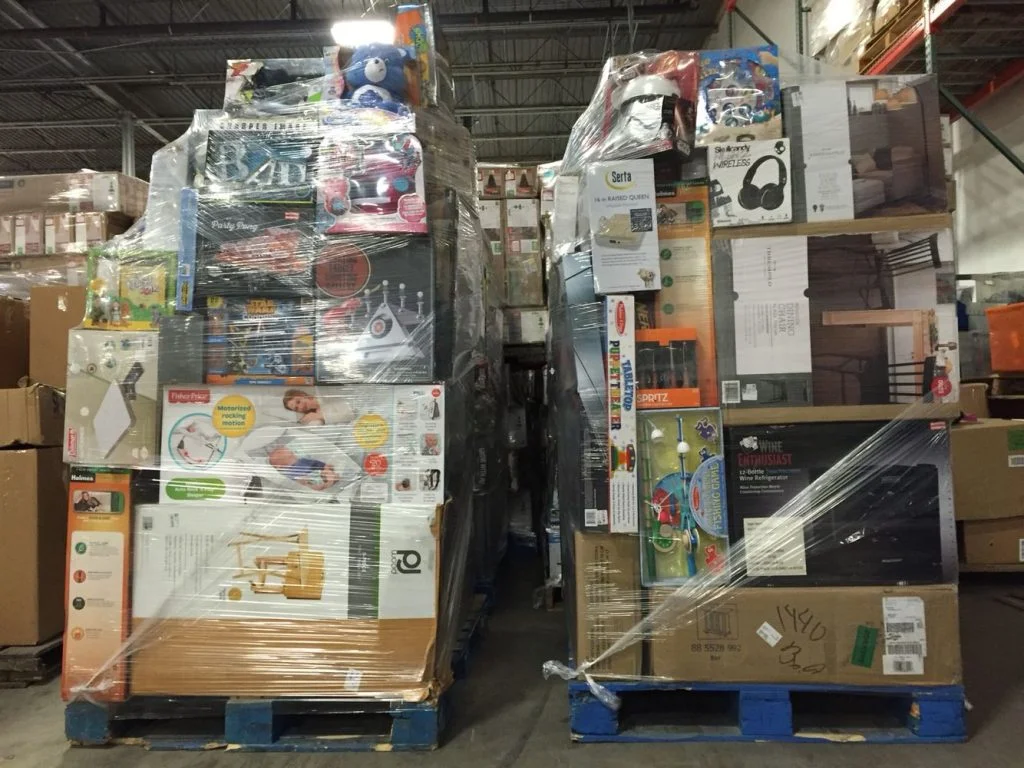
Liquidation Pallet Cost: How to Calculate the True Cost Before You Buy
Liquidation Pallet Cost is one of the most important numbers a reseller should understand before purchasing wholesale liquidation inventory. A pallet may appear inexpensive when you look only at the advertised purchase price, but the actual Liquidation Pallet Cost can be significantly different once you include freight, handling, taxes, payment fees, storage, processing, damaged merchandise, and other expenses.
If you are buying liquidation pallets to resell, your goal should not simply be to find the cheapest pallet. Your goal should be to determine the true Liquidation Pallet Cost and compare that number with the realistic revenue you expect to generate from the merchandise. This approach can help you avoid buying inventory that looks like a bargain but produces disappointing margins.
In this guide, we will show you how to calculate Liquidation Pallet Cost step by step. You will learn which expenses belong in your calculation, how to determine your actual cost per item, how to account for unsellable merchandise, and how to estimate whether a pallet makes financial sense for your resale business.
Quick Formula for Liquidation Pallet Cost
A useful starting formula is:
True Liquidation Pallet Cost = Purchase Price + Shipping + Taxes/Duties + Fees + Handling + Other Acquisition Costs
Then, to determine your approximate inventory cost per sellable unit:
Cost Per Sellable Item = True Liquidation Pallet Cost ÷ Number of Sellable Items
What Is Liquidation Pallet Cost?
Liquidation Pallet Cost is the total amount you spend to acquire a pallet and get its merchandise ready for resale. The purchase price is only one part of the calculation. Depending on where you buy, where the pallet is being shipped, and how you plan to resell the products, additional expenses can materially change your final cost.
For example, imagine that a liquidation pallet is advertised for $600. At first glance, the deal may appear attractive. However, suppose you spend another $150 on freight, $50 on local transportation, $25 on payment or transaction expenses, and $75 preparing the merchandise for resale. Your effective acquisition cost is no longer $600.
In that example, your total investment would be:
$600 + $150 + $50 + $25 + $75 = $900
That means your practical Liquidation Pallet Cost is $900 rather than the advertised $600 purchase price.
This distinction is extremely important when comparing liquidation inventory. Two pallets with similar advertised prices can have very different final costs depending on freight, merchandise condition, processing requirements, and the percentage of inventory that is actually sellable.
Why the Advertised Pallet Price Is Not the Whole Story
One of the most common mistakes new liquidation buyers make is comparing pallets exclusively by their listing prices. A pallet priced at $500 may look better than a pallet priced at $700, but that does not automatically mean the $500 pallet offers the better value.
The correct comparison is based on the total Liquidation Pallet Cost and the quality and quantity of merchandise you expect to sell.
For example:
- Pallet A costs $500 but requires $300 in freight and processing.
- Pallet B costs $700 but requires only $150 in additional expenses.
Pallet A has a lower advertised price, but its acquisition cost could become $800. Pallet B could have a total acquisition cost of $850. The difference between the two deals is therefore much smaller than the original listing prices suggest.
This is why understanding Liquidation Pallet Cost before buying is more useful than simply searching for the lowest pallet price.
The 7 Major Components of Liquidation Pallet Cost
When calculating your Liquidation Pallet Cost, consider the major expenses involved in acquiring, receiving, preparing, and selling the inventory.
- Pallet purchase price – The amount charged by the liquidation supplier.
- Freight and shipping – The cost of transporting the pallet to your location.
- Taxes and duties – Applicable sales taxes, import duties, customs charges, or other government fees.
- Payment and transaction fees – Costs associated with your chosen payment method or purchasing platform.
- Local transportation – Expenses such as delivery from a freight terminal to your warehouse or store.
- Processing and preparation – Labor, cleaning, testing, sorting, repackaging, labeling, or minor repairs.
- Losses and unsellable inventory – Merchandise that is damaged, incomplete, recalled, defective, or otherwise difficult to sell.
Not every buyer will have all seven expenses, and the exact amount of each expense will vary. The important point is to identify the costs that apply to your specific purchase before deciding whether the pallet is profitable.
Liquidation Pallet Cost vs. Retail Value
Another important distinction is the difference between Liquidation Pallet Cost and the stated retail value of the merchandise.
A liquidation pallet may have a manifest or product description showing a high estimated retail value. That figure can be useful when researching the inventory, but retail value should not automatically be treated as your expected revenue.
If a pallet contains products with a suggested retail value of $5,000, it does not necessarily mean you will collect $5,000 when you resell the inventory. Your actual selling prices may be lower because of competition, product condition, market demand, seasonality, platform fees, discounts, shipping costs, and the time required to sell the merchandise.
For this reason, your buying decision should begin with the Liquidation Pallet Cost, followed by a realistic estimate of resale revenue.
A Simple Example of Liquidation Pallet Cost
Consider a hypothetical pallet with the following expenses:
| Expense | Amount |
|---|---|
| Pallet purchase price | $750 |
| Freight | $180 |
| Local transportation | $40 |
| Processing and preparation | $80 |
| Other purchasing expenses | $25 |
| Total Liquidation Pallet Cost | $1,075 |
The advertised pallet price is $750, but the actual acquisition investment is $1,075.
If the pallet contains 100 sellable units, the effective acquisition cost becomes:
$1,075 ÷ 100 = $10.75 per sellable item
This number is much more useful for your resale strategy than simply knowing that the pallet cost $750.
Why Cost Per Sellable Item Matters
Calculating the Liquidation Pallet Cost is only the first step. The next question is how many items you can realistically sell.
Suppose one pallet contains 150 units, but after inspection you discover that 20 require significant repairs and another 10 are not suitable for resale. Your effective sellable inventory is closer to 120 units.
If your total Liquidation Pallet Cost is $1,200, dividing $1,200 by all 150 units would produce an apparent cost of $8 per unit. But dividing the total investment by the 120 sellable units produces a more realistic figure:
$1,200 ÷ 120 = $10 per sellable item
That $10 figure should have a major influence on your pricing decisions.
Do Not Confuse Retail Value With Profit
A high estimated retail value can make a liquidation pallet look attractive, but retail value is not the same thing as profit.
Your actual business calculation should consider:
- Your complete Liquidation Pallet Cost
- The number of genuinely sellable products
- Realistic resale prices
- Marketplace commissions
- Payment processing costs
- Packaging materials
- Customer shipping expenses
- Returns and refunds
- Discounts and promotions
- Storage and labor
- Potential damaged or unsold inventory
Only after considering these factors can you make a reasonable assessment of your potential margin.
Why Buyers Should Compare Total Costs
When comparing liquidation suppliers, always compare the total acquisition cost rather than looking at the headline pallet price alone. The Federal Trade Commission similarly advises online shoppers to consider the total cost of a purchase, including shipping, handling, taxes, and other fees.
This principle is especially useful for liquidation buyers because pallets are larger purchases and often involve freight or additional handling.
Before placing an order, ask:
- What is the exact pallet purchase price?
- How much will shipping cost?
- Are there additional handling charges?
- Are taxes or duties applicable?
- How many units are included?
- What condition are the products in?
- How many products are realistically sellable?
- What will it cost to prepare the inventory?
- What are realistic resale prices?
The answers will help you calculate a more accurate Liquidation Pallet Cost before committing your money.
Check the Inventory Before You Calculate Profit
Condition is another factor that can dramatically change your effective Liquidation Pallet Cost. A pallet containing new merchandise may require less preparation than a pallet containing customer returns, used merchandise, damaged goods, or products requiring testing.
Before purchasing, carefully review the product description, manifest when available, condition information, quantity, and any limitations stated by the supplier.
If you are buying consumer products for resale, product safety should also be part of your due diligence. The U.S. Consumer Product Safety Commission provides an Online Sellers’ Safety Guide and advises resellers to examine products and check whether merchandise has been subject to safety recalls.
Checking inventory condition does not simply protect customers. It also protects your margins because unexpected defective or unsellable merchandise can increase your effective Liquidation Pallet Cost.
Start Your Calculation Before You Place the Order
The best time to calculate Liquidation Pallet Cost is before you buy, not after the pallet arrives.
At Elite Pallet Liquidators, buyers can review available liquidation inventory and compare different pallet opportunities based on their business model, target market, and resale strategy.
Rather than asking only, “How cheap is this pallet?” ask a better question:
“What will this pallet actually cost me to acquire, prepare, and sell?”
That question changes the way you evaluate liquidation inventory and can help you make more disciplined purchasing decisions.
Ready to Compare Liquidation Inventory?
Explore the latest available liquidation inventory at Elite Pallet Liquidators and use the calculation method in this guide before choosing your next pallet.
What We Will Cover Next
Understanding the basic Liquidation Pallet Cost formula is only the beginning.
Part 2: The 7 Costs That Make Up Your True Liquidation Pallet Cost
Understanding Liquidation Pallet Cost requires looking beyond the number displayed on a product listing. When you purchase wholesale liquidation inventory, the advertised pallet price is only the starting point. Your actual investment can include freight, delivery charges, taxes, customs duties, payment fees, storage, labor, testing, repairs, packaging, and losses from merchandise that cannot be resold.
This is why experienced liquidation buyers calculate their Liquidation Pallet Cost before placing an order. A pallet that looks inexpensive may become considerably more expensive after all acquisition expenses are included. On the other hand, a pallet with a higher purchase price can sometimes provide better value if it contains more desirable, sellable, and profitable merchandise.
1. Start With the Pallet Purchase Price
The first component of your Liquidation Pallet Cost is the actual price charged for the pallet. This is normally the easiest number to identify because it appears directly on the product listing or supplier quotation.
For example, if a pallet is listed at $800, your starting acquisition cost is $800. However, you should not immediately conclude that your total Liquidation Pallet Cost is $800.
The purchase price tells you what you are paying for the inventory itself. It does not necessarily include transportation, taxes, handling, preparation, or other expenses.
Before buying, record the exact pallet price and determine whether the advertised amount represents the complete merchandise price or whether additional supplier charges will be added at checkout.
If you are comparing different inventory opportunities, you can browse the current selection available through the Elite Pallet Liquidators Shop and evaluate each opportunity using the total-cost method explained throughout this guide.
Why the Lowest Pallet Price Is Not Always the Best Deal
Imagine you have two pallets:
- Pallet A: $600 purchase price
- Pallet B: $850 purchase price
At first glance, Pallet A appears to be the obvious bargain. But suppose Pallet A requires $300 in additional freight and preparation expenses while Pallet B requires only $100.
Your comparison then becomes:
- Pallet A: $600 + $300 = $900
- Pallet B: $850 + $100 = $950
The difference is only $50. If Pallet B also contains more sellable merchandise, it could potentially provide the better overall value despite having a higher advertised price.
This is why Liquidation Pallet Cost should always be calculated using the complete acquisition picture.
2. Add Freight and Shipping Costs
Shipping is one of the most important components of Liquidation Pallet Cost, particularly when purchasing pallets that must travel long distances.
A pallet can be relatively inexpensive while its freight charge substantially increases the final amount you spend. Freight pricing can depend on distance, shipment weight, pallet dimensions, carrier rates, delivery location, freight class, residential delivery requirements, and other logistical factors.
For this reason, never calculate your Liquidation Pallet Cost using the merchandise price alone if shipping is charged separately.
Example of Shipping Impact
Suppose you purchase a pallet for $700 and the freight charge is $250.
Your calculation becomes:
$700 + $250 = $950
Your effective acquisition cost has already increased by $250 before considering taxes, preparation, storage, or selling expenses.
If you are purchasing several pallets at once, also determine whether the supplier or carrier offers consolidated freight. Combining shipments can sometimes change the transportation economics, although the actual savings depend on the shipment and carrier.
Ask About Delivery Conditions
Freight delivery can involve additional requirements. A commercial warehouse with a loading dock may have different delivery requirements from a residential address without unloading equipment.
Before purchasing, confirm:
- Where the pallet will be delivered
- Whether residential delivery is available
- Whether liftgate service is required
- Whether appointment delivery is required
- Whether terminal pickup is an option
- Whether additional delivery fees apply
These details can prevent unexpected expenses from being added to your final Liquidation Pallet Cost.
3. Include Sales Tax, Import Duties, and Customs Charges
Taxes and import-related charges can also affect your Liquidation Pallet Cost. The exact charges depend on the transaction, location, merchandise, applicable tax rules, and whether the goods cross an international border.
If you are purchasing within the United States, determine whether sales tax applies to your transaction and whether your business has documentation that may affect how the transaction is handled.
For international buyers, customs and import requirements become particularly important. U.S. Customs and Border Protection provides information for individuals and businesses importing merchandise into the United States, including information about importing goods and customs requirements. You can review the official CBP importing and exporting guidance when evaluating international transactions.
Do not automatically assume that the advertised pallet price represents your final landed cost. If merchandise crosses borders, duties, taxes, brokerage charges, customs-related fees, and other expenses may apply depending on the transaction.
Landed Cost vs. Pallet Price
The concept of landed cost is particularly useful for international liquidation buyers.
A simplified landed-cost calculation can be expressed as:
Landed Cost = Merchandise Price + Freight + Insurance + Duties + Taxes + Applicable Import Fees
Your exact calculation will depend on the transaction, but the principle is simple: determine what it actually costs to get the merchandise into your possession and ready for your business.
4. Consider Payment and Transaction Fees
Payment fees are another expense that can sometimes be overlooked when calculating Liquidation Pallet Cost.
Depending on how you purchase inventory, you may encounter payment-processing charges, marketplace fees, financing costs, currency-conversion expenses, or other transaction-related charges.
For example, suppose your pallet costs $1,000 and your payment method creates a 3% processing expense.
$1,000 × 3% = $30
Your acquisition cost would therefore be $1,030 before shipping, taxes, or preparation expenses.
The amount may appear small on a single pallet, but transaction costs can become significant when purchasing multiple pallets throughout the year.
5. Calculate Local Transportation and Handling
Getting the pallet to your city is not necessarily the same thing as getting the pallet into your warehouse, store, or home-based business.
Local transportation can therefore become part of your Liquidation Pallet Cost.
For example, you might need to pay for:
- Freight terminal pickup
- Local delivery
- Truck rental
- Fuel
- Loading and unloading labor
- Warehouse handling
- Equipment rental
Suppose your pallet costs $900 and the carrier delivers it to a terminal 30 miles from your warehouse. If you spend another $75 on transportation and loading, your effective acquisition cost becomes $975.
Always consider the complete journey from the supplier to the place where you will actually process and sell the inventory.
6. Include Inspection, Sorting, Cleaning, and Preparation
Another important part of Liquidation Pallet Cost is the work required to turn acquired merchandise into sellable inventory.
The amount of preparation required depends heavily on the merchandise condition and product category.
For example, new merchandise may require little preparation beyond counting and organizing. Customer returns or used products may require inspection, testing, cleaning, repackaging, photography, labeling, or minor repairs.
Your preparation expenses may include:
- Employee wages
- Your own labor time
- Cleaning supplies
- Testing equipment
- Replacement packaging
- Labels and stickers
- Minor repair parts
- Photography equipment and supplies
Your Time Has Economic Value
One mistake small resellers frequently make is treating their own labor as free.
If you spend eight hours sorting, testing, cleaning, photographing, and listing a pallet, that time represents a real business cost even if you do not write yourself a paycheck for those hours.
For example, if you value your time at $20 per hour and spend eight hours preparing inventory:
8 hours × $20 = $160
That $160 should be considered when evaluating the economic performance of the pallet.
Ignoring labor can make a liquidation business appear more profitable on paper than it actually is.
7. Account for Damaged, Missing, or Unsellable Merchandise
The final major component of your Liquidation Pallet Cost is inventory loss.
Not every item acquired through liquidation will necessarily become a successful retail sale. Depending on the merchandise condition and the specific liquidation source, some products may be damaged, incomplete, defective, obsolete, difficult to sell, or otherwise unsuitable for your target market.
This is why the number of items in a pallet should not automatically be treated as the number of profitable items.
Suppose a pallet costs $1,000 and contains 100 units. The simple calculation would be:
$1,000 ÷ 100 = $10 per unit
But what happens if only 85 units are realistically sellable?
Your effective cost becomes:
$1,000 ÷ 85 = approximately $11.76 per sellable item
That is a substantial difference.
This is one of the most important reasons why calculating Liquidation Pallet Cost should include an assessment of expected sell-through rather than simply dividing the pallet price by the total item count.
How Product Condition Changes Your True Cost
Product condition should always be considered before calculating your expected margin.
Different liquidation marketplaces and suppliers may use different condition terminology. Terms such as new, shelf pull, customer return, used, salvage, tested, untested, and refurbished can describe materially different inventory situations.
Before purchasing, carefully read the supplier’s condition description and understand what you are actually receiving.
You can also review condition terminology used by established liquidation marketplaces. For example, Direct Liquidation’s merchandise-condition guide explains several common inventory-condition categories.
The better you understand the merchandise condition, the more accurately you can estimate your Liquidation Pallet Cost and potential resale performance.
Don’t Forget Storage Costs
Storage is another expense that can become important when your liquidation operation grows.
A pallet occupies physical space. If you rent a warehouse, storage unit, retail location, or dedicated inventory space, some portion of that expense is associated with holding your liquidation inventory.
Even a home-based reseller should consider the opportunity cost of using valuable garage, room, or storage space for inventory.
Storage costs become especially important when inventory sells slowly. A pallet that takes six months to sell may consume more resources than a pallet that sells within several weeks.
Calculate the Complete Acquisition Cost
Once you identify the relevant expenses, combine them into one calculation.
For example:
| Cost | Amount |
|---|---|
| Pallet purchase price | $800 |
| Freight | $200 |
| Local transportation | $75 |
| Payment fees | $30 |
| Processing and preparation | $100 |
| Other acquisition expenses | $45 |
| True Liquidation Pallet Cost | $1,250 |
The pallet was advertised at $800, but your actual acquisition investment is $1,250.
If 125 units are realistically sellable, your effective acquisition cost is:
$1,250 ÷ 125 = $10 per sellable item
Now you have a much more useful number for developing your resale prices and estimating your potential margin.
Use Total Cost When Comparing Pallets
When shopping for liquidation inventory, avoid comparing pallets based only on the displayed purchase price.
Instead, compare:
- Total acquisition cost
- Number of sellable units
- Expected selling price
- Product demand
- Condition
- Preparation requirements
- Shipping requirements
- Expected selling time
This approach gives you a much clearer understanding of the potential economics of each pallet.
Use a Liquidation Pallet Cost Worksheet
Before placing an order, create a simple worksheet containing the following fields:
- Pallet purchase price
- Shipping and freight
- Taxes
- Import duties, when applicable
- Payment fees
- Local transportation
- Labor and preparation
- Storage
- Expected damaged inventory
- Expected sellable units
- Estimated average selling price
- Expected marketplace fees
Once these numbers are entered, you can calculate your Liquidation Pallet Cost, effective cost per sellable item, estimated revenue, and potential gross margin.
Looking for Liquidation Inventory?
Once you understand how to calculate your true acquisition cost, the next step is finding inventory that fits your budget and resale strategy. Visit the Elite Pallet Liquidators Shop to explore available liquidation inventory.
You can also return to the Elite Pallet Liquidators homepage to learn more about available wholesale liquidation opportunities.
Part 2 Takeaway
The most important lesson is simple: Liquidation Pallet Cost is more than the sticker price. Your actual investment may include freight, taxes, duties, payment charges, transportation, labor, storage, preparation, and inventory losses.
By adding these expenses before you purchase, you can calculate a more realistic cost per sellable item and make better buying decisions.
In Part 3, we will take the calculation one step further and show you how to determine your cost per item, expected revenue, gross profit, and potential liquidation pallet profit margin using practical examples.
Part 3: How to Calculate Your Cost Per Item, Profit and ROI
Knowing your total Liquidation Pallet Cost is important, but it is only the beginning of making a smart liquidation purchase. To determine whether a pallet can actually make money, you need to take that total investment and compare it with the number of sellable products, realistic selling prices, marketplace expenses, and other costs associated with turning the inventory into revenue.
This is where Liquidation Pallet Cost becomes a practical business calculation rather than simply a purchase price. A reseller who knows the true cost of every sellable unit can make better pricing decisions, identify stronger opportunities, avoid overpaying, and understand how much revenue is required to reach profitability.
In Part 3, we will break down the calculations you can use to determine your effective cost per item, estimated sales revenue, gross profit, profit margin, and return on investment.
Start With Your Total Liquidation Pallet Cost
Before calculating profit, you need to establish your complete Liquidation Pallet Cost. This should include every significant expense required to acquire the inventory and get it into a condition where you can realistically sell it.
A simplified formula is:
Total Liquidation Pallet Cost = Purchase Price + Freight + Taxes + Duties + Payment Fees + Transportation + Preparation Costs + Other Acquisition Expenses
For example, imagine you purchase a pallet for $900. You then spend $200 on freight, $50 on local transportation, $35 on payment-related expenses, and $115 preparing the merchandise for resale.
Your calculation would be:
$900 + $200 + $50 + $35 + $115 = $1,300
Your actual Liquidation Pallet Cost is therefore $1,300.
That $1,300—not the original $900 listing price—is the figure you should use when calculating your effective inventory cost and potential profitability.
How to Calculate Cost Per Item
One of the most useful calculations for a liquidation reseller is the cost per item. This tells you approximately how much of your total investment is allocated to each sellable product.
The basic formula is:
Cost Per Item = Total Liquidation Pallet Cost ÷ Number of Sellable Items
Suppose your complete Liquidation Pallet Cost is $1,300 and the pallet contains 130 sellable products.
Your effective cost per item would be:
$1,300 ÷ 130 = $10 per sellable item
This means that, before considering selling expenses, each sellable item represents approximately $10 of your acquisition investment.
This number can then be compared with realistic resale prices.
Why You Should Use Sellable Items Instead of Total Units
One of the biggest mistakes beginners make when calculating Liquidation Pallet Cost is dividing their investment by the total number of products without considering condition.
Imagine a pallet contains 200 products. After inspection, you determine that:
- 170 products are ready for resale.
- 15 products need minor preparation.
- 10 products require significant repairs.
- 5 products are incomplete or unsuitable for your intended sales channel.
If you can realistically sell only 180 products, using 200 as your denominator would make your cost per item appear artificially low.
Suppose your total Liquidation Pallet Cost is $1,800.
Using all 200 units:
$1,800 ÷ 200 = $9 per unit
Using 180 realistically sellable units:
$1,800 ÷ 180 = $10 per sellable item
That $1 difference may appear small, but it becomes meaningful when you purchase multiple pallets or sell hundreds or thousands of units.
How to Calculate Expected Revenue
Once you know your effective Liquidation Pallet Cost and the number of sellable items, the next step is estimating potential revenue.
The simplest formula is:
Expected Revenue = Number of Sellable Items × Average Selling Price
For example, suppose your pallet produces 180 sellable items and your realistic average selling price is $25.
Your estimated gross sales revenue would be:
180 × $25 = $4,500
At this point, it may appear that you have a $2,700 difference between your $1,800 acquisition investment and $4,500 in sales revenue.
However, this is not necessarily your final profit.
You still need to account for selling expenses.
Revenue Is Not the Same as Profit
This distinction is essential when evaluating Liquidation Pallet Cost.
If you spend $1,800 acquiring and preparing inventory and eventually generate $4,500 in sales, you cannot simply call the entire $2,700 difference your net profit.
You may still have:
- Marketplace commissions
- Payment-processing fees
- Packaging costs
- Customer shipping expenses
- Returns and refunds
- Advertising costs
- Storage expenses
- Labor expenses
- Discounts
- Unsold inventory
Your actual profit depends on what remains after all relevant business expenses have been deducted.
How Marketplace Fees Affect Your Liquidation Pallet Cost
If you sell liquidation merchandise through online marketplaces, platform fees can significantly affect your final margin.
For example, suppose you sell an item for $30 and the combined selling and payment fees amount to 15%.
Your estimated fees would be:
$30 × 15% = $4.50
Your remaining revenue before other expenses would therefore be approximately $25.50.
That means a product that appears to sell for $30 does not necessarily produce $30 of usable revenue for your business.
When estimating your potential return from a liquidation purchase, use the actual fee structure of the sales channel you intend to use.
If you sell on multiple platforms, calculate each channel separately rather than assuming every marketplace has identical costs.
How to Calculate Gross Profit
A simplified gross-profit calculation is:
Gross Profit = Revenue − Cost of Goods Sold
For liquidation inventory, your acquisition cost can be allocated across the sellable products based on your calculated Liquidation Pallet Cost.
Suppose:
- Total acquisition cost = $1,800
- Sellable items = 180
- Average selling price = $25
- Expected revenue = $4,500
Your simplified gross profit would be:
$4,500 − $1,800 = $2,700
This is a simplified calculation and does not necessarily represent your final net profit because additional operating and selling expenses may still apply.
How to Calculate Profit Margin
Profit margin helps you understand how much of your revenue remains after the relevant costs have been deducted.
A simplified profit-margin formula is:
Profit Margin = Profit ÷ Revenue × 100
Using the previous example:
$2,700 ÷ $4,500 × 100 = 60%
Under this simplified model, the gross margin would be approximately 60%.
However, you should not treat that 60% as guaranteed net profit. Once marketplace fees, shipping subsidies, advertising, returns, labor, storage, and other operating costs are included, the final margin can be substantially lower.
How to Calculate ROI on a Liquidation Pallet
Return on investment, commonly called ROI, is another useful measurement when evaluating Liquidation Pallet Cost.
A simplified ROI formula is:
ROI = Profit ÷ Total Investment × 100
Suppose your total investment is $1,800 and your simplified gross profit is $2,700.
Your ROI would be:
$2,700 ÷ $1,800 × 100 = 150%
This means the simplified profit is 150% of the original investment.
Again, this should be treated as a simplified calculation rather than a guaranteed financial outcome. Your real ROI should include all relevant costs associated with purchasing, preparing, marketing, selling, and delivering the inventory.
Example: Comparing Two Liquidation Pallets
Let’s compare two hypothetical pallets to see why Liquidation Pallet Cost matters more than the advertised price.
| Metric | Pallet A | Pallet B |
|---|---|---|
| Purchase price | $700 | $1,000 |
| Additional acquisition costs | $400 | $250 |
| Total Liquidation Pallet Cost | $1,100 | $1,250 |
| Sellable items | 100 | 160 |
| Effective cost per item | $11 | $7.81 |
Pallet A has the lower advertised purchase price, but Pallet B produces a substantially lower effective cost per sellable item.
This demonstrates why a serious reseller should never evaluate liquidation inventory using the purchase price alone.
Calculate Your Break-Even Selling Price
Another useful calculation is your break-even price.
The break-even price tells you approximately how much revenue you need from each sellable item to recover your acquisition investment before additional selling expenses.
The simplified formula is:
Break-Even Price Per Item = Total Liquidation Pallet Cost ÷ Sellable Items
Suppose your complete Liquidation Pallet Cost is $2,000 and you have 200 sellable products.
Your basic break-even acquisition price is:
$2,000 ÷ 200 = $10 per item
If you sell each product for exactly $10, you have recovered your acquisition investment before accounting for marketplace fees, packaging, shipping, taxes, labor, returns, and other expenses.
Therefore, your actual target selling price generally needs to be higher than your basic acquisition cost per item if you want to generate a meaningful profit.
Include Unsold Inventory in Your Calculations
Not every item will necessarily sell immediately.
Some products may require a discount. Others may remain in storage for months. Seasonal merchandise may lose demand after the season ends. Certain products may be difficult to sell because of competition or limited customer demand.
These factors can increase your effective Liquidation Pallet Cost over time.
For example, imagine you acquire 200 items but only sell 170 at your expected price. The remaining 30 may eventually be sold at a discount, bundled with other products, donated, recycled, or written off depending on their condition and usefulness.
Your profitability calculation should therefore be based on realistic sell-through assumptions rather than assuming that every unit will sell at the highest possible price.
Account for Returns and Refunds
Returns can also affect your actual liquidation business margins.
If you sell online, some customers may return products. Depending on your sales channel and policies, a return can create additional costs involving shipping, processing, restocking, refunds, or damaged packaging.
For this reason, it is useful to maintain a small contingency in your financial planning rather than assuming that every sale will remain final.
Your Liquidation Pallet Cost calculation becomes more realistic when it reflects the actual operating environment in which you sell.
Don’t Forget Packaging and Fulfillment
Packaging materials are another expense that can be overlooked when calculating profitability.
Depending on what you sell, you may need:
- Boxes
- Poly mailers
- Tape
- Bubble wrap
- Labels
- Protective packaging
- Shipping materials
If you spend $100 on packaging while processing one pallet, that $100 should be included when analyzing the financial performance of that inventory.
Use Conservative Selling Prices
When estimating the potential return from a liquidation pallet, avoid building your business model around the highest price you can imagine receiving.
Instead, research realistic market prices and use a conservative estimate.
For example, if comparable products commonly sell between $20 and $30, using $30 as your expected average selling price may produce an overly optimistic projection. A more conservative estimate might be $22 or $24 depending on the product, condition, competition, and sales channel.
Conservative calculations make it easier to identify pallets that remain financially attractive even when actual selling prices are lower than expected.
Research Market Prices Before Buying
Before committing to a pallet, research comparable products and determine what customers are actually paying.
Do not rely exclusively on manufacturer’s suggested retail prices. Retail price, asking price, and completed sales can represent very different numbers.
When possible, compare multiple listings and examine factors such as:
- Product condition
- Brand
- Model
- Size
- Color or variation
- Seasonality
- Shipping costs
- Competition
The more realistic your expected selling price, the more useful your Liquidation Pallet Cost calculation becomes.
Use the CPSC Database for Product Safety Checks
Profit calculations should never replace product-safety due diligence. If you are reselling consumer products, check whether products have been subject to recalls or safety notices before putting them on the market.
The U.S. Consumer Product Safety Commission recall database provides a searchable resource for checking recalled consumer products.
This is particularly important when dealing with electronics, children’s products, appliances, tools, household products, and other consumer merchandise that may be subject to safety requirements.
Calculate Before You Buy, Not After
The most powerful part of understanding Liquidation Pallet Cost is that you can use the calculation before committing your money.
Before purchasing, write down:
- Pallet price
- Shipping cost
- Taxes and duties
- Payment fees
- Local transportation
- Processing costs
- Estimated sellable units
- Expected average selling price
- Marketplace fees
- Packaging expenses
- Expected returns
- Potential unsold inventory
Then calculate your expected revenue and compare it with your complete acquisition investment.
A Simple Liquidation Pallet Cost Formula to Save
You can save the following formula as a simple purchasing checklist:
Step 1: Calculate total acquisition cost.
Total Acquisition Cost = Pallet Price + Freight + Taxes + Duties + Fees + Transportation + Preparation
Step 2: Determine realistic sellable units.
Step 3: Calculate effective cost per sellable item.
Cost Per Sellable Item = Total Acquisition Cost ÷ Sellable Units
Step 4: Estimate realistic revenue.
Expected Revenue = Sellable Units × Average Selling Price
Step 5: Estimate profit.
Estimated Profit = Expected Revenue − Total Relevant Costs
Step 6: Calculate ROI.
ROI = Estimated Profit ÷ Total Investment × 100
Using this process gives you a much clearer picture of whether a liquidation purchase fits your business.
Part 3 Takeaway
The true value of a liquidation pallet cannot be determined from the advertised price alone. Your Liquidation Pallet Cost should be converted into a realistic cost per sellable item and then compared against realistic selling prices and all relevant sales expenses.
By calculating your effective cost per item, expected revenue, gross profit, profit margin, and ROI before purchasing, you can make more informed inventory decisions and reduce the risk of overpaying for merchandise.
If you are ready to research available inventory, visit the Elite Pallet Liquidators Shop and evaluate potential purchases using the calculations in this guide.
You can also visit Elite Pallet Liquidators to explore the broader range of wholesale liquidation opportunities available to resellers and businesses.
Part 4: Hidden Expenses That Can Increase Your Liquidation Pallet Cost
When calculating Liquidation Pallet Cost, many buyers focus on the purchase price, shipping, and taxes. Those are important, but they are not always the expenses that determine whether a liquidation purchase ultimately makes financial sense. Several less obvious costs can appear after the pallet arrives, and these expenses can reduce your profit if they are not included in your calculations.
The real Liquidation Pallet Cost should reflect the money and resources required to turn the pallet into successfully sold inventory. This includes your time, storage, inspection, cleaning, testing, repairs, packaging, advertising, returns, discounts, and potentially unsellable merchandise.
Understanding these hidden expenses before you buy can help you create a more realistic purchasing budget and avoid the common mistake of calculating profit from the pallet price alone.
What Are Hidden Liquidation Pallet Costs?
Hidden liquidation costs are expenses that may not appear directly on the pallet listing but can still affect your overall investment. Some are predictable, while others depend on the condition and type of merchandise you receive.
Examples include:
- Storage expenses
- Labor and sorting time
- Cleaning supplies
- Testing equipment
- Minor repairs
- Replacement packaging
- Photography and listing expenses
- Advertising
- Customer returns
- Discounts
- Unsold merchandise
- Disposal or recycling costs
- Local transportation
Individually, some of these expenses may appear small. Together, however, they can substantially increase your effective Liquidation Pallet Cost.
1. Storage Costs
Storage is one of the most overlooked components of Liquidation Pallet Cost. A pallet occupies physical space from the moment it arrives until the merchandise is sold, transferred, donated, discarded, or otherwise removed from your inventory.
If you operate from a warehouse, storage unit, retail store, or dedicated commercial facility, you should allocate a reasonable portion of your storage expense to the inventory you purchase.
For example, suppose your business pays $600 per month for storage and one pallet occupies approximately 10% of your available inventory space.
A simplified allocation would be:
$600 × 10% = $60 per month
If that pallet remains in storage for three months, the allocated storage expense could be approximately:
$60 × 3 = $180
That $180 becomes part of the economic cost of holding the inventory.
Storage becomes particularly important when you purchase large volumes of slow-moving merchandise. A pallet that looks profitable on paper can become less attractive if it takes months to sell.
2. Your Labor Is a Real Business Cost
Another frequently overlooked component of Liquidation Pallet Cost is labor.
Someone has to receive the pallet, unload it, count the products, inspect the merchandise, sort it, clean it, test it when necessary, photograph it, create listings, answer customer questions, package orders, and handle returns.
If you perform all of these tasks yourself, it can be tempting to treat your time as free. From a business perspective, however, your time has an economic value.
Suppose you spend 12 hours processing a pallet and value your working time at $20 per hour.
12 × $20 = $240
That means approximately $240 of labor value has been invested into processing the inventory.
You may not necessarily need to add your personal labor to every basic acquisition calculation, but you should understand its economic impact when comparing the profitability of different pallets.
3. Sorting and Inventory Organization
Sorting can also increase your effective Liquidation Pallet Cost.
A mixed pallet may contain different brands, sizes, models, colors, product categories, or conditions. Organizing these products takes time and sometimes requires shelving, bins, labels, inventory software, or additional warehouse space.
For example, a clothing pallet may need to be sorted by:
- Gender
- Size
- Brand
- Season
- Product type
- Condition
Electronics may need to be separated by model, function, accessories, condition, and testing status.
The more complicated the inventory, the more processing time you should anticipate when estimating your true Liquidation Pallet Cost.
4. Cleaning and Product Preparation
Some liquidation inventory requires cleaning or cosmetic preparation before it can be presented to customers.
Depending on the merchandise category, preparation could involve:
- Removing stickers
- Cleaning surfaces
- Washing clothing
- Polishing products
- Removing dust
- Replacing damaged packaging
- Organizing accessories
- Repackaging products
Cleaning supplies may appear inexpensive, but repeated processing across multiple pallets can create a measurable operating expense.
More importantly, cleaning requires time. When calculating Liquidation Pallet Cost, remember that labor and materials both contribute to your overall investment.
5. Testing Electronics and Appliances
Electronics, appliances, power tools, and other functional products may require additional testing before resale.
Testing can involve:
- Power cables
- Batteries
- Chargers
- Electrical testers
- Replacement components
- Diagnostic tools
If products are sold as working or tested, you need a reliable process for determining whether they function as expected.
For consumer products, safety should be considered alongside profitability. The U.S. Consumer Product Safety Commission recall database is a useful resource for checking whether consumer products have been subject to recalls or safety notices.
A product that appears profitable can create significant problems if it is recalled, unsafe, incomplete, or incorrectly represented to customers. Product due diligence is therefore part of responsible inventory management.
6. Repairs and Replacement Parts
Some liquidation merchandise may require minor repairs before resale. Depending on the product category, this might involve replacing a component, installing a missing accessory, repairing packaging, or performing basic maintenance.
Repairs can increase Liquidation Pallet Cost in two ways:
- The replacement materials or parts cost money.
- The repair requires labor and time.
Suppose you spend $80 on replacement parts and four hours repairing products. If you value your labor at $20 per hour, the economic repair cost is:
$80 + ($20 × 4) = $160
That $160 should be considered when determining whether repairing the products makes financial sense.
7. Replacement Packaging
Packaging can have a surprisingly large effect on your final margins.
Products without original boxes or protective packaging may require:
- New boxes
- Poly bags
- Bubble wrap
- Foam protection
- Shipping labels
- Tape
- Instruction sheets
If your average packaging expense is $1.50 per order and you sell 150 products from a pallet, packaging alone could represent approximately:
150 × $1.50 = $225
That expense should not be ignored when evaluating the true economics of your liquidation inventory.
8. Product Photography and Listing Costs
Online resellers often need to photograph products and create individual listings. This process takes time and may require equipment, lighting, backgrounds, software, or other resources.
For standardized products, listing one item may be relatively simple. For mixed liquidation inventory, however, every product can require a separate description, set of photographs, price, SKU, and inventory record.
When calculating Liquidation Pallet Cost, consider how much work will be required to transform the pallet into searchable, marketable inventory.
9. Advertising and Customer Acquisition
Buying the merchandise is only one stage of the resale process. You also need customers.
Depending on your business model, you may spend money on:
- Paid search advertising
- Social media advertising
- Marketplace promotions
- Email marketing
- Influencer campaigns
- Discount campaigns
- Photography and creative production
Advertising expenses do not necessarily belong entirely in the acquisition cost of a single pallet, but they are part of the overall cost of turning inventory into revenue.
If a particular pallet requires heavy advertising to move, its final profitability may be lower than initially expected.
10. Customer Returns
Returns can reduce your expected revenue and increase your effective Liquidation Pallet Cost.
When a customer returns a product, you may need to process the item again, inspect its condition, repackage it, issue a refund, or pay additional shipping expenses depending on your sales channel and return policy.
For example, if you sell 150 products from a pallet and five are returned, those five products may require additional processing before they can be sold again.
Returns should therefore be considered when building a realistic financial model.
11. Discounts and Price Reductions
Not every product will sell at your original asking price.
You may eventually need to discount merchandise because of:
- Slow demand
- Seasonality
- Competition
- Excess inventory
- Minor cosmetic imperfections
- Changes in market trends
For example, you may initially list a product for $30 but eventually sell it for $24 to move the inventory faster.
If your financial model assumes every unit will sell for $30, your estimated return could be unnecessarily optimistic.
Using conservative selling prices is one of the best ways to make your Liquidation Pallet Cost analysis more realistic.
12. Unsold and Slow-Moving Inventory
Unsold merchandise represents another hidden cost.
A product that remains in inventory does not generate revenue, but it can continue consuming storage space and management time.
Slow-moving inventory can also tie up capital that could otherwise be used to purchase faster-moving merchandise.
For this reason, experienced resellers consider inventory turnover when evaluating Liquidation Pallet Cost.
A pallet generating a smaller margin but selling quickly may sometimes be more attractive to a business than a pallet with a higher theoretical margin that takes many months to clear.
13. Disposal and Recycling Expenses
Some merchandise may eventually prove unsuitable for resale. Depending on the product, disposal may involve transportation, recycling, waste-management charges, or labor.
This is particularly relevant when handling damaged merchandise or products that cannot legally or safely be sold.
Never assume that every unit has a positive resale value. A realistic Liquidation Pallet Cost calculation should account for the possibility that some inventory will generate little or no revenue.
14. Currency Conversion and International Banking Costs
International buyers may face additional costs that domestic buyers do not encounter.
Depending on the transaction, these can include:
- Currency conversion
- International payment fees
- Bank charges
- Wire-transfer fees
- Foreign exchange differences
- Import-related expenses
These charges can affect your final Liquidation Pallet Cost, especially when purchasing inventory in a currency different from the one used by your business.
If you purchase internationally, calculate your expected exchange rate and transaction charges before determining your maximum buying price.
15. Customs and Import Costs
International liquidation purchases can involve additional customs and import requirements.
The U.S. Customs and Border Protection provides official resources covering importing and exporting merchandise. Buyers can review the CBP basic importing and exporting information when evaluating cross-border transactions.
Depending on the shipment, country, product category, and applicable regulations, additional duties, taxes, brokerage charges, or other fees may affect the final landed cost.
Therefore, international buyers should calculate their expected landed cost rather than assuming that the supplier’s listed pallet price represents the complete amount they will spend.
16. Opportunity Cost
Opportunity cost is a more advanced concept, but it is useful for growing liquidation businesses.
If you spend $5,000 on slow-moving inventory, that $5,000 cannot simultaneously be used to purchase another inventory opportunity.
For example, suppose:
- Investment in slow-moving inventory: $5,000
- Average time to sell: 8 months
During those eight months, your capital remains tied up in inventory.
By contrast, another inventory opportunity might require $5,000 but turn over within two months.
Even if both purchases eventually generate similar gross profits, the faster inventory may allow you to reinvest your capital more frequently.
This is why Liquidation Pallet Cost should be evaluated alongside inventory turnover and cash-flow requirements.
17. The Difference Between Gross Profit and Net Profit
One of the biggest mistakes liquidation resellers make is confusing gross profit with net profit.
Suppose you purchase and prepare a pallet for $2,000 and eventually generate $5,000 in sales.
A simplified gross-profit calculation would be:
$5,000 − $2,000 = $3,000
However, you may still need to subtract:
- Marketplace fees
- Payment-processing costs
- Advertising
- Packaging
- Returns
- Storage
- Labor
- Business expenses
- Shipping subsidies
Your final net profit could therefore be considerably lower than $3,000.
When you calculate Liquidation Pallet Cost, remember that acquisition cost and total operating cost are related but not always identical. Your financial model should distinguish between the cost of acquiring inventory and the wider expenses of operating your resale business.
18. Create a Hidden-Cost Reserve
A practical approach for liquidation buyers is to create a reserve for expenses that cannot be predicted perfectly before the pallet arrives.
For example, if your estimated acquisition cost is $2,000, you might create a separate contingency amount for unexpected processing, repairs, returns, or other expenses.
The exact reserve will depend on your product category, inventory condition, experience, and risk tolerance.
The purpose is not to invent a guaranteed expense. Instead, the reserve helps prevent you from spending your entire purchasing budget without leaving room for normal business surprises.
A Complete Hidden-Cost Example
Consider a hypothetical pallet purchased for $1,000.
| Expense | Amount |
|---|---|
| Pallet purchase price | $1,000 |
| Freight | $250 |
| Local transportation | $75 |
| Processing labor | $200 |
| Packaging | $100 |
| Cleaning and supplies | $50 |
| Storage allocation | $75 |
| Other expenses | $50 |
| Total Effective Cost | $1,800 |
The advertised purchase price is only $1,000, but the effective investment is $1,800.
That means using $1,000 as your only Liquidation Pallet Cost figure would significantly overstate the potential profitability of the pallet.
How to Protect Your Profit Margin
The best way to protect your margin is to calculate your costs before purchasing and then monitor actual costs after the pallet arrives.
Keep records of:
- Purchase price
- Freight
- Taxes
- Processing hours
- Packaging expenses
- Repairs
- Storage
- Advertising
- Marketplace fees
- Returns
- Discounts
- Final sales revenue
After selling the inventory, compare your original estimate with your actual results.
Over time, this information will help you become much better at predicting the real Liquidation Pallet Cost of future purchases.
Use Your Past Pallets to Improve Future Buying Decisions
Your previous liquidation purchases can become valuable data for future decisions.
For example, if your last five clothing pallets consistently required approximately 10 hours of sorting and 5% of products needed additional preparation, you can use that historical information when evaluating another clothing pallet.
If electronics pallets regularly require extensive testing, you can incorporate additional labor into future calculations.
Your own historical data can eventually become more useful than generic assumptions because it reflects your specific products, customers, sales channels, and operating process.
Check the Available Inventory Before You Commit
Once you understand how hidden expenses affect Liquidation Pallet Cost, you can evaluate available inventory more intelligently.
Visit the Elite Pallet Liquidators Shop to review available liquidation products and consider each pallet in relation to your budget, target customers, processing capabilities, and resale strategy.
You can also explore the Elite Pallet Liquidators website for additional information about wholesale liquidation inventory.
Part 4 Takeaway
The true Liquidation Pallet Cost can be much higher than the advertised pallet price. Storage, labor, cleaning, testing, repairs, packaging, advertising, returns, discounts, unsold inventory, and international charges can all affect the final economics of your purchase.
The more accurately you identify these expenses before buying, the better you can estimate your potential margin and determine the maximum price you should be willing to pay.
Remember that the goal is not simply to buy the cheapest pallet. The goal is to acquire inventory at a cost that gives your business a realistic opportunity to generate profitable sales.
Part 5: The Ultimate Liquidation Pallet Cost Checklist Before You Buy
By now, you should understand that Liquidation Pallet Cost is much more than the price displayed on a pallet listing. A profitable liquidation purchase requires you to look at the complete financial picture before committing your money. Purchase price, freight, taxes, duties, preparation, labor, storage, selling fees, damaged products, and other expenses can all influence your final return.
The purpose of calculating Liquidation Pallet Cost is not to make liquidation buying complicated. It is to give you a realistic number that you can use to make better purchasing decisions. Once you know what a pallet will actually cost you and how many products you can realistically sell, you can determine whether the opportunity fits your budget and business model.
This final section brings everything together into a practical process you can use before purchasing your next liquidation pallet.
The Complete Liquidation Pallet Cost Formula
Start with the complete acquisition calculation:
Liquidation Pallet Cost = Purchase Price + Freight + Taxes + Duties + Payment Fees + Local Transportation + Preparation + Other Acquisition Expenses
For a more comprehensive business analysis, you can then add operating and selling expenses such as packaging, advertising, marketplace fees, returns, storage, and labor.
The important principle is simple: do not base your buying decision on the advertised pallet price alone.
Step 1: Record the Exact Purchase Price
Begin by recording the actual price of the pallet.
Do not use an estimated price or a rounded figure. If the pallet is listed at $875, use $875 in your calculation.
Also confirm what is included in the quoted price. Depending on the supplier and transaction, additional charges may be applied separately.
If you are researching inventory for your next purchase, visit the Elite Pallet Liquidators Shop and review the available products before deciding which inventory best fits your resale strategy.
Step 2: Determine Your Shipping and Freight Expense
Next, determine how much it will cost to get the pallet from the supplier to your intended receiving location.
Record the expected freight expense separately so that you can see how significantly transportation affects your Liquidation Pallet Cost.
For example:
- Pallet price: $900
- Freight: $225
Your subtotal is:
$900 + $225 = $1,125
Do not stop here. Additional expenses may still apply.
Step 3: Add Taxes, Duties, and Import Charges
Determine whether your transaction is subject to sales tax, import duties, customs charges, brokerage fees, or other applicable costs.
International buyers should pay particular attention to landed costs. U.S. Customs and Border Protection provides official information about importing and exporting goods through its Basic Importing and Exporting resources.
Your actual requirements will depend on the transaction, country, merchandise, and applicable laws. Do not assume that the supplier’s advertised price represents your final landed cost.
Step 4: Add Payment and Transaction Expenses
Record any payment-related charges associated with your purchase.
For example, if a $1,125 transaction incurs a 3% processing expense:
$1,125 × 0.03 = $33.75
Your running acquisition total becomes:
$1,125 + $33.75 = $1,158.75
Small transaction fees can become significant when you purchase many pallets over time.
Step 5: Estimate Local Transportation
Consider what happens after the freight shipment reaches your city or delivery terminal.
You may need to pay for:
- Terminal pickup
- Local truck delivery
- Fuel
- Truck rental
- Loading and unloading
- Warehouse handling
If local transportation costs $75, add it to your calculation.
$1,158.75 + $75 = $1,233.75
Your effective Liquidation Pallet Cost is now already substantially higher than the original $900 purchase price.
Step 6: Estimate Processing and Preparation Costs
Next, estimate how much work will be required to turn the pallet into sellable inventory.
Consider:
- Unloading
- Counting
- Sorting
- Cleaning
- Testing
- Repairing
- Photographing
- Listing
- Labeling
- Repackaging
Suppose you estimate that processing the pallet will require $150 worth of labor and supplies.
Your calculation becomes:
$1,233.75 + $150 = $1,383.75
This is a much more realistic representation of what the inventory is costing your business to acquire and prepare.
Step 7: Estimate the Number of Sellable Products
Now determine how many products you realistically expect to sell.
Do not automatically use the total number of units listed in a manifest or product description.
Instead, consider condition and marketability.
For example, a pallet may contain 200 units, but you might reasonably expect:
- 180 units to be readily sellable
- 10 units to require additional preparation
- 5 units to be sold at a discount
- 5 units to have little or no resale value
Your financial model should reflect realistic expectations rather than assuming that every unit will generate the same revenue.
Step 8: Calculate Your Effective Cost Per Sellable Item
Once you know your complete Liquidation Pallet Cost and expected sellable units, calculate your effective cost per item.
The formula is:
Cost Per Sellable Item = Total Liquidation Pallet Cost ÷ Sellable Units
Using our example:
- Total acquisition cost: $1,383.75
- Sellable units: 180
The calculation is:
$1,383.75 ÷ 180 = approximately $7.69 per sellable item
This is far more useful than simply saying that the pallet cost $900.
Step 9: Estimate a Realistic Selling Price
Research the market before assigning an expected selling price.
Do not automatically use the manufacturer’s suggested retail price or the highest price you see online.
Consider:
- Current customer demand
- Comparable products
- Product condition
- Brand recognition
- Competition
- Seasonality
- Sales channel
- Shipping costs
For example, if your products could realistically average $20 per sale, use $20 in your conservative projection rather than assuming $30.
Step 10: Calculate Potential Gross Revenue
The basic revenue calculation is:
Expected Revenue = Sellable Units × Average Selling Price
If you have 180 sellable products and expect an average selling price of $20:
180 × $20 = $3,600
Your projected gross sales revenue is therefore $3,600.
Remember that gross revenue is not the same as profit.
Step 11: Subtract Selling Expenses
After estimating revenue, account for the expenses associated with selling the inventory.
These may include:
- Marketplace fees
- Payment processing
- Advertising
- Packaging
- Customer shipping
- Returns
- Discounts
- Storage
For example, suppose selling expenses total $600.
Your simplified result would be:
$3,600 − $600 = $3,000
You would then compare that amount with your acquisition and preparation costs to estimate the remaining profit.
Step 12: Calculate Your Estimated Profit
A simplified formula is:
Estimated Profit = Revenue − Total Relevant Costs
Suppose:
- Gross revenue = $3,600
- Acquisition and preparation cost = $1,383.75
- Selling expenses = $600
Your simplified estimated profit would be:
$3,600 − $1,383.75 − $600 = $1,616.25
This provides a much more realistic picture of the potential financial outcome than simply subtracting the pallet purchase price from the estimated retail value.
Step 13: Calculate Your Potential ROI
ROI helps you compare the return generated by your investment.
A simplified formula is:
ROI = Profit ÷ Total Investment × 100
Using the previous example:
$1,616.25 ÷ $1,383.75 × 100 = approximately 116.8%
This is a simplified illustration. Actual ROI will depend on your real acquisition costs, selling expenses, taxes, returns, unsold inventory, labor, and other operating expenses.
Liquidation Pallet Cost Buying Checklist
Before purchasing a pallet, run through this checklist.
| Question | What to Check |
|---|---|
| What is the pallet price? | Record the exact purchase price. |
| What is the freight cost? | Confirm transportation charges. |
| Are taxes applicable? | Determine applicable sales or other taxes. |
| Are duties applicable? | Check international import requirements when relevant. |
| Are there payment fees? | Check transaction and currency-conversion costs. |
| What will local delivery cost? | Include terminal pickup or local transportation. |
| How much preparation is required? | Estimate labor, cleaning, testing, and repairs. |
| How many units are realistically sellable? | Account for condition and potential losses. |
| What is the realistic selling price? | Research comparable market prices. |
| What are the selling fees? | Include marketplace, payment, packaging, and other fees. |
| How quickly can the inventory sell? | Consider demand and inventory turnover. |
Questions to Ask Before Buying a Liquidation Pallet
Before you commit to a purchase, ask questions that can help you establish your true Liquidation Pallet Cost.
Is the pallet price the final price?
Confirm whether freight, handling, taxes, and other charges are included or calculated separately.
What condition is the merchandise in?
Understand whether the products are new, shelf pulls, customer returns, used, refurbished, salvage, tested, or untested when applicable.
How many products are included?
Confirm the quantity and determine whether the stated quantity represents actual units, cases, sets, or another measurement.
Is a manifest available?
When a manifest is provided, review the product descriptions, quantities, brands, models, and other available information carefully. A manifest can help you estimate the potential value of inventory, but it should not be treated as a guarantee of your actual sales revenue.
What are the shipping requirements?
Find out whether freight delivery requires a commercial address, loading dock, liftgate, appointment, or other arrangements.
What products can you realistically sell?
Consider your existing customer base and sales channels. A product can have value in the general market but still be difficult for you to sell profitably.
Be Careful With Extremely Low Pallet Prices
An unusually low Liquidation Pallet Cost can be attractive, but a low price should encourage you to investigate the opportunity rather than purchase immediately.
Ask why the price is low.
Possible explanations can include:
- Damaged merchandise
- Customer returns
- Salvage inventory
- Older products
- Seasonal inventory
- Incomplete products
- Untested merchandise
- Limited demand
A low purchase price can be a genuine opportunity, but only if the inventory fits your ability to process and resell it.
Don’t Ignore Product Safety
Profitability should never come at the expense of product safety.
If you purchase consumer merchandise for resale, conduct appropriate due diligence before listing products for customers.
The U.S. Consumer Product Safety Commission recall database can be used to check recalled consumer products. This is particularly relevant for categories such as electronics, appliances, children’s products, tools, and other consumer goods.
Resellers should also avoid assuming that a product is safe simply because it appears new or has packaging. Product condition and product safety are separate considerations.
Use Trusted Sources When Researching Online Purchases
When buying liquidation inventory online, research the supplier, understand the transaction terms, and confirm the complete cost before sending payment.
The Federal Trade Commission’s online shopping guidance provides useful information about researching sellers, understanding total costs, and protecting yourself when making online purchases.
For liquidation buyers, these principles are particularly valuable because pallet purchases can involve substantially larger amounts of money than ordinary consumer purchases.
When Should You Walk Away From a Pallet?
Not every liquidation pallet is worth buying.
You should reconsider a purchase when your calculations show that the realistic resale revenue does not provide enough room for your complete Liquidation Pallet Cost and operating expenses.
Consider walking away if:
- The total cost is unclear.
- Shipping is unexpectedly expensive.
- The inventory condition does not match your business model.
- The expected selling prices are unrealistic.
- The number of sellable units is too low.
- The products have weak market demand.
- The processing requirements are too high.
- The expected margin does not justify the risk.
- The investment would consume too much of your available working capital.
Walking away from a bad deal can be more profitable than forcing yourself to buy inventory simply because the pallet looks inexpensive.
When a Higher-Priced Pallet Can Be Better
A higher purchase price does not automatically mean a worse deal.
Suppose:
- Pallet A costs $700 and produces 70 sellable products.
- Pallet B costs $1,000 and produces 150 sellable products.
Before considering other expenses, Pallet A has a purchase-price cost of $10 per unit, while Pallet B has a purchase-price cost of approximately $6.67 per unit.
Pallet B costs more upfront but may offer a lower effective cost per sellable product.
This is exactly why Liquidation Pallet Cost should be analyzed alongside quantity, condition, demand, and resale potential.
Build a Maximum Buying Price
One of the most useful strategies for experienced buyers is determining the maximum amount they are willing to pay before making an offer or placing an order.
Instead of asking, “How much does the pallet cost?” ask:
“What is the maximum Liquidation Pallet Cost that still allows me to achieve my target margin?”
For example, if your analysis shows that a pallet can reasonably generate $4,000 in sales but you want to leave sufficient room for selling expenses and profit, you can calculate backward to establish an acquisition ceiling.
This reverse calculation can help prevent emotional purchasing decisions.
Track Actual Results After the Pallet Sells
Your initial calculation is an estimate. Your final sales results provide real business data.
After selling the pallet, compare:
- Estimated pallet cost
- Actual pallet cost
- Estimated sellable units
- Actual sellable units
- Estimated revenue
- Actual revenue
- Estimated profit
- Actual profit
- Estimated selling time
- Actual selling time
This process allows you to improve future Liquidation Pallet Cost calculations using your own historical performance.
Turn Your Calculations Into a Repeatable Buying System
The biggest advantage of understanding Liquidation Pallet Cost is that you can turn your calculations into a repeatable purchasing system.
For every pallet you consider, follow the same process:
- Record the purchase price.
- Calculate freight.
- Calculate taxes and duties where applicable.
- Add payment and transaction fees.
- Estimate local transportation.
- Estimate processing and preparation.
- Determine realistic sellable units.
- Calculate cost per sellable item.
- Research realistic selling prices.
- Estimate gross revenue.
- Subtract selling expenses.
- Calculate potential profit.
- Calculate ROI.
- Compare the result with your target margin.
- Decide whether the pallet is worth the risk.
Frequently Asked Questions About Liquidation Pallet Cost
What is the true Liquidation Pallet Cost?
The true Liquidation Pallet Cost is the total amount you spend to acquire and prepare liquidation inventory for resale. It can include the pallet purchase price, freight, taxes, duties, payment fees, transportation, preparation, labor, and other applicable acquisition expenses.
Does shipping count toward Liquidation Pallet Cost?
Yes. If you pay separately for freight or delivery, those transportation expenses should generally be included when calculating the total acquisition cost of the pallet.
How do I calculate the cost per item?
Divide your complete acquisition cost by the number of realistically sellable products. The formula is Total Liquidation Pallet Cost ÷ Sellable Units.
Should I include damaged products in the calculation?
You should account for the effect of damaged, incomplete, defective, or otherwise unsellable products. Dividing your total investment by every unit can make your effective cost per sellable product appear lower than it really is.
Is retail value the same as profit?
No. Estimated retail value is not the same as actual sales revenue or profit. Your realized selling prices can be affected by demand, competition, condition, discounts, marketplace fees, returns, and other expenses.
What is a good Liquidation Pallet Cost?
There is no universal ideal cost because profitability depends on the product category, condition, demand, selling channel, quantity, freight, and your operating expenses. A good purchase is one where your complete costs leave sufficient room for your target margin and risk level.
Should I buy a pallet because the retail value is high?
Not necessarily. A high estimated retail value can be useful for research, but you should base your purchasing decision on realistic resale prices, sellable units, complete acquisition costs, and expected selling expenses.
How can I reduce my liquidation pallet costs?
You can potentially reduce your effective costs by comparing suppliers, negotiating where appropriate, consolidating shipments when practical, improving inventory processing efficiency, reducing unnecessary packaging expenses, and selecting merchandise that fits your existing customer base.
Your Final Liquidation Pallet Cost Checklist
Before purchasing your next pallet, make sure you can answer all of these questions:
- What is the exact purchase price?
- What is the exact or estimated freight cost?
- Are taxes applicable?
- Are customs duties applicable?
- Are there payment or currency-conversion fees?
- What will local transportation cost?
- How much labor will processing require?
- Will products need cleaning or repairs?
- How much packaging will be required?
- How many products are realistically sellable?
- What is the realistic average selling price?
- What marketplace fees will apply?
- What will customer shipping cost?
- What percentage of inventory might be discounted?
- Could some products remain unsold?
- How much storage will the inventory require?
- How long might it take to sell?
- What is the estimated profit?
- What is the expected ROI?
- Does the opportunity meet your target margin?
Final Thoughts: Calculate Before You Buy
Understanding Liquidation Pallet Cost can fundamentally change the way you approach liquidation inventory. Instead of being influenced by a low advertised price or an impressive estimated retail value, you can evaluate each opportunity based on the numbers that actually matter to your business.
Remember the key formula:
True Liquidation Pallet Cost = Purchase Price + All Relevant Acquisition Expenses
Then determine:
Cost Per Sellable Item = True Liquidation Pallet Cost ÷ Sellable Units
Finally, compare that cost with realistic selling prices and all relevant selling expenses.
This approach gives you a stronger foundation for deciding whether a pallet deserves your investment.
The objective is not simply to find the cheapest liquidation pallet. The objective is to find inventory where the complete Liquidation Pallet Cost, product quality, customer demand, processing requirements, and resale opportunity work together to create a sensible business proposition.
Explore Liquidation Inventory at Elite Pallet Liquidators
Once you know how to calculate the true Liquidation Pallet Cost, you can apply the process to real inventory opportunities.
Visit the Elite Pallet Liquidators Shop to explore available liquidation inventory and compare products based on your purchasing budget and resale strategy.
You can also visit the Elite Pallet Liquidators website for more information about wholesale liquidation opportunities.
Before purchasing, take the time to calculate your complete cost, estimate your realistically sellable inventory, research your market, and determine your expected margin. A few minutes of careful calculation before buying can help you avoid expensive purchasing mistakes later.
Ready to Find Your Next Liquidation Opportunity?
Explore available inventory at Elite Pallet Liquidators and use the Liquidation Pallet Cost method from this guide to evaluate your next purchase.
Calculate the cost. Know your numbers. Buy with confidence.