
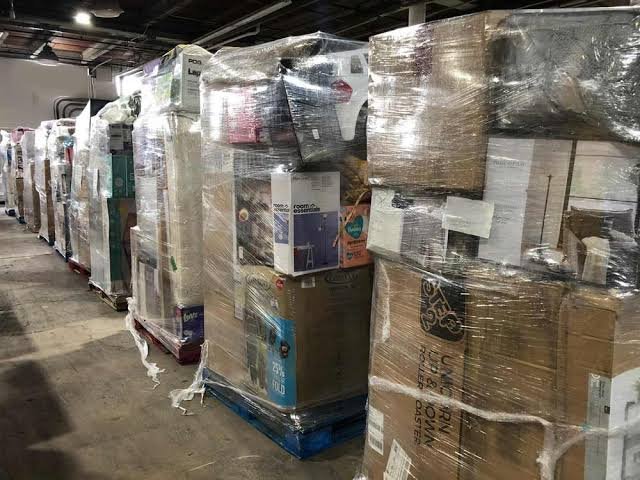
What Does “Salvage” Mean in Liquidation?
If you are researching Salvage Liquidation Pallets for the first time, the word “salvage” can be confusing. Does it mean damaged merchandise? Does it mean everything is broken? Can you actually make money buying salvage inventory? Most importantly, should you buy Salvage Liquidation Pallets?
The short answer is that salvage merchandise can offer significant buying opportunities, but it comes with considerably more risk than new, overstock, or fully tested liquidation inventory. The key is understanding exactly what the salvage condition means before you spend your money.
In the liquidation industry, salvage generally refers to merchandise that requires significant repairs before it can be resold or merchandise that may be more suitable for parts, components, recycling, or recovery of usable materials. For example, B-Stock’s published condition definitions describe salvage merchandise as products requiring significant repairs before resale or products that may be used for parts or components instead. B-Stock’s liquidation condition guide provides an example of how salvage is classified in a commercial liquidation marketplace.
That distinction is extremely important for anyone considering Salvage Liquidation Pallets. Salvage does not simply mean “cheap products.” It means you are purchasing inventory where the condition and resale potential may require considerably more work, knowledge, and capital.
What Are Salvage Liquidation Pallets?
Salvage Liquidation Pallets are bulk loads of merchandise classified as salvage because some or many of the products may have substantial damage, missing components, functional problems, cosmetic defects, or other issues that prevent them from being sold immediately as normal retail inventory.
The exact contents can vary significantly depending on the retailer, supplier, product category, and liquidation program. One Salvage Liquidation Pallet could contain products that are repairable, while another may contain a mixture of repairable merchandise, incomplete products, damaged products, and items that are ultimately more valuable for parts.
This is why you should never assume that two Salvage Liquidation Pallets with similar advertised prices will have the same potential value.
The condition description, manifest, photographs, product category, quantity, source, shipping cost, and supplier terms all matter when deciding whether a salvage load represents a good opportunity.
Does Salvage Mean Everything Is Broken?
No. This is one of the biggest misconceptions about Salvage Liquidation Pallets.
A salvage classification does not necessarily mean that every individual product is completely unusable. Instead, the classification generally indicates that the merchandise, as a load or condition category, requires significant repair work before normal resale or may be better suited for parts and components.
For example, a salvage pallet containing power tools could include tools with damaged housings, missing batteries, defective switches, or other problems. Some units might be repairable, while others could be valuable for replacement parts.
Similarly, a salvage clothing load could contain products with broken zippers, torn linings, stains, or other damage. The merchandise may have some recoverable value, but it should not be priced like new retail inventory.
Why Do Retailers Sell Salvage Inventory?
Retailers and businesses can accumulate merchandise that is no longer practical to sell through their normal retail channels. Products may have been returned by customers, damaged during handling, removed from stores, discontinued, or classified as unsuitable for standard retail sale.
Rather than keeping this inventory in warehouses indefinitely, businesses can move it through liquidation channels.
For buyers, this creates an opportunity to acquire large quantities of merchandise at a substantially lower acquisition cost. However, the lower price exists for a reason: Salvage Liquidation Pallets transfer more of the sorting, testing, repair, and resale risk to the buyer.
Where Does Salvage Merchandise Come From?
The merchandise inside Salvage Liquidation Pallets can originate from several different sources.
- Customer returns
- Damaged merchandise
- Warehouse inventory
- Store returns
- Discontinued products
- Products with missing components
- Products requiring repair
- Excess inventory that has deteriorated or become unsellable through normal channels
The source matters because it can influence the type of damage and the potential recovery value.
For example, customer-return merchandise may have been used briefly before being returned, while warehouse-damaged merchandise may have experienced physical damage during transportation or storage. Understanding the source can therefore help you estimate the type of work that may be required when processing Salvage Liquidation Pallets.
Salvage vs. Untested: They Are Not the Same
One of the most important distinctions for liquidation buyers is the difference between salvage and untested.
An untested product has not necessarily been confirmed as defective. It may simply not have gone through the testing process required to verify its functionality.
Salvage, on the other hand, generally indicates a substantially higher level of condition risk. A marketplace such as B-Stock specifically distinguishes salvage from conditions such as “Used – Good,” “Used – Fair,” and “Refurbished.”
This means buyers should not automatically apply the same pricing strategy to Salvage Liquidation Pallets and untested pallets.
If you are unfamiliar with untested inventory, you can also read our guide on liquidation pallets and wholesale inventory to understand how different liquidation opportunities can vary in condition and resale potential.
Why Are Salvage Liquidation Pallets So Cheap?
The low price of Salvage Liquidation Pallets is one of their biggest attractions for experienced resellers.
However, the purchase price is only one part of the total investment.
When you buy salvage inventory, you may also need to spend money on:
- Freight and delivery
- Sorting
- Testing
- Cleaning
- Replacement parts
- Repairs
- Labor
- Packaging
- Storage
- Marketplace fees
- Disposal or recycling
A pallet that costs $500 may not really cost you only $500. If you spend another $300 on transportation, $200 on parts and repairs, and significant time processing the inventory, your true acquisition cost is much higher.
This is why experienced buyers evaluate the total landed and processing cost of Salvage Liquidation Pallets rather than judging an opportunity based solely on the advertised pallet price.
Can You Make Money From Salvage Liquidation Pallets?
Yes, it is possible to make money from Salvage Liquidation Pallets, but profitability is not guaranteed.
The business model works when you can acquire the inventory at a low enough cost, recover enough usable merchandise, repair or prepare products efficiently, and sell the recovered inventory for more than your total expenses.
For example, imagine you purchase a salvage pallet for $600. After freight, your total cost becomes $800. You inspect the merchandise and discover that some products can be repaired, some can be sold as-is where appropriate, and others have useful parts.
If your total net revenue after selling expenses eventually reaches $1,500, you have generated a positive gross margin before accounting for all business overhead and your labor. If your recovery rate is much lower than expected, however, the same pallet could produce little profit or even a loss.
The lesson is simple: Salvage Liquidation Pallets are a risk-and-reward purchase.
Who Should Buy Salvage Liquidation Pallets?
Salvage Liquidation Pallets are generally more appropriate for buyers who have the resources and experience to process damaged or repairable merchandise.
They can be particularly attractive to:
- Experienced liquidation resellers
- Repair businesses
- Parts dealers
- Refurbishment businesses
- Automotive parts sellers
- Electronics technicians
- Tool repair businesses
- Wholesale distributors
- Businesses with established local resale channels
A buyer with repair skills may see value in a product that an inexperienced reseller considers worthless. That difference in expertise can create the opportunity behind Salvage Liquidation Pallets.
Who Should Be Careful With Salvage Pallets?
Beginners should approach Salvage Liquidation Pallets carefully, especially when they have limited repair knowledge, limited storage space, or a small amount of working capital.
The biggest problem for a new reseller is often underestimating the amount of work required.
A $500 salvage pallet may look like an inexpensive way to start a liquidation business. But if the products require specialized repairs, expensive replacement parts, extensive testing, or weeks of processing, the apparent bargain can quickly become expensive.
If you are new to liquidation, it can be safer to begin by learning how different pallet conditions work before committing significant capital to heavily damaged inventory.
What Should You Look for Before Buying?
Before purchasing Salvage Liquidation Pallets, investigate as much information as possible about the specific load.
Pay particular attention to:
- Product category
- Condition description
- Manifest availability
- Product quantities
- Brand names
- Model numbers
- Photographs
- Original retail value
- Estimated resale value
- Shipping cost
- Supplier policies
- Return restrictions
A detailed listing can make it easier to determine whether the risk associated with Salvage Liquidation Pallets is justified by the potential return.
Don’t Confuse Retail Value With Profit
One of the most common mistakes buyers make when evaluating Salvage Liquidation Pallets is looking at the advertised retail value and assuming that amount represents potential profit.
It does not.
If a pallet contains merchandise with a stated retail value of $10,000, that does not mean you can resell the merchandise for $10,000. Salvage products may require repairs, may have missing components, may sell for substantially less than retail, and may include products that cannot be economically resold.
Instead, calculate your expected realistic resale revenue after considering condition, demand, repairs, selling fees, and other expenses.
Safety Is Part of the Buying Decision
Safety should never be ignored when evaluating Salvage Liquidation Pallets. A product with physical or functional damage may present risks that are not immediately obvious.
This is particularly important for children’s products, electrical products, appliances, tools, and other consumer goods.
For U.S. buyers, the U.S. Consumer Product Safety Commission recall database is an important resource for checking recalled consumer products. The CPSC maintains recall and product-safety information and updates its database as new recalls and warnings are issued.
Before reselling products from Salvage Liquidation Pallets, research applicable recalls and safety warnings, especially when the merchandise involves products that could create injury or safety hazards.
So, Is Salvage a Bad Condition?
Not necessarily.
Salvage is a high-risk condition, not automatically a bad investment.
The difference comes down to the buyer’s ability to recover value from the merchandise.
An experienced repair business may see a salvage pallet as an excellent source of inexpensive parts. A professional reseller may be able to repair enough products to generate a healthy margin. A beginner without repair skills may struggle to recover the same value.
That is why the right question is not simply, “Are Salvage Liquidation Pallets good?”
The better question is:
“Can I recover enough value from this specific salvage pallet to justify my total cost, time, and risk?”
The Bottom Line
Salvage Liquidation Pallets can provide opportunities for resellers, repair businesses, parts dealers, and experienced liquidation buyers who understand how to evaluate damaged inventory. However, salvage merchandise requires a more conservative buying strategy than new, overstock, or fully functional inventory.
Before buying, understand the condition, inspect the available information, calculate your total costs, research realistic resale prices, and determine how much of the inventory you can realistically recover.
Most importantly, never assume that a low pallet price automatically means you have found a great deal.
A great Salvage Liquidation Pallet is one where the potential recovered value is significantly higher than your total acquisition, repair, processing, and selling costs.
What Can You Find Inside Salvage Liquidation Pallets?
One of the biggest questions buyers ask before purchasing Salvage Liquidation Pallets is: “What will actually be inside the pallet?” The answer depends heavily on the supplier, merchandise source, product category, and condition of the particular load.
Unlike a pallet of brand-new overstock, Salvage Liquidation Pallets can contain products with significant damage, missing components, functional problems, cosmetic defects, or other issues that prevent normal retail resale. Established liquidation marketplaces commonly define salvage as merchandise requiring significant repairs before resale or merchandise intended for parts and components.
That does not mean every item has the same problem. A salvage load can contain a mixture of repairable products, incomplete products, damaged products, and items whose greatest value comes from their components. This variation is exactly why buyers need to evaluate Salvage Liquidation Pallets based on their actual contents rather than assuming every pallet has the same recovery potential.
Common Product Categories Found in Salvage Pallets
The merchandise found in Salvage Liquidation Pallets can cover almost any retail category. Depending on the source, you may encounter electronics, appliances, furniture, tools, clothing, toys, home goods, sporting products, automotive accessories, and many other types of merchandise.
Some categories are easier to recover than others. Your ability to repair, test, clean, repackage, or sell products for parts can have a major impact on the profitability of a salvage purchase.
1. Electronics
Electronics are among the most interesting categories for experienced buyers of Salvage Liquidation Pallets. Smartphones, tablets, laptops, televisions, gaming systems, speakers, cameras, monitors, and accessories can potentially contain valuable components even when the complete product is not suitable for normal resale.
However, electronics also carry significant risk. A damaged screen, defective motherboard, swollen battery, broken charging port, locked device, missing proprietary component, or other internal fault can substantially reduce the value of an individual unit.
When purchasing Salvage Liquidation Pallets containing electronics, you should already understand how you will test, repair, refurbish, part out, or otherwise monetize the merchandise.
2. Power Tools and Hand Tools
Tools can be another attractive category within Salvage Liquidation Pallets. Cordless drills, saws, grinders, impact drivers, sanders, tool accessories, wrenches, pliers, and other equipment can have established resale and parts markets.
A power tool that does not operate may still have value through its battery, charger, motor, housing, switches, gears, or other components.
This creates an important distinction between an ordinary reseller and a repair-oriented buyer. A reseller may see a broken tool as worthless, while a knowledgeable technician may see the same product as a source of inexpensive replacement components.
If you specialize in tools, Salvage Liquidation Pallets can therefore provide opportunities that are difficult for inexperienced buyers to recognize.
3. Small Appliances
Small appliances may also appear in Salvage Liquidation Pallets. Examples can include coffee makers, blenders, vacuum cleaners, air fryers, fans, kitchen appliances, and other household equipment.
The condition can range from cosmetic damage to missing accessories and serious functional problems.
When processing salvage appliances, separate products that can potentially be repaired from products that are more appropriate for parts or recycling. Never assume that an appliance is safe to operate simply because the damage is not immediately visible.
4. Furniture
Furniture can represent a significant portion of some Salvage Liquidation Pallets, particularly loads originating from home improvement, furniture, or large-retail supply chains.
Potential merchandise can include tables, chairs, desks, cabinets, shelves, beds, storage products, and other household furnishings.
Furniture can be particularly interesting for local resellers because transportation costs can make nationwide shipping impractical. A buyer who has local customers and sufficient storage space may be able to recover value through local pickup and direct sales.
Inspect structural integrity carefully. Broken frames, damaged surfaces, missing hardware, water damage, stains, and assembly problems can significantly affect resale value.
5. Clothing and Footwear
Clothing, footwear, and accessories can also appear in Salvage Liquidation Pallets. These loads may include garments with stains, tears, broken zippers, missing buttons, damaged packaging, or other defects.
Although damaged apparel may not be suitable for traditional retail resale, certain products may still have value through repair, customization, bundles, clearance sales, textile recovery, or parts.
The economics depend heavily on the brand, style, material, condition, season, and local demand.
6. Toys and Children’s Products
Toys can appear in Salvage Liquidation Pallets, including dolls, games, outdoor toys, electronic toys, accessories, and children’s merchandise.
Potential problems include broken components, missing pieces, damaged packaging, battery issues, and safety concerns.
This category requires additional caution because children’s products can be subject to product-safety requirements and recalls. Before reselling applicable products in the United States, check the official U.S. Consumer Product Safety Commission recall database.
For Salvage Liquidation Pallets containing children’s products, potential resale profit should never take priority over product safety.
7. Home Improvement Merchandise
Home improvement products are another possible category in Salvage Liquidation Pallets. These can include hardware, lighting products, fixtures, storage systems, tools, organizers, fittings, and other household improvement merchandise.
Some products may only have cosmetic damage or damaged packaging, while others may have missing components or functional problems.
Before buying Salvage Liquidation Pallets in this category, determine whether you have customers who are willing to purchase discounted or repairable home improvement products.
8. Sporting Goods
Sporting equipment can also be found in Salvage Liquidation Pallets. Depending on the load, merchandise may include fitness equipment, recreational products, sports accessories, protective equipment, and other sporting goods.
The inspection requirements depend on the product. A simple accessory may require only a visual inspection, while equipment that supports a person’s weight or protects against impact requires much more careful evaluation.
For safety-sensitive sporting products, do not sell damaged equipment simply because it appears to have resale value.
9. Automotive Products
Automotive accessories and components can sometimes create attractive opportunities in Salvage Liquidation Pallets. However, compatibility is extremely important.
Products may include accessories, lighting components, interior accessories, tools, replacement parts, and other automotive merchandise.
A product can be physically intact but difficult to sell if you cannot identify the vehicles or models it fits. Before listing automotive products, research part numbers and compatibility information carefully.
10. Seasonal and Holiday Merchandise
Seasonal merchandise can also appear in Salvage Liquidation Pallets. Halloween decorations, Christmas products, holiday lighting, costumes, outdoor decorations, and seasonal accessories may all enter liquidation channels.
Seasonal salvage can be particularly challenging because the merchandise has a limited selling window. Damaged Halloween products, for example, may have little value once Halloween has passed.
However, buyers who have storage capacity and understand seasonal demand may be able to purchase Salvage Liquidation Pallets at a sufficiently low cost and hold suitable inventory until the next selling season.
Can Salvage Pallets Contain Brand-Name Products?
Yes. Salvage Liquidation Pallets can contain recognizable brands, depending on the source and product category.
However, the presence of a major brand does not automatically make a salvage product valuable.
A brand-name product with severe damage, missing proprietary components, or an expensive repair requirement may be worth considerably less than a fully functional product from the same brand.
When evaluating branded merchandise, research the exact model and condition rather than assigning value based only on the brand name.
Can Salvage Pallets Contain Complete Products?
They can, but you should not assume that all products in Salvage Liquidation Pallets will be complete or ready for resale.
Some units may be repairable with relatively inexpensive replacement components. Others may be missing essential parts that make complete restoration uneconomical.
This is why experienced salvage buyers often evaluate both the complete-product value and the potential parts value of the merchandise.
Parts Can Be More Valuable Than the Finished Product
One of the biggest opportunities associated with Salvage Liquidation Pallets is parts recovery.
Consider a damaged electronic device that cannot be economically repaired. Its screen, housing, buttons, speakers, camera modules, cables, motors, boards, or other components may still have value.
Similarly, a damaged power tool may contain a useful motor, battery, charger, switch, gear assembly, or other component.
This means the correct question is not always, “Can I sell this product?”
Sometimes the better question is, “Can I recover enough value from this product or its components to justify keeping it?”
Salvage Pallets Can Contain Different Levels of Damage
Do not assume that every item in Salvage Liquidation Pallets has identical damage.
A single load may contain:
- Cosmetically damaged products
- Products with missing accessories
- Products requiring minor repairs
- Products requiring major repairs
- Non-functional products
- Incomplete products
- Products suitable for parts
- Products suitable for recycling
The actual mixture depends on the supplier and specific lot. Some marketplaces explicitly note that mixed-condition lots can contain products of different quality levels, including salvage, unless the listing or manifest specifies otherwise.
Why the Manifest Matters
When available, a manifest can be one of the most useful tools for evaluating Salvage Liquidation Pallets.
A manifest may provide product descriptions, quantities, brands, model numbers, or other information that allows you to research potential resale and parts value.
However, buyers should still read the condition information carefully. A product appearing on a manifest does not automatically mean that it is functional, complete, or ready for resale.
You can also visit the Elite Pallet Liquidators shop to compare available liquidation inventory and evaluate product categories before choosing your next wholesale load.
How Product Category Changes Salvage Value
The same level of physical damage can have completely different financial consequences depending on the product category.
For example, a missing accessory on an inexpensive household product may make the product uneconomical to repair. The same type of missing component on an expensive branded electronic device could still leave enough value to justify replacement.
This is why Salvage Liquidation Pallets should be evaluated based on recoverable value rather than simply counting the number of products inside the pallet.
Don’t Count Every Piece as a Resalable Unit
A pallet containing 200 products does not necessarily mean you have 200 sellable products.
When evaluating Salvage Liquidation Pallets, divide the inventory into realistic categories:
- Ready for resale
- Needs cleaning
- Needs minor repair
- Needs major repair
- Parts only
- Recycling
- Unsellable
This method gives you a much more realistic picture of the potential recovery from the pallet.
How Experienced Buyers Create Value
Experienced buyers of Salvage Liquidation Pallets often create value through specialization.
A repair technician may know how to restore electronics. A mechanic may understand automotive parts. A tool specialist may know which components are valuable. A clothing reseller may have established channels for damaged apparel.
The more knowledge you have about a particular category, the easier it can become to identify opportunities that an inexperienced buyer might overlook.
Is a Salvage Pallet Better Than an Untested Pallet?
Not necessarily. Salvage Liquidation Pallets and untested pallets represent different risk profiles.
Untested merchandise may contain products that work perfectly but have not been inspected. Salvage merchandise is generally associated with substantially greater repair or parts risk. For example, B-Stock’s condition definitions distinguish salvage merchandise as requiring significant repairs before resale or being suitable for parts/components only.
Therefore, a buyer should not choose between the two simply because one pallet has a lower price. Compare the expected recovery, labor requirements, repair costs, and resale opportunities.
What Makes a Salvage Load Attractive?
An attractive Salvage Liquidation Pallet usually has one or more characteristics that create a path to value recovery.
- Strong demand for the product category
- Recognizable brands
- Accessible replacement parts
- Manageable repair costs
- Strong local resale demand
- Established parts markets
- Reasonable shipping costs
- A detailed manifest
- A purchase price that leaves sufficient margin
The combination is more important than any individual characteristic. A cheap pallet with no realistic resale strategy is not necessarily a good purchase.
What Makes a Salvage Load Dangerous?
The biggest danger with Salvage Liquidation Pallets is buying based on theoretical retail value rather than realistic recovery value.
A pallet can have thousands of dollars in original retail value but still produce a poor return if most of the merchandise requires expensive repairs, lacks critical components, has weak demand, or cannot legally or safely be resold.
Buyers should also be cautious of suspiciously attractive online offers. The liquidation market has attracted fraudulent sellers, including fake websites and social-media offers designed to take payment without delivering legitimate merchandise.
The Real Value Is in Your Recovery Strategy
Ultimately, the contents of Salvage Liquidation Pallets only tell part of the story. The bigger question is what you can do with those contents after the pallet arrives.
If you have a repair shop, parts business, local resale operation, online store, or established wholesale customer base, you may be able to recover considerably more value than a casual buyer.
If you have no way to repair, test, store, or sell damaged products, even an inexpensive salvage pallet can become a difficult investment.
Final Takeaway
Salvage Liquidation Pallets can contain electronics, tools, appliances, furniture, apparel, toys, sporting goods, automotive products, seasonal merchandise, and many other categories. The condition can range from repairable merchandise to products that are more valuable for parts or recycling.
The most successful buyers do not assume that every item will be profitable. Instead, they identify the products with realistic recovery potential, calculate the cost of processing them, and create a clear exit strategy for merchandise that cannot be repaired or resold.
Before purchasing your next Salvage Liquidation Pallet, study the manifest when available, research the product category, understand the condition definition, calculate your total landed cost, and determine how you will monetize both complete products and usable components.
In Part 3, we will compare Salvage Liquidation Pallets with other common liquidation conditions, including customer returns, untested inventory, overstock, shelf pulls, refurbished products, and used merchandise. This comparison will help you determine which condition is the best fit for your budget and resale strategy.
Salvage vs. Other Liquidation Conditions: What Is the Difference?
Before buying Salvage Liquidation Pallets, it is important to understand how salvage compares with other common liquidation conditions. Liquidation inventory can be classified in several different ways, including customer returns, overstock, shelf pulls, used merchandise, refurbished products, and untested inventory.
These conditions can have dramatically different levels of risk, resale potential, and processing requirements. Understanding the differences can help you avoid paying too much for inventory that requires more work than your business can handle.
Most importantly, do not assume that the cheapest pallet is automatically the best pallet. When comparing Salvage Liquidation Pallets with other liquidation inventory, you should consider the purchase price, expected recovery rate, testing requirements, repair costs, selling fees, labor, and realistic resale value.
Salvage vs. Untested Liquidation Pallets
One of the most important comparisons is between Salvage Liquidation Pallets and untested liquidation pallets.
Untested generally means the merchandise has not been fully inspected or tested to confirm functionality. An untested product could be functional, defective, incomplete, or somewhere in between.
Salvage generally represents a higher level of condition risk. Salvage merchandise is commonly associated with products requiring significant repairs before resale or products that may be more appropriate for parts and components. B-Stock’s published condition information provides this distinction in its liquidation grading descriptions. See B-Stock’s condition definitions for an example of how a major liquidation marketplace describes different inventory conditions.
This means an Untested Liquidation Pallet may provide more upside from working merchandise, while Salvage Liquidation Pallets may offer a lower acquisition price in exchange for greater uncertainty and repair requirements.
Salvage vs. Customer Returns
Customer returns are another common source of liquidation inventory. A customer may return a product because they changed their mind, ordered the wrong size, found a cosmetic issue, or experienced an actual functional problem.
As a result, customer returns can contain products in a wide range of conditions.
Salvage Liquidation Pallets, however, are generally positioned toward the more damaged or repair-intensive end of the condition spectrum.
A customer-return pallet may contain many products that can be cleaned, tested, repackaged, and resold with relatively little work. A salvage pallet may require significantly more repair, parts recovery, or disposal.
This difference should influence the price you are willing to pay.
Salvage vs. Overstock
Overstock inventory is generally merchandise that a retailer has in excess of current demand. Products may be new and unused even though the retailer no longer needs the inventory.
This makes overstock fundamentally different from Salvage Liquidation Pallets.
Overstock products can often be sold much closer to their original retail condition, while salvage merchandise may require repairs, replacement components, cleaning, or parts recovery.
For a beginner, overstock can therefore be easier to understand and process. The trade-off is that overstock generally costs more because the condition risk is lower.
Salvage vs. Shelf Pulls
Shelf pulls are products removed from retail shelves for reasons such as product resets, seasonal changes, packaging changes, discontinued lines, or changes in inventory strategy.
Shelf pulls may be new and unused, although the packaging may show signs of handling.
Compared with Salvage Liquidation Pallets, shelf pulls typically carry a lower repair risk. However, shelf-pull merchandise may still require inspection for missing accessories, damaged packaging, cosmetic issues, or discontinued product demand.
If you want inventory that is easier to list and sell without extensive repairs, shelf pulls may be more suitable than heavily damaged salvage inventory.
Salvage vs. Refurbished Products
Refurbished products are different from Salvage Liquidation Pallets because refurbishment generally involves inspection, repair, restoration, or testing before the product is offered for resale.
A refurbished item may have previously been defective or returned, but it has gone through a process intended to make it functional again.
When purchasing salvage inventory, you are often taking on the refurbishment work yourself. That means you need to account for parts, labor, tools, testing, and time.
The advantage is that the lower acquisition cost of Salvage Liquidation Pallets can potentially leave room for profit if you have an efficient refurbishment process.
Salvage vs. Used Merchandise
Used merchandise is another broad category that can be difficult to compare directly with Salvage Liquidation Pallets.
Used products can range from excellent condition to heavily worn. The important distinction is that “used” describes previous use, while “salvage” generally indicates a greater degree of damage, repair requirement, or recovery need.
A used product may be completely functional and ready for resale. A salvage product may require substantial work before it can be sold as a functioning product.
Always read the supplier’s specific condition definition rather than assuming that the labels have identical meanings across every marketplace.
Salvage vs. General Merchandise
General merchandise is usually a product category rather than a specific condition. A general merchandise pallet can contain products from multiple categories, including household goods, electronics, toys, apparel, tools, and accessories.
Therefore, you can have general merchandise that is new, overstock, customer returns, untested, or salvage.
When evaluating Salvage Liquidation Pallets, pay attention to both the condition and the product category. The combination determines much of your potential risk.
Salvage vs. Damaged Packaging
Damaged packaging does not automatically mean that the product itself is damaged.
A box may be crushed, torn, opened, or otherwise unattractive while the merchandise inside remains functional.
This is very different from Salvage Liquidation Pallets, where the merchandise itself may require significant repair or may be more appropriate for parts.
If the only issue is packaging, the cost of preparing the item for resale may be considerably lower.
Comparison at a Glance
| Condition | Typical Risk | Potential Work | Best Suited For |
|---|---|---|---|
| Salvage | High | Repairs, testing, parts recovery | Experienced buyers and repair businesses |
| Untested | Medium to high | Testing, cleaning, possible repairs | Resellers with testing capability |
| Customer Returns | Variable | Inspection, cleaning, testing | General resellers |
| Used | Variable | Inspection and cleaning | Used-goods resellers |
| Shelf Pulls | Low to medium | Inspection and repackaging | Retail resellers |
| Overstock | Low | Minimal preparation | New-product resellers |
| Refurbished | Lower | Usually tested before sale | Resellers seeking ready-to-sell products |
These categories are general guidelines, not universal definitions. Individual suppliers can use different grading systems, so always read the specific condition description attached to the pallet you are considering.
Which Condition Has the Highest Profit Potential?
There is no single liquidation condition that guarantees the highest profit. Instead, profit depends on the relationship between your purchase price, processing cost, recovery rate, and resale revenue.
Salvage Liquidation Pallets can have attractive margins because their acquisition cost may be significantly lower than better-condition inventory. However, the lower price compensates the buyer for greater risk.
An experienced buyer with repair skills may therefore generate better returns from salvage than a beginner buying higher-condition inventory.
Why Salvage Can Have Higher Risk
The biggest difference between Salvage Liquidation Pallets and better-condition liquidation inventory is uncertainty.
You may not know how many products can be restored until you inspect them. You may discover that replacement parts are unavailable or too expensive. You may also find that some products have no practical resale market.
This makes conservative purchasing particularly important.
How to Decide Which Condition Is Right for You
Start by assessing your own resources rather than looking only at the pallet price.
Ask yourself:
- Do I have experience repairing products?
- Can I test merchandise efficiently?
- Do I have access to replacement parts?
- Do I have enough storage space?
- Can I sell damaged or repaired merchandise?
- Do I have local buyers?
- Can I sell parts if complete products cannot be restored?
- Can my cash flow handle inventory that takes longer to sell?
If you answer “yes” to most of these questions, Salvage Liquidation Pallets may be worth investigating.
Beginners Should Start Conservatively
New liquidation buyers should be particularly careful about jumping directly into heavily damaged inventory.
A beginner may see a low price on Salvage Liquidation Pallets and assume that the discount creates automatic profit. In reality, the buyer must know how to evaluate, process, repair, price, and sell the merchandise.
Starting with smaller loads or easier-to-process categories can allow you to develop experience before taking on higher-risk salvage inventory.
Experienced Buyers Can Exploit the Difference
Experienced liquidation buyers often have an advantage because they understand their product categories.
For example, a technician may know that a particular defective device has valuable components. A tool specialist may understand which broken tools are worth repairing. A parts dealer may already have customers looking for specific components.
This knowledge can make Salvage Liquidation Pallets considerably more attractive to specialized buyers.
Calculate Total Cost, Not Just Purchase Price
When comparing Salvage Liquidation Pallets with other conditions, calculate your complete cost.
A useful formula is:
Total investment = pallet price + freight + testing + repairs + replacement parts + storage + selling fees + labor.
Then compare that investment with your realistic expected net resale revenue.
This approach gives you a much clearer picture of whether the pallet is actually a good deal.
Consider Your Exit Strategy
A strong exit strategy can make Salvage Liquidation Pallets more manageable.
Before purchasing, determine what you will do with products that cannot be restored.
Potential options can include selling suitable components, bundling products, selling items for repair where appropriate, recycling eligible materials, or disposing of products through appropriate channels.
If you have no practical way to monetize damaged products, you should be more conservative about how much you pay for the pallet.
Where Should You Buy?
The supplier is just as important as the condition.
Before purchasing Salvage Liquidation Pallets, research the seller’s business information, condition definitions, photographs, manifests, shipping terms, payment process, and policies.
You can explore the Elite Pallet Liquidators shop to review available wholesale liquidation inventory and compare different product opportunities.
You can also research established liquidation marketplaces such as B-Stock to learn how liquidation inventory and condition categories can be presented.
Which Condition Should You Choose?
There is no universal winner between salvage, untested, customer returns, overstock, shelf pulls, used, and refurbished inventory.
The right choice depends on your business model.
If you want lower risk and simpler processing, higher-condition inventory may make more sense. If you have repair skills, strong local demand, access to parts, and an efficient processing system, Salvage Liquidation Pallets may provide opportunities that higher-condition inventory cannot.
The key is matching the condition to your capabilities.
Final Takeaway
Salvage Liquidation Pallets sit toward the higher-risk end of the liquidation spectrum because the merchandise may require significant repairs, parts recovery, or additional processing before it can generate revenue.
Compared with overstock and shelf pulls, salvage generally requires more work. Compared with untested inventory, salvage usually represents a stronger expectation of damage or repair needs. Compared with refurbished products, salvage transfers more of the restoration responsibility to the buyer.
That does not make salvage a bad investment. It simply means you need to buy at a price that properly reflects the risk.
If you can test, repair, refurbish, part out, and sell the merchandise efficiently, Salvage Liquidation Pallets can become a valuable source of inventory. If you lack the necessary skills, storage, capital, or sales channels, a higher-condition pallet may be a better starting point.
The Biggest Risks of Buying Salvage Liquidation Pallets
Buying Salvage Liquidation Pallets can create excellent opportunities for experienced resellers, but the low purchase price comes with additional risk. If you are considering your first salvage load, understanding these risks before placing an order can help you avoid expensive mistakes.
The most important principle is simple: never evaluate a salvage pallet based only on how cheap it looks. A $400 pallet can be a better investment than a $200 pallet if the $400 pallet contains more recoverable merchandise, requires fewer repairs, and has stronger resale demand.
At the same time, a seemingly expensive pallet can become a poor investment if a large percentage of its merchandise turns out to be unsellable.
The real question is whether the expected recovered value justifies your total investment.
1. Unknown or Uncertain Product Condition
Condition uncertainty is one of the biggest risks associated with Salvage Liquidation Pallets.
Unlike new or overstock inventory, salvage merchandise may have significant damage, missing components, functional problems, or other defects. Even when a supplier provides photographs or a manifest, the information may not reveal every problem with every individual unit.
For this reason, you should avoid treating the stated retail value as guaranteed resale value.
A pallet may contain products originally worth thousands of dollars at retail, yet only a fraction may be realistically recoverable after accounting for damage and repair costs.
2. Expensive Repairs
Another major risk is underestimating repair costs.
A product may appear to need a simple repair until you discover that the replacement component is expensive, difficult to source, or requires specialized tools and expertise.
For example, replacing a small component may be economical on one product but completely uneconomical on another.
Before purchasing Salvage Liquidation Pallets, research the typical repair costs associated with the product category you intend to buy.
3. Missing Parts and Accessories
Missing components can significantly reduce the value of salvage merchandise.
A product may look almost new but still be impossible to use because an essential component is missing. Examples include missing power adapters, batteries, chargers, remotes, mounting hardware, proprietary cables, covers, or other required parts.
When evaluating Salvage Liquidation Pallets, determine whether replacement components are readily available and affordable.
4. Low Recovery Rates
The recovery rate is one of the most important concepts for salvage buyers.
Suppose you purchase a pallet containing 100 products. If only 40 can eventually be sold profitably, the other 60 units still consumed storage space, labor, and processing time.
That means your calculation should not simply be:
“100 units × estimated selling price.”
Instead, you should estimate how many units will realistically fall into each category:
- Ready for resale
- Minor repair
- Major repair
- Parts only
- Recycling
- Unsellable
This gives you a much more realistic recovery estimate for Salvage Liquidation Pallets.
5. Shipping Can Destroy Your Margin
Freight is another expense that buyers sometimes overlook.
Because liquidation pallets are large and heavy, transportation can represent a significant percentage of your total investment.
For example, a pallet purchased for $500 may appear inexpensive. But if freight adds another $300 or $500, your effective acquisition cost changes substantially.
Always calculate the landed cost before deciding whether Salvage Liquidation Pallets are profitable.
Your landed cost should include the pallet purchase price and transportation expenses before you compare the load with realistic resale revenue.
6. Storage Problems
Salvage inventory can require considerably more storage time than ready-to-sell merchandise.
A functional product may be listed immediately. A damaged product may sit in your workspace while you search for parts, perform repairs, test it, photograph it, create a listing, and wait for a buyer.
If you purchase multiple Salvage Liquidation Pallets without sufficient storage space, your business can quickly become overwhelmed with unfinished inventory.
7. Slow-Moving Inventory
Not every salvage product has strong demand.
A product may be repairable but still difficult to sell because customers do not want it, the model is outdated, replacement parts are unavailable, or competitors offer newer alternatives at similar prices.
This is why researching demand is just as important as researching product condition.
Before buying Salvage Liquidation Pallets, check comparable products on established marketplaces and determine whether buyers are actually purchasing similar items.
8. Seasonal Demand
Seasonality can create another challenge.
A salvage pallet containing Halloween decorations may be valuable shortly before Halloween but much harder to monetize immediately afterward. Christmas merchandise has a similar challenge.
If you purchase seasonal Salvage Liquidation Pallets, consider whether you have enough storage space and working capital to hold inventory until the next selling season.
9. Product Recalls
Product safety is particularly important when buying salvage inventory.
A damaged or defective product may also be subject to a recall or safety warning.
U.S. buyers should use the official Consumer Product Safety Commission recall database to research applicable consumer product recalls before reselling products.
The CPSC explains that its recall information covers consumer products that may pose risks including injury, fire, chemical exposure, or other hazards. Checking official recall information is therefore an important part of due diligence when processing Salvage Liquidation Pallets.
10. Counterfeit or Questionable Merchandise
Brand-name merchandise can be attractive, but buyers should be cautious about products with questionable authenticity.
A low purchase price does not make a potentially counterfeit product legitimate.
When buying Salvage Liquidation Pallets, document brand names, model numbers, serial numbers where applicable, packaging, and product identifiers. If something appears suspicious, investigate it before listing the product for sale.
This is especially important when dealing with high-value electronics, designer products, branded accessories, and other categories commonly targeted by counterfeiters.
11. Products With No Replacement Parts
A salvage product may technically be repairable but still be economically worthless if the required replacement parts are unavailable.
This is a common issue with discontinued products.
Before buying Salvage Liquidation Pallets containing older electronics, appliances, tools, or equipment, search for replacement parts and repair documentation.
If replacement parts are difficult to locate, reduce the amount you are willing to pay for the load.
12. Labor Costs
Your time has financial value.
One of the biggest mistakes new salvage buyers make is assuming that their own labor is free.
Sorting, cleaning, testing, repairing, photographing, listing, packaging, and shipping hundreds of products can consume many hours.
When calculating the potential return from Salvage Liquidation Pallets, consider how much labor the load will require.
If one pallet takes 50 hours to process, the purchase may be less attractive than another pallet that takes only 15 hours to prepare, even if both have similar gross revenue potential.
13. Disposal Costs
Some products may have no practical resale value.
Damaged, hazardous, incomplete, or obsolete merchandise may require appropriate disposal or recycling rather than resale.
Disposal costs can reduce your final profit, particularly when a pallet contains a large percentage of unusable inventory.
Before buying Salvage Liquidation Pallets, understand how you will handle products that cannot be economically repaired or sold.
14. Incorrect Resale Expectations
Another major risk is setting unrealistic selling prices.
The original retail price of a product does not determine what you can sell a damaged or repaired unit for.
Instead, research current market prices for comparable products in comparable conditions.
If similar working products sell for $100 but damaged units sell for $30, you should not calculate your salvage opportunity using the $100 figure.
15. Marketplace Fees
Online selling platforms can charge fees for listings, transactions, payment processing, advertising, fulfillment, or other services.
These costs can significantly affect the final margin on lower-priced salvage products.
For example, spending several hours repairing a $30 product may not make financial sense if selling fees and shipping consume a large percentage of the revenue.
Before purchasing Salvage Liquidation Pallets, understand the fee structure of the platforms where you plan to sell.
16. Fraudulent Liquidation Sellers
Not every website advertising liquidation pallets is legitimate.
Fake liquidation stores may advertise extremely attractive prices, use stolen product photographs, imitate legitimate companies, or request payment through methods that provide limited buyer protection.
The U.S. Federal Trade Commission provides guidance on online shopping scams and safer online purchasing.
Before buying Salvage Liquidation Pallets, investigate the seller, verify business information, review the website carefully, and be suspicious of offers that appear dramatically below normal market levels.
17. Unclear Terms and Conditions
Always read the supplier’s terms before purchasing.
Pay particular attention to:
- Condition definitions
- Return policies
- Shipping terms
- Payment requirements
- Manifest accuracy
- Product guarantees
- Claims procedures
- Pickup requirements
A supplier’s definition of salvage may differ from another supplier’s definition. Never assume that terminology is standardized across every liquidation company.
18. Buying Too Many Pallets at Once
Another common mistake is scaling too quickly.
A buyer may find one profitable Salvage Liquidation Pallet and immediately order five or ten more.
The problem is that processing capacity may not scale at the same speed.
Before increasing your order volume, make sure you have enough storage, labor, repair capacity, capital, and customers to handle the additional inventory.
How to Reduce Salvage Pallet Risk
The good news is that many of these risks can be reduced through careful due diligence.
Before buying Salvage Liquidation Pallets, follow this basic process:
- Research the supplier. Verify that the company has legitimate business information and established operations.
- Understand the condition. Read the exact salvage definition rather than relying on assumptions.
- Request a manifest when available. Use product information to estimate realistic resale value.
- Study photographs. Look for visible damage and missing components.
- Research market prices. Compare actual selling prices rather than original retail prices.
- Estimate repair costs. Research parts availability before purchasing.
- Calculate freight. Determine your complete landed cost.
- Estimate recovery. Decide how many units are likely to be resalable, repairable, parts-only, or unsellable.
- Plan your exit strategy. Know where you will sell the recovered inventory.
- Set a maximum purchase price. Never allow excitement to push you beyond your calculated limit.
The Importance of a Maximum Bid
Experienced buyers rarely decide what they can afford to pay after winning a pallet. They calculate their maximum acceptable purchase price beforehand.
For example, suppose your estimated net resale revenue from a Salvage Liquidation Pallet is $2,000. You estimate $500 for freight, repairs, fees, and other processing costs and want at least $600 remaining as a target gross margin.
Your maximum purchase price would need to remain below approximately $900 under those assumptions.
This type of calculation prevents you from overpaying because of competition or excitement.
Don’t Let Retail Value Make the Decision
A high stated retail value can make a salvage pallet look extremely attractive.
But retail value is not the same as recoverable value.
The number that matters most is the amount of money you can realistically generate after accounting for condition, repairs, fees, shipping, labor, storage, and disposal.
This principle should guide every purchase of Salvage Liquidation Pallets.
When the Risk May Be Worth It
The risk associated with Salvage Liquidation Pallets can make sense when you have a clear advantage.
For example, you may have:
- Repair expertise
- Cheap access to replacement parts
- Established resale customers
- Local demand
- A parts business
- Low-cost storage
- Efficient testing equipment
- Experienced employees
These advantages can reduce your processing costs and increase the percentage of merchandise you can successfully monetize.
When You Should Walk Away
Sometimes the smartest liquidation decision is not buying.
You should consider walking away from Salvage Liquidation Pallets when the condition information is too vague, the manifest is unavailable when you need one, shipping is excessive, repair costs are uncertain, demand is weak, or the seller cannot provide sufficient information about the merchandise.
A good deal should still make financial sense after you account for the unknowns.
Use a Conservative Calculation
When estimating the profitability of Salvage Liquidation Pallets, it is better to underestimate revenue and overestimate expenses.
For example, instead of assuming that 80% of the products will be profitable, you could build a conservative scenario around a lower recovery rate.
If the pallet still produces an acceptable return under conservative assumptions, the opportunity may deserve further investigation.
Final Takeaway
The biggest risks of buying Salvage Liquidation Pallets include uncertain condition, expensive repairs, missing parts, low recovery rates, freight costs, storage requirements, slow-moving inventory, product recalls, counterfeit concerns, labor costs, disposal expenses, marketplace fees, and fraudulent sellers.
None of these risks automatically means that salvage inventory is a bad investment. They simply mean that you need a more disciplined buying process.
The strongest salvage buyers understand their product categories, calculate their total costs, research realistic resale prices, and establish a maximum purchase price before buying.
If the numbers work after accounting for the risks, a salvage load can potentially become a profitable source of inventory. If the numbers only work under an optimistic scenario, it is usually better to walk away.
How to Evaluate Salvage Liquidation Pallets Before You Buy
Knowing the risks is only the first step. The next step is learning how to evaluate Salvage Liquidation Pallets before you spend your money. A good evaluation process can help you identify promising inventory, estimate your potential recovery, and avoid pallets that look profitable on paper but could become expensive problems after delivery.
The goal is not to find a pallet with zero risk. Salvage inventory naturally carries more uncertainty than new, overstock, or shelf-pull merchandise. Instead, your goal is to determine whether the potential return is high enough to justify the risk and work involved.
Before purchasing Salvage Liquidation Pallets, work through the following evaluation process.
Step 1: Identify Exactly What You Are Buying
Start by identifying the product category and the type of merchandise included in the pallet. Do not make a purchasing decision based solely on the word “salvage.”
A salvage pallet containing consumer electronics is very different from one containing furniture, clothing, tools, toys, appliances, or general merchandise.
Each category has different repair costs, resale channels, demand levels, storage requirements, and safety considerations.
When researching Salvage Liquidation Pallets, write down the main product categories before calculating potential profit.
Step 2: Read the Condition Definition Carefully
The word salvage can mean different things depending on the liquidation supplier. Never assume that every seller uses exactly the same grading system.
Read the seller’s specific condition description and determine what the supplier means by salvage. Find out whether the merchandise is expected to require repairs, whether products may be incomplete, and whether some units may be suitable only for parts.
For example, B-Stock’s published condition definitions describe salvage merchandise as products requiring significant repairs before resale or merchandise intended for parts and components. You can review their liquidation condition definitions as an example of how condition information can be presented.
This step is particularly important when comparing different Salvage Liquidation Pallets from multiple suppliers.
Step 3: Look for a Manifest
A manifest can provide valuable information about what you are purchasing.
Depending on the liquidation source, a manifest may include product descriptions, quantities, model numbers, brands, original retail values, or other identifying information.
A manifest does not eliminate risk, but it can give you a much better starting point for research.
When evaluating Salvage Liquidation Pallets, look for information that allows you to identify the exact products rather than relying on broad descriptions such as “mixed electronics” or “assorted merchandise.”
Step 4: Research the Products Individually
Once you have product names, brands, or model numbers, research them individually.
Search for current selling prices rather than relying on the original retail price.
For example, if a product originally sold for $200 but comparable used or repaired units currently sell for $60, using $200 in your profit calculation would give you a misleading result.
The purpose of researching Salvage Liquidation Pallets is to determine realistic recoverable value, not theoretical retail value.
Step 5: Check Current Market Demand
A product can have a high resale price and still be a poor liquidation investment if customers rarely buy it.
Research whether comparable products are actively selling. Look at completed or sold listings where the marketplace provides that information.
Pay attention to:
- Number of competing sellers
- Current asking prices
- Recent selling prices
- Product reviews
- Product age
- Seasonality
- Availability of competing products
Strong demand can make Salvage Liquidation Pallets more attractive because you may have multiple channels through which to sell recovered merchandise.
Step 6: Estimate the Recovery Rate
The recovery rate is one of the most important numbers in your evaluation.
Suppose a pallet contains 100 units. You might estimate:
- 25 units ready for resale after cleaning
- 30 units requiring minor repairs
- 15 units requiring major repairs
- 15 units suitable for parts
- 10 units suitable for recycling
- 5 units with little or no recoverable value
This is only an example. Your actual percentages should come from the information available about the specific pallet.
The important point is that you should never assume every unit in Salvage Liquidation Pallets will become a profitable retail product.
Step 7: Estimate Repair Costs
After estimating how many units might be repairable, determine what those repairs could cost.
Consider:
- Replacement parts
- Tools
- Technician labor
- Testing equipment
- Cleaning supplies
- Replacement packaging
- Shipping parts to your location
Do not underestimate small expenses. A $5 component may not seem significant, but hundreds of repairs can turn small costs into a substantial expense.
For Salvage Liquidation Pallets, repair economics can make the difference between a profitable load and a loss.
Step 8: Determine Your Labor Cost
Your time is part of the cost of buying salvage inventory.
Consider how many hours will be required to:
- Unload the pallet
- Sort the merchandise
- Inspect each product
- Clean the products
- Test functionality
- Repair defective units
- Photograph products
- Create listings
- Package orders
- Handle customer service
If a pallet requires 40 hours of work, that labor should be reflected in your profitability calculation.
This is especially important when comparing Salvage Liquidation Pallets with higher-condition inventory that can be listed much faster.
Step 9: Calculate Freight and Landed Cost
Never evaluate a pallet using the purchase price alone.
Your actual acquisition cost includes the price you pay plus transportation and other expenses necessary to get the merchandise ready for sale.
A simple starting formula is:
Landed cost = pallet purchase price + freight + applicable fees.
You can then add processing, repair, storage, labor, and selling expenses to determine your total investment.
For example, if a Salvage Liquidation Pallet costs $600 and freight is $350, your inventory has already cost $950 before you repair or sell anything.
Step 10: Check for Product Recalls
Product safety should never be overlooked when purchasing salvage inventory.
This is particularly important for children’s products, appliances, electronics, automotive products, protective equipment, and other safety-sensitive categories.
If you are reselling consumer products in the United States, check applicable recalls through the official U.S. Consumer Product Safety Commission recall database.
Do not assume that a product is safe to resell simply because it looks functional.
Step 11: Check for Missing Components
When evaluating Salvage Liquidation Pallets, determine whether the products are likely to include their essential accessories.
Common missing items include:
- Chargers
- Batteries
- Power adapters
- Remote controls
- Mounting hardware
- Proprietary cables
- Instruction manuals
- Replacement covers
- Specialized attachments
Research the cost of replacing these components before purchasing the pallet.
Step 12: Investigate Parts Availability
If your business relies on repairing Salvage Liquidation Pallets, parts availability is critical.
Search for replacement components before you buy. If you cannot find affordable parts for the products on the manifest, your expected recovery rate should be reduced.
This is particularly important for discontinued electronics, appliances, power tools, and specialized equipment.
Step 13: Calculate Your Expected Revenue Conservatively
Now estimate how much revenue you can realistically generate.
Do not use the highest possible selling price for every product.
Instead, use conservative prices based on the actual condition you expect to receive.
For example:
- Ready-to-sell products: use realistic current market prices
- Repaired products: use prices for comparable refurbished or repaired units
- Damaged products: use realistic parts or secondary-market values
- Unsellable products: assign zero resale value
This approach prevents inflated projections from making Salvage Liquidation Pallets appear more profitable than they really are.
Step 14: Calculate Net Profit
Once you have estimated revenue and expenses, calculate your potential net profit.
A simplified formula is:
Estimated net profit = expected net sales revenue − total investment.
Your total investment should include the pallet, freight, repairs, parts, labor, storage, marketplace fees, packaging, and other relevant costs.
If your estimated net profit is only attractive under extremely optimistic assumptions, the pallet may not be worth the risk.
Step 15: Calculate Your Break-Even Point
Your break-even point tells you how much revenue you need to generate before recovering your investment.
Suppose your total investment in a Salvage Liquidation Pallet is $1,200.
You need to generate more than $1,200 in net revenue to move beyond break-even before considering your desired profit.
If the realistic resale potential is only $1,250, there may not be enough margin to justify the risk and labor.
Step 16: Set a Maximum Purchase Price
Never enter a liquidation purchase without knowing the maximum amount you are willing to pay.
Your maximum price should be based on:
- Expected recoverable revenue
- Freight
- Repair costs
- Labor
- Selling fees
- Storage
- Desired profit
- Risk allowance
For example, if you expect $3,000 in realistic net sales and anticipate $1,200 in non-purchase expenses, you should not spend another $1,800 simply because the theoretical retail value looks high.
The more uncertainty involved, the more conservative your maximum purchase price should be.
Step 17: Review the Seller Before Paying
The merchandise is not the only thing you need to investigate.
Research the seller before purchasing Salvage Liquidation Pallets.
Look for:
- Established business information
- Clear contact details
- Transparent product descriptions
- Clear condition definitions
- Realistic product photographs
- Clear payment terms
- Shipping information
- Return or claims policies where applicable
You should also be cautious about sellers offering liquidation merchandise at prices that appear unrealistically low.
The Federal Trade Commission’s online shopping scam guidance provides useful information about recognizing suspicious online sellers and protecting yourself when making purchases.
Step 18: Compare Multiple Pallets
Do not automatically buy the first pallet you find.
Compare several Salvage Liquidation Pallets based on:
- Purchase price
- Product category
- Number of units
- Manifest quality
- Condition information
- Expected recovery rate
- Freight cost
- Repair requirements
- Potential resale demand
- Expected profit
Comparing multiple opportunities makes it easier to identify which pallet provides the best risk-to-reward ratio.
Step 19: Consider Your Selling Channels
Before purchasing Salvage Liquidation Pallets, determine where you will sell the recovered products.
Possible channels include:
- Your own ecommerce store
- Online marketplaces
- Local marketplaces
- Physical retail stores
- Wholesale buyers
- Repair shops
- Parts buyers
- Flea markets and liquidation outlets
Having multiple sales channels can reduce your dependence on one marketplace and help you find buyers for different levels of product condition.
If you are looking for liquidation inventory for your resale operation, you can also browse the Elite Pallet Liquidators shop to review available wholesale products and identify categories that match your business model.
Step 20: Build Three Profit Scenarios
One of the most effective ways to evaluate Salvage Liquidation Pallets is to create three different financial scenarios.
Best-Case Scenario
Assume a higher recovery rate, strong demand, manageable repair costs, and favorable selling prices.
Expected Scenario
Use the most realistic assumptions based on the manifest, condition information, market research, and your previous experience.
Worst-Case Scenario
Assume a lower recovery rate, additional repairs, weaker selling prices, and higher processing costs.
If the pallet only makes money in the best-case scenario, you should be cautious.
If the pallet remains reasonably profitable under your expected scenario and does not create an unacceptable loss under the worst-case scenario, it may deserve closer consideration.
A Simple Salvage Pallet Evaluation Example
Imagine you find a pallet advertised for $700.
You estimate:
- Pallet purchase: $700
- Freight: $300
- Replacement parts: $200
- Cleaning and packaging: $75
- Estimated selling fees: $250
- Labor and processing: $175
Your estimated total investment would be $1,700.
After researching the products, you estimate that realistic net sales could reach approximately $2,500.
That would leave an estimated $800 before accounting for any additional unexpected costs.
This does not guarantee an $800 profit. It simply demonstrates why you need to calculate the complete economics of Salvage Liquidation Pallets rather than looking at the $700 purchase price alone.
Red Flags That Should Make You Stop
Some warning signs deserve additional investigation before you purchase.
- The seller refuses to explain the condition
- The manifest contains almost no useful information
- Product photographs appear copied or misleading
- The seller promises guaranteed huge profits
- The purchase price is dramatically below comparable inventory
- Payment instructions seem unusual
- The seller provides no verifiable business information
- Shipping terms are unclear
- The condition is described only with vague marketing language
- The deal only appears profitable when using original retail prices
One red flag does not automatically prove that a seller is fraudulent, but several warning signs together should make you extremely cautious.
Don’t Confuse Low Price With Good Value
This is perhaps the most important lesson when evaluating Salvage Liquidation Pallets.
A low price is attractive only when the merchandise has enough recoverable value to justify your total investment.
A $300 pallet that costs another $1,000 to process can be far more expensive than a $900 pallet that requires minimal work.
Always evaluate the entire transaction rather than the advertised pallet price.
Use a Salvage Pallet Checklist
Before purchasing Salvage Liquidation Pallets, ask yourself these questions:
- Do I understand exactly what salvage means for this seller?
- Do I have enough information about the merchandise?
- Is a manifest available?
- Have I researched the individual products?
- Is there enough market demand?
- What percentage can realistically be recovered?
- What repairs will be required?
- Are replacement parts available?
- How much will freight cost?
- How much labor will processing require?
- Are there applicable recalls or safety concerns?
- Where will I sell the recovered products?
- What is my total landed cost?
- What is my expected net revenue?
- What is my maximum purchase price?
- Would I still buy the pallet if recovery is lower than expected?
If you cannot answer several of these questions, you may not have enough information to make a responsible purchasing decision.
Final Takeaway
Evaluating Salvage Liquidation Pallets requires more than looking at the number of products or the advertised retail value. You need to understand the condition, inspect the available information, research market demand, estimate recovery rates, calculate repair and labor costs, account for freight, and determine your realistic net resale revenue.
The best salvage purchase is not necessarily the pallet with the highest retail value. It is the pallet where your expected recoverable value provides enough margin to compensate for the risks and work involved.
Use a conservative approach. Research the products, verify the seller, calculate your total investment, establish a maximum purchase price, and make sure you have a clear selling strategy before committing your money.
Once you develop this process, evaluating Salvage Liquidation Pallets becomes much less about guessing and much more about making a calculated inventory decision.
How Much Should You Pay for Salvage Liquidation Pallets?
One of the most important questions buyers ask before purchasing Salvage Liquidation Pallets is how much they should actually pay. There is no universal price because every pallet is different. Product category, quantity, condition, brand, estimated recovery rate, shipping cost, repair requirements, and market demand can all affect what a pallet is worth.
The most important rule is this: do not determine your maximum purchase price from the seller’s advertised retail value. Instead, calculate how much revenue you can realistically recover from the merchandise and then work backward to determine what you can afford to pay.
A pallet advertised as having $5,000 in original retail value may not be worth $1,500 if most of the merchandise requires expensive repairs. Conversely, a smaller pallet with a lower stated retail value may be a better opportunity if most of the inventory can be repaired and sold quickly.
Start With Recoverable Value
The first number you need when evaluating Salvage Liquidation Pallets is the recoverable value.
Recoverable value is the amount you reasonably expect to generate from the products after considering their actual condition and realistic selling prices.
For example, imagine a pallet contains:
- 20 products that could sell for approximately $80 each after testing
- 15 products that could sell for approximately $50 each after minor repairs
- 10 products worth approximately $20 each as parts
- 5 products with no realistic resale value
Your estimated gross recovery would be:
20 × $80 = $1,600
15 × $50 = $750
10 × $20 = $200
That gives you approximately $2,550 in potential gross sales.
This is a much more useful starting point than simply looking at the pallet’s original retail value.
Subtract Your Processing Costs
The next step is to calculate everything you will spend after purchasing the Salvage Liquidation Pallets.
Potential expenses include:
- Freight
- Replacement parts
- Repair tools
- Cleaning supplies
- Packaging
- Storage
- Marketplace fees
- Payment processing
- Labor
- Advertising
- Disposal or recycling
For example, if your expected gross recovery is $2,550 and your processing expenses total $650, your remaining amount before the pallet purchase price would be approximately $1,900.
That $1,900 is the amount you have available to cover the pallet itself and your desired profit.
Use a Maximum Purchase Price
A maximum purchase price is the highest amount you are willing to pay for Salvage Liquidation Pallets while still achieving your target return.
A simple formula is:
Maximum purchase price = expected net sales − all non-purchase costs − desired profit.
For example:
- Expected net sales: $2,550
- Freight and processing: $650
- Desired profit: $700
Your maximum pallet purchase price would be:
$2,550 − $650 − $700 = $1,200
In this example, paying more than approximately $1,200 would reduce your target profit under the assumptions used.
Why Your Maximum Price Should Be Lower for High-Risk Salvage
Not every Salvage Liquidation Pallet deserves the same percentage of its estimated recoverable value.
A pallet with a detailed manifest, identifiable products, strong demand, and predictable repair costs may justify a higher purchase price.
A pallet with vague descriptions, limited product information, uncertain condition, and significant repair risk should normally be approached more conservatively.
The greater the uncertainty, the greater the margin of safety you should build into your purchase price.
Do Not Use Original Retail Value as Your Main Calculation
Retail value can be useful for understanding the original market position of merchandise, but it should not be your primary valuation method for Salvage Liquidation Pallets.
Suppose a pallet contains products with an original retail value of $10,000. That sounds impressive.
But imagine that:
- 30% are unsellable
- 25% require expensive repairs
- 20% can only be sold for parts
- 25% can be sold as functioning products
The realistic recovery could be dramatically lower than $10,000.
Your calculations should therefore be based on current market conditions and the actual condition of the inventory.
Calculate the Cost Per Recoverable Unit
Another useful method for evaluating Salvage Liquidation Pallets is to calculate your effective cost per recoverable unit.
Suppose you purchase a pallet containing 100 items for $800. After inspection, you estimate that only 60 units will produce meaningful resale revenue.
Your pallet acquisition cost per recoverable unit is:
$800 ÷ 60 = approximately $13.33 per recoverable unit.
Now add freight, repairs, and other processing costs to determine your true effective cost per recoverable unit.
This calculation can reveal whether a seemingly inexpensive pallet is actually expensive relative to the merchandise you can monetize.
Factor in Your Recovery Rate
The recovery rate can have a major effect on the value of Salvage Liquidation Pallets.
For example, consider two pallets that each contain 100 units.
Pallet A: 75 units generate meaningful revenue.
Pallet B: 40 units generate meaningful revenue.
If both pallets cost the same amount, Pallet A may be the better opportunity even if Pallet B has a higher original retail value.
This is why experienced buyers focus on recoverable inventory rather than simply counting total pieces.
Account for Freight Before Making Your Offer
Freight can dramatically change the economics of Salvage Liquidation Pallets.
Consider two pallets:
- Pallet A costs $700 with $250 freight.
- Pallet B costs $550 with $600 freight.
The second pallet has the lower advertised purchase price, but its total acquisition cost is higher.
Always compare pallets using their complete landed cost.
Don’t Forget Marketplace Fees
If you plan to sell recovered products through an online marketplace, selling fees need to be included in your calculation.
A product that sells for $50 does not necessarily generate $50 in profit.
Depending on your selling channel, you may have transaction fees, payment-processing costs, advertising costs, fulfillment charges, shipping expenses, or other deductions.
When evaluating Salvage Liquidation Pallets, estimate your expected net sales revenue rather than simply adding up listing prices.
Labor Can Change the Entire Deal
Labor is frequently underestimated by new liquidation buyers.
Imagine that a pallet requires 50 hours of sorting, testing, cleaning, repairing, photographing, listing, packaging, and customer service.
Even if you personally perform the work, those hours have economic value.
If your effective labor value is $15 per hour, 50 hours represents approximately $750 of labor.
Ignoring that cost can make Salvage Liquidation Pallets appear much more profitable than they actually are.
Calculate Three Different Purchase Prices
A useful strategy is to establish three price levels before purchasing Salvage Liquidation Pallets.
1. Ideal Price
This is the price that gives you an excellent margin and provides substantial protection against unexpected problems.
2. Maximum Acceptable Price
This is the highest amount you are willing to pay while still achieving your minimum target return.
3. Walk-Away Price
Once the bidding or negotiation exceeds this amount, stop.
Having these numbers in advance prevents emotional purchasing decisions.
Build a Risk Buffer
Because Salvage Liquidation Pallets involve uncertainty, you should leave room for unexpected expenses.
Potential surprises include:
- Additional defective products
- Higher repair costs
- Missing parts
- Unexpected freight charges
- Lower selling prices
- Longer storage periods
- Unsold merchandise
- Disposal expenses
A transaction that only works when everything goes perfectly is usually too risky.
Use Conservative Revenue Estimates
When estimating the revenue from Salvage Liquidation Pallets, use realistic or conservative selling prices.
If similar products are currently selling for $70–$90, using $90 for every unit may create an overly optimistic projection.
A more conservative calculation might use $70 or another defensible figure based on the actual condition of the products.
This approach gives you a better chance of protecting your margin when the pallet arrives.
What Percentage of Retail Value Should You Pay?
There is no universal percentage that applies to every Salvage Liquidation Pallet.
You may see sellers or online guides suggest paying a certain percentage of retail value, but these rules can be misleading because retail value does not account for condition, demand, repair costs, or selling expenses.
Instead of asking:
“What percentage of retail value should I pay?”
ask:
“What percentage of realistic recoverable value can I afford to pay while still achieving my target margin?”
That is a much more useful question for salvage buyers.
Example: A $500 Salvage Pallet
Suppose you find Salvage Liquidation Pallets advertised at $500.
You estimate:
- Expected sales revenue: $2,000
- Freight: $300
- Repairs and parts: $250
- Packaging and cleaning: $100
- Selling fees: $200
- Labor: $200
Your estimated non-purchase costs are $1,050.
If you purchase the pallet for $500, your estimated total investment becomes $1,550.
If the merchandise generates $2,000 in net sales, your estimated remaining margin would be approximately $450.
That could be attractive or unattractive depending on how much time and risk are involved.
The important lesson is that the $500 advertised price tells you very little without the rest of the calculation.
Example: When a Cheap Pallet Is Actually Expensive
Now imagine another seller offering Salvage Liquidation Pallets for only $300.
The pallet appears inexpensive, but you estimate:
- Freight: $500
- Repairs: $600
- Labor: $400
- Fees and packaging: $250
Your total investment would reach approximately $2,050.
If realistic net sales are only $2,200, your potential margin is just $150.
The $300 pallet was cheaper to purchase, but it was not necessarily the better deal.
Use a Profit Margin Target
Your business should establish a minimum acceptable return before purchasing Salvage Liquidation Pallets.
Your target may depend on:
- Risk level
- Processing time
- Capital invested
- Product category
- Sales channel
- Repair complexity
Higher-risk salvage inventory generally needs a stronger potential margin to justify the additional uncertainty.
Consider Cash Flow
Profitability and cash flow are not the same thing.
You may eventually make a profit from Salvage Liquidation Pallets, but if the inventory takes six months to sell, your capital remains tied up for six months.
This can become a problem if you need that money to purchase your next inventory load.
Before purchasing, consider how quickly you realistically expect to recover your investment.
Don’t Buy More Than You Can Process
A profitable pallet can still create problems if you purchase more inventory than your operation can handle.
If one pallet requires 30 hours to process, buying five pallets means potentially 150 hours of work.
If you cannot process the inventory quickly, products may sit in storage while market demand changes.
Start with a volume that matches your available labor, storage, repair capacity, and capital.
Compare Different Salvage Opportunities
If you are actively searching for Salvage Liquidation Pallets, compare several opportunities before committing.
Your comparison should include:
| Factor | Pallet A | Pallet B | Pallet C |
|---|---|---|---|
| Purchase Price | $600 | $800 | $500 |
| Freight | $300 | $250 | $500 |
| Expected Recovery | $2,100 | $2,800 | $1,900 |
| Repair Cost | $300 | $350 | $500 |
| Estimated Labor | $200 | $250 | $400 |
The table illustrates why purchase price alone is not enough. You need to compare the entire financial picture of each opportunity.
Research Before You Buy
Before purchasing Salvage Liquidation Pallets, research the products, seller, condition, and market.
If you are looking for liquidation inventory, you can review the Elite Pallet Liquidators shop to compare available products and identify inventory categories that fit your resale strategy.
For additional education about liquidation conditions and inventory grading, resources such as B-Stock can help buyers understand how major liquidation marketplaces organize inventory.
What If the Seller Won’t Negotiate?
Not every liquidation purchase is negotiable.
If the seller has a fixed price, simply compare that price with your calculated maximum purchase price.
If the asking price is below your maximum and the risk is acceptable, the opportunity may be worth considering.
If the asking price exceeds your maximum, walking away is often the better financial decision.
There will always be more Salvage Liquidation Pallets available in the future.
When a Salvage Pallet Is Probably Overpriced
A Salvage Liquidation Pallet may be overpriced when:
- The price is based heavily on original retail value
- The manifest is incomplete
- The recovery rate is uncertain
- Repair costs are high
- Freight is excessive
- Demand is weak
- There is little information about product condition
- The expected margin is too small
- The seller makes unrealistic profit claims
When several of these factors apply at the same time, your maximum purchase price should be significantly lower.
When a Salvage Pallet May Be Undervalued
On the other hand, a Salvage Liquidation Pallet may be attractive when:
- The purchase price is reasonable
- The merchandise has strong demand
- Brands and models are identifiable
- Repair costs are predictable
- Replacement parts are affordable
- You have specialized repair skills
- You already have customers
- Freight is manageable
- The expected margin remains strong under conservative assumptions
Your own business capabilities can also increase the value of a pallet because you may be able to process merchandise more efficiently than another buyer.
The Best Price Is the Price That Leaves Room for Mistakes
The ideal purchase price for Salvage Liquidation Pallets is not necessarily the lowest price available.
It is the price that leaves enough room for unexpected problems while still providing an acceptable return.
If your calculations show that you need everything to go perfectly to make a profit, you are probably paying too much.
If your numbers remain attractive even when recovery is lower than expected and repair costs are higher, you have created a stronger margin of safety.
Final Buying Formula
Before purchasing Salvage Liquidation Pallets, use this basic framework:
Realistic net sales revenue
− Freight and processing costs
− Repair and parts costs
− Labor and selling expenses
− Desired profit
= Maximum pallet purchase price
This formula is simple, but it can prevent one of the most common liquidation mistakes: paying based on excitement instead of economics.
Final Takeaway
There is no fixed price that every buyer should pay for Salvage Liquidation Pallets. The right price depends on realistic recoverable value, product condition, repair costs, freight, labor, selling expenses, demand, and your desired profit.
Do not let original retail value determine your purchase price. Instead, research the actual merchandise, estimate how much you can realistically recover, calculate your complete investment, and establish a maximum price before purchasing.
Most importantly, leave yourself a margin of safety. Salvage inventory can contain unexpected damage, missing parts, additional repair requirements, and products that are worth less than anticipated.
A disciplined buyer does not ask only, “How cheap is this pallet?” The better question is, “At what price does this pallet still make financial sense after I account for the risks?”
If you can answer that question with actual numbers, you will be in a much stronger position to decide whether a particular Salvage Liquidation Pallet deserves your money.
Salvage Liquidation Pallets Buyer Checklist: How to Make the Final Decision
After learning what salvage means, understanding the risks, comparing liquidation conditions, and calculating your potential profit, you are now ready to make the final purchasing decision. The biggest mistake a liquidation buyer can make is rushing into a deal simply because the advertised pallet price looks attractive.
Salvage Liquidation Pallets can provide opportunities for experienced resellers, repair businesses, parts dealers, and entrepreneurs who understand how to evaluate damaged or incomplete inventory. However, the same pallets can create significant losses when buyers ignore condition, repair costs, freight, market demand, or recovery rates.
Use this final checklist before purchasing any Salvage Liquidation Pallets.
1. Confirm What “Salvage” Means
Never assume that the word salvage has exactly the same meaning everywhere.
Before purchasing Salvage Liquidation Pallets, read the seller’s condition definition carefully. Determine whether the merchandise may contain damaged products, incomplete items, products requiring significant repairs, or inventory intended primarily for parts.
The condition description should influence the amount you are willing to pay.
2. Identify the Product Categories
Determine exactly what type of merchandise is included.
A pallet containing tools requires a different evaluation process from one containing electronics, appliances, furniture, apparel, toys, or general merchandise.
Product category affects:
- Repair costs
- Testing requirements
- Storage space
- Shipping expenses
- Customer demand
- Resale channels
- Safety requirements
The more familiar you are with the category, the easier it becomes to evaluate Salvage Liquidation Pallets accurately.
3. Request a Manifest When Available
A manifest can make your evaluation significantly easier.
When available, look for product names, brands, model numbers, quantities, and other identifying information.
Do not assume that a manifest guarantees the condition or resale value of every item. Instead, use it as a research tool for estimating potential recovery.
4. Examine Every Available Photograph
Product photographs can reveal information that a short description may not.
Look for:
- Visible physical damage
- Broken components
- Damaged packaging
- Missing accessories
- Water or corrosion damage
- Signs of heavy use
- Model numbers
- Brand identifiers
When evaluating Salvage Liquidation Pallets, do not rely on carefully selected photographs alone. Treat images as evidence to support your broader research rather than proof that every item is in good condition.
5. Research Current Resale Prices
Original retail value is not the same as current resale value.
Search for comparable products and determine what buyers are actually paying for products in similar conditions.
When researching Salvage Liquidation Pallets, compare:
- New prices
- Used prices
- Refurbished prices
- Damaged-product prices
- Parts-only prices
This allows you to build a more realistic recovery estimate.
6. Determine Your Expected Recovery Rate
Estimate how much of the pallet you can realistically monetize.
Divide the inventory into categories such as:
- Ready to sell
- Minor repair
- Major repair
- Parts only
- Recycling
- Unsellable
The recovery rate should be based on evidence rather than optimism.
If you expect only 50 out of 100 products to produce meaningful revenue, build your calculations around those 50 products rather than assuming all 100 will sell.
7. Calculate the Complete Landed Cost
Your purchase price is only one part of your investment in Salvage Liquidation Pallets.
Calculate:
Pallet price + freight + processing + repairs + parts + labor + packaging + selling fees.
The resulting figure gives you a much better understanding of what the inventory will actually cost your business.
8. Research Replacement Parts
If the pallet contains repairable merchandise, investigate parts availability before purchasing.
Search for:
- Replacement components
- Batteries
- Chargers
- Power supplies
- Motors
- Screens
- Switches
- Hardware
- Specialized accessories
If replacement parts are expensive or impossible to find, reduce your estimated recovery value.
9. Estimate Your Labor
How many hours will you spend processing the pallet?
Include time spent unloading, sorting, inspecting, cleaning, testing, repairing, photographing, listing, packaging, and handling customers.
Even if you operate the business yourself, your time has an economic value.
A pallet requiring 60 hours of work should not be evaluated in the same way as one requiring 15 hours.
10. Check Product Safety and Recalls
Do not resell products without checking applicable safety information.
For U.S. consumer products, the U.S. Consumer Product Safety Commission recall database is an important resource for checking recalled products.
This is especially important for Salvage Liquidation Pallets containing children’s products, appliances, electronics, automotive products, and other safety-sensitive merchandise.
11. Verify the Seller
Before purchasing Salvage Liquidation Pallets, research the seller.
Check for:
- Verifiable business information
- Clear contact information
- Transparent product descriptions
- Clear condition definitions
- Shipping information
- Payment terms
- Claims policies
- Customer feedback where available
Be cautious when a seller refuses to provide basic information about the merchandise or transaction.
12. Watch for Online Shopping Scams
Liquidation buyers should also protect themselves against fraudulent websites and fake sellers.
The Federal Trade Commission’s online shopping scam guidance explains several warning signs that consumers should consider when purchasing products online.
Before buying Salvage Liquidation Pallets, verify the seller’s identity, investigate the business, review the payment process, and be cautious of offers that seem too good to be true.
13. Understand the Shipping Terms
Shipping can significantly affect the economics of a pallet.
Confirm:
- Shipping location
- Freight charges
- Delivery method
- Estimated delivery timeframe
- Residential delivery requirements
- Liftgate requirements
- Pickup options
A pallet that appears inexpensive can become much more expensive once freight and additional delivery charges are included.
14. Determine Your Selling Channels
Before buying Salvage Liquidation Pallets, know how you will sell the recovered merchandise.
Potential channels include:
- Your own ecommerce website
- Online marketplaces
- Local marketplaces
- Physical retail locations
- Wholesale buyers
- Repair businesses
- Parts buyers
- Flea markets
- Specialized resale stores
Multiple selling channels can help you monetize different product conditions and reduce dependence on a single platform.
15. Calculate Your Maximum Purchase Price
This should be one of the final steps before you buy.
Use:
Expected net sales − non-purchase expenses − desired profit = maximum purchase price.
For example, if your realistic net sales are $3,000, your other expenses are $1,200, and you want $800 in profit, your maximum purchase price would be approximately $1,000.
If the seller wants $1,400, the numbers do not meet your target.
16. Build a Worst-Case Scenario
Do not evaluate Salvage Liquidation Pallets using only the best possible outcome.
Ask what happens if:
- 10–20% fewer products are recoverable
- Repair costs are higher than expected
- Selling prices are lower
- Freight increases
- Products take longer to sell
- Some parts cannot be sourced
- Some products must be discarded
If the deal becomes a major loss under a realistic downside scenario, reconsider the purchase price or walk away.
17. Check Your Cash Flow
Do not use money that your business cannot afford to have tied up.
Some Salvage Liquidation Pallets may take weeks or months to process and sell.
Make sure you have enough working capital for:
- Inventory
- Repairs
- Freight
- Storage
- Packaging
- Marketing
- Unexpected expenses
Maintaining sufficient working capital can help prevent one difficult pallet from disrupting your entire operation.
18. Start Small If You Are New
If you are new to liquidation, consider starting with a manageable quantity instead of purchasing several Salvage Liquidation Pallets at once.
A smaller purchase can teach you:
- How accurate manifests are
- How long processing takes
- How much repairs actually cost
- How quickly products sell
- Which categories perform best
- How much storage you require
You can use the information from your first purchases to improve your future buying decisions.
19. Keep Detailed Records
Track every pallet you purchase.
Record:
- Purchase price
- Freight cost
- Number of units received
- Number of working units
- Number of repaired units
- Parts recovered
- Unsellable units
- Repair costs
- Labor hours
- Sales revenue
- Marketplace fees
- Final profit
Over time, these records will give you real data for evaluating future Salvage Liquidation Pallets.
20. Compare the Deal With Alternatives
Before committing to a salvage pallet, compare it with other available liquidation conditions.
You may find that customer returns, shelf pulls, overstock, or refurbished inventory provides a better risk-to-reward ratio for your particular business.
Do not assume salvage is automatically more profitable simply because it costs less upfront.
21. Know Your Exit Strategy
Every pallet should have an exit strategy.
Before purchasing Salvage Liquidation Pallets, determine what you will do with:
- Working products
- Repaired products
- Damaged products
- Parts
- Incomplete products
- Unsellable merchandise
If you already know how each category can generate value, your overall recovery strategy becomes much stronger.
22. Review Available Inventory Before Buying
If you are ready to compare liquidation opportunities, you can visit the Elite Pallet Liquidators shop to review available wholesale inventory and identify products that match your resale strategy.
Compare the available products carefully rather than choosing solely based on the lowest advertised price.
The Final Yes-or-No Decision
After completing your research, put the numbers together.
Ask yourself:
- Do I understand the condition?
- Do I know what products are included?
- Have I researched realistic resale prices?
- Is the expected recovery rate reasonable?
- Can I afford the repairs?
- Can I handle the labor?
- Is the freight reasonable?
- Have I checked for applicable recalls?
- Is the seller trustworthy?
- Do I have enough storage?
- Do I have established sales channels?
- Does the expected profit justify the risk?
- Is the purchase price below my maximum?
- Would the deal still be acceptable if recovery is lower than expected?
If the answer to most of these questions is yes, the pallet may deserve consideration.
If several answers are no, do not force the purchase. There will always be other Salvage Liquidation Pallets and other liquidation opportunities.
When You Should Buy Salvage Liquidation Pallets
Salvage Liquidation Pallets can make sense when you understand the products, have a reliable repair or processing system, know your customers, and can purchase the inventory at a price that leaves enough room for unexpected costs.
They can be particularly interesting for experienced resellers who have access to inexpensive parts, specialized tools, technical knowledge, or established buyers for repaired products and components.
When You Should Avoid Salvage Liquidation Pallets
You should consider avoiding Salvage Liquidation Pallets when the condition is unclear, the seller cannot provide enough information, repair costs are impossible to estimate, the market demand is weak, freight is excessive, or the expected profit depends on every product working perfectly.
Beginners should also be cautious if they do not have the skills, storage, capital, or sales channels required to process damaged inventory.
Final Verdict: Are Salvage Liquidation Pallets Worth Buying?
Salvage Liquidation Pallets can be worth buying, but they are not automatically a good deal.
The opportunity comes from buying inventory at a price that reflects its condition and then using your knowledge, repair capabilities, sales channels, and operational efficiency to recover more value than you invested.
The biggest mistake is focusing on the advertised discount or original retail value instead of the actual economics of the transaction.
A successful salvage buyer calculates realistic recoverable revenue, subtracts freight and processing costs, accounts for repairs and labor, considers potential losses, and establishes a maximum purchase price before buying.
If the numbers work under conservative assumptions, the opportunity may be worth pursuing. If the numbers only work when everything goes perfectly, the safest decision is usually to negotiate a lower price or walk away.
Key Takeaways for Liquidation Buyers
When evaluating Salvage Liquidation Pallets, remember these core principles:
- Understand the condition. Never assume every seller uses the term salvage in exactly the same way.
- Research the inventory. Use manifests, photographs, product identifiers, and market data whenever available.
- Calculate recoverable value. Do not treat original retail value as guaranteed resale revenue.
- Account for every cost. Include freight, repairs, parts, labor, storage, packaging, and selling fees.
- Set a maximum price. Decide your limit before purchasing.
- Build a risk buffer. Expect some products to perform worse than anticipated.
- Verify the seller. Research the company before sending payment.
- Know your exit strategy. Have a plan for working products, repairs, parts, and unsellable inventory.
- Track your results. Use real sales data to improve future purchasing decisions.
- Walk away when the numbers do not work. A missed deal is better than an unprofitable purchase.
Conclusion
Buying Salvage Liquidation Pallets is ultimately a numbers game combined with product knowledge and disciplined risk management. The cheapest pallet is not necessarily the most profitable, and the pallet with the highest retail value is not necessarily the best opportunity.
The best purchase is the one where you understand the condition, know your likely recovery rate, have a realistic resale strategy, and purchase the inventory at a price that leaves enough room for profit and unexpected expenses.
Whether you are an experienced liquidation buyer or just starting your resale business, use the checklist in this guide before committing your money. Take your time, research the inventory, verify the seller, calculate your numbers, and never allow an attractive advertised price to replace proper due diligence.
Salvage Liquidation Pallets can offer substantial opportunities for the right buyer—but the key to turning liquidation inventory into a profitable business is not simply buying cheap. It is knowing exactly what you are buying, understanding the risks, and paying a price that makes financial sense.
For more liquidation buying guides, product sourcing information, and wholesale inventory opportunities, continue exploring the resources available through Elite Pallet Liquidators.